Aboriginal Art & CultureAboriginal Art Centres Aboriginal Art Centres Aboriginal Dreaming Aboriginal Symbols
INDIGENOUS SYMBOLS, Icons and Imagery
- Aboriginal Symbols
- Man Woman Child
- Human Activity
- Tools & Weapons
~ - Bush Food
- Bush Medicine
- Wildlife
~ - Landscape & Country
- Rain & Water
~
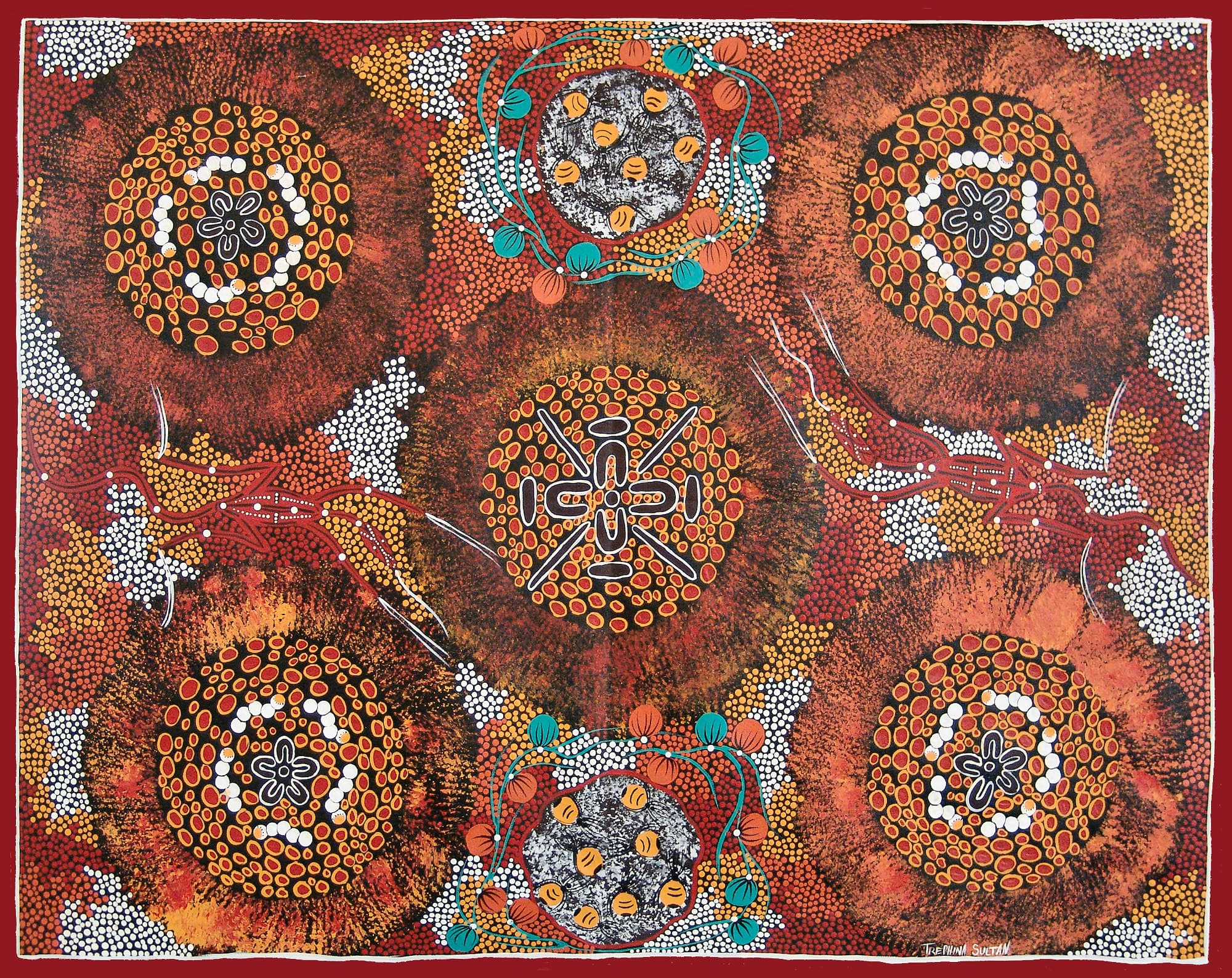
The dotted motifs of much of today’s Aboriginal modern design work has become the trademark of the contemporary Aboriginal Art movement. The imagery of symbols and icons is developed from a culture stretching back into the history of an ancient land, evolving and weaving into dreamtime stories.
The iconography of the Aboriginal culture, depicted in ceremonial body art and many of the sacred sites, rock and cave paintings, used very few colours, as they were often made from what was available locally.
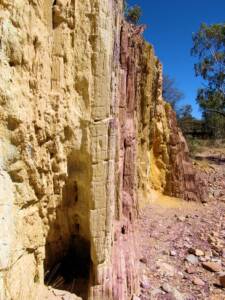
The colours were often mined from ‘ochre pits’, being used for both painting and ceremonies. The ochre was even traded between clans and at one time could only be collected by specific men within the clan. Some of the ochre pits throughout Australia can be viewed today as tourist attractions.
There were variation in the symbolic representation of some rock art and paintings, depending on the tribe or region of Australia that you belong to, which is still evident today in the modern art work. Yet there is also similarities of the art work from different regions that are thousands of kilometres apart.
Aboriginal culture is steeped in history and hidden meanings that is only known to the appropriate people, even among the aboriginal people themselves, knowledge is passed on to the appropriate person and aboriginal artists can only paint dreaming and stories that have been passed to them and are their right to paint.
That is not to say, aboriginal artists cannot paint something completely new or different. Many of the famed and feted aboriginal artist have broken moulds and expectations, producing extraordinary works of art that catapults them into the modernist art world of today.
With the development of the modern Aboriginal art movement, symbols took on a variety of colours, with some symbolic representation taking on a more realistic rendering. New generations of Aboriginal artists were developing their own style of painting, which saw whole communities producing abstract works that fit well with many modern galleries and museums.
The use of dots and the modern abstract equivalent was to tell a story, more often then not, a physical representation of an oral tradition that is passed down from generation to generation. Of course, some of these stories are not for the uninitiated, and although they may be depicted in the paintings, they are not revealed to the non-initiate. It has been discussed in publications elsewhere that:
As the Papunya painting movement developed in the 1970s, dotting was increasingly used to obscure meanings and to hide some of the symbolism that was not meant to be exposed to the un-initiated.
Aboriginal Art Online – Land and Cultures – Traditional Aboriginal Art Symbols. Retrieved September 28, 2008.
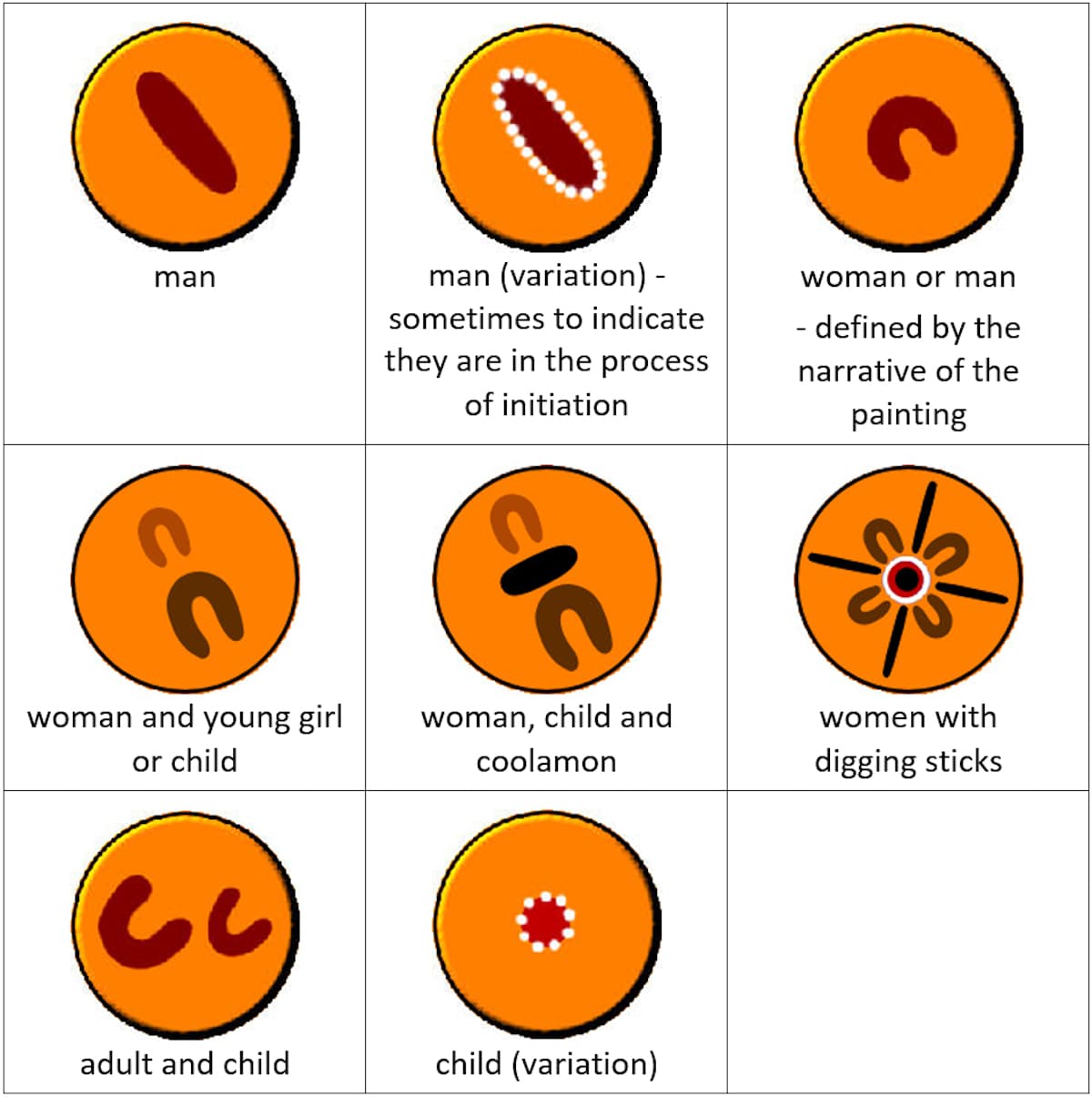
Some of the symbols used in Aboriginal art appear to be the same, but can mean different things, such as the symbol used for woman, adult and child. The child is depicted as a smaller version of the adult/woman symbol. There are of course variations on symbols such as that for a child, which could also be represented as a dot enclosed with dots. Even a small circle can be used to depict a child. Children are usually easy to identify in many painting, as a smaller symbol to that of the woman or adult, found in the same painting.
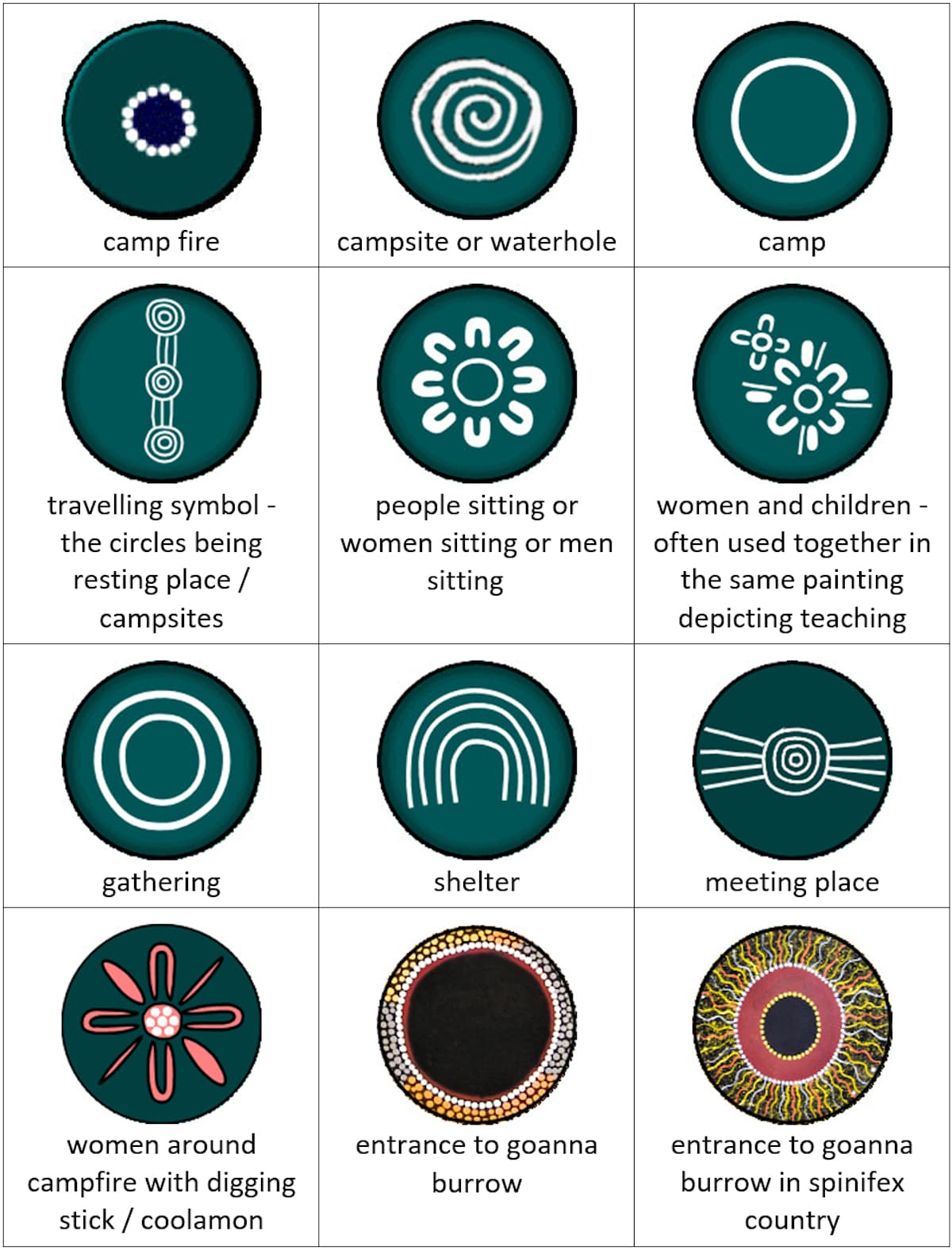
When viewed in monochrome other symbols can look similar, such as the circles within circles, sometimes depicted on its own, sparsely or in clustered groups. When this symbol is used and depending on the Aboriginal tribe you belong to, it can vary in meaning from campfire, tree, hill, digging hole, waterhole or spring. The symbol may be clarified further by the use of colour, for example water may be depicted with the use of the colour blue.
Many paintings by Aboriginal artist, such as those that are depicting a ‘dreamtime story’, are detailed from an aerial perspective. The narrative is laid out detailing the lay of the land, as created by ancestral beings in their journey or during creation. This modern day rendition is a modern reinterpretation of songs, ceremonies, rock art and body art that was the norm for many thousands of years.
Whatever the meaning, interpretations of the icons should be taken in context of the entire painting, the region from which the artist originates from, the story behind the painting, the style of the painting, with additional clues being the colours used in some of the more modern works, such as the blue circles signifying water.
In its basic depiction, the individual, family and community unit is easily identified. Variation to these symbols can be found not only in different regions, but within the same region. An artist may depict the man as a single stroke, or the ‘u’ shape. The identification of the symbol and its meaning may be held in the title of the painting, the story within the painting, and even just on the style that the Aboriginal artist has decided to paint with.
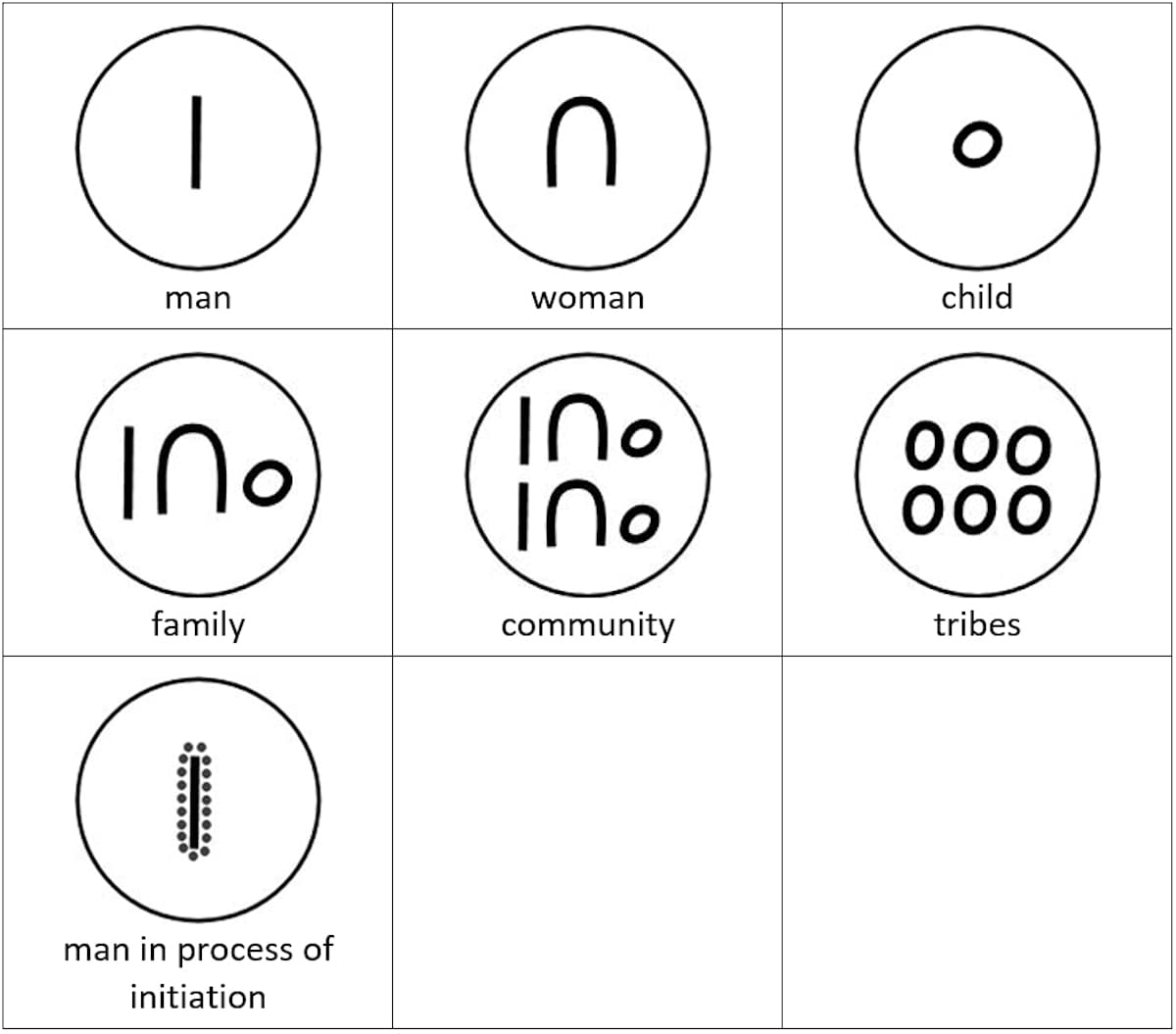
How a single symbol is treated within a painting can provide further detail to the viewer, such is the case where the male adult symbol is surrounded by dots to indicate initiation.
Children are often depicted in the same painting with adults, often depicting hunting and gathering food; passing down of knowledge; teaching unity and the importance of family.
Depending on the context of the whole painting, the adult could be either woman or man, with the child representing girl or boy, or children in general.
Aboriginal Art & CultureAboriginal Art Centres Aboriginal Art Centres Aboriginal Dreaming Aboriginal Symbols
Art & CultureAboriginal Artists Artists Aboriginal Art & Culture Literary and Poets