
Aboriginal Symbols of Fauna and Wildlife
| WARNING: Aboriginal and Torres Strait Islander people are warned that this website contain images, voices and names of people who have passed away. |
Indigenous Symbols, Iconography and Imagery
- Aboriginal Symbols
———————————— - Man Woman Child
- Human Activity
- Tools & Weapons
———————————— - Bush Food
- Bush Medicine
- Wildlife
- Emu
- Goanna
- Honey Ant
- Kangaroo
- Thorny Devil
- Witchetty Grub
————————————
- Landscape & Country
- Rain & Water
————————————
The dotted motifs of much of today’s Aboriginal modern design work has become the trademark of the contemporary Aboriginal Art movement. Its iconic status developed from a culture stretching back into the history of an ancient land, evolving and weaving into desert dreamtime stories.
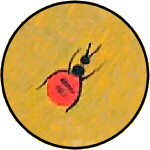
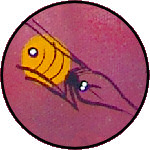
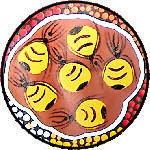
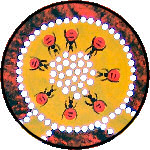
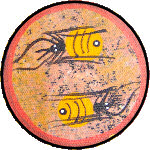
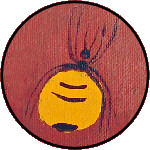
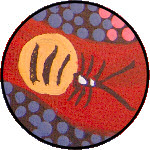
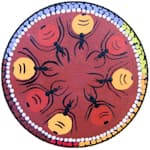
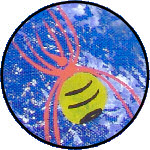
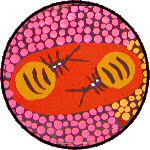
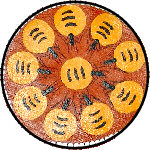
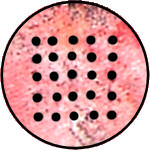
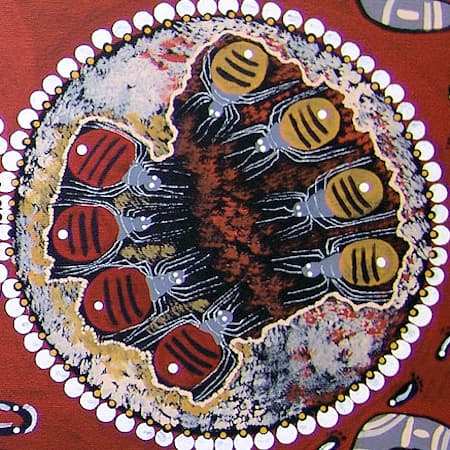
One of the popular imagery of bush tucker include the iconic honey ants. In the depiction of the honey ants, many artist stamp their own unique way of portraying the sweet food, whether it is a close facsimile of the insect, a unique clustering arrangement or a modern take that may emphasise a particular pattern.
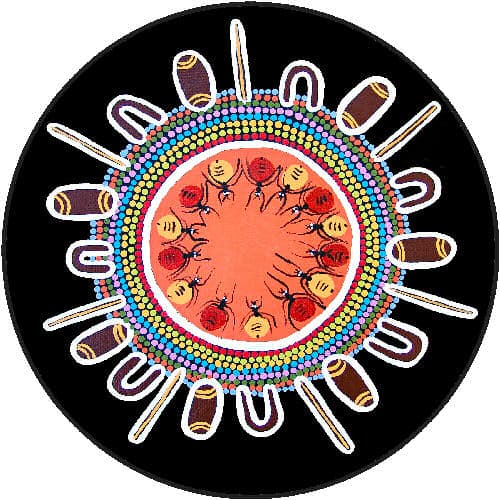
Honey Ants Information
Honey ants are ants that have been gorged with food by worker ants, so much so that their abdomens swell, functioning as a living larder. The ants are fed by the collected honeydew made by the Red Mulga Lerp, Austrotachardia acaciae (Kurkunytjungu)1.
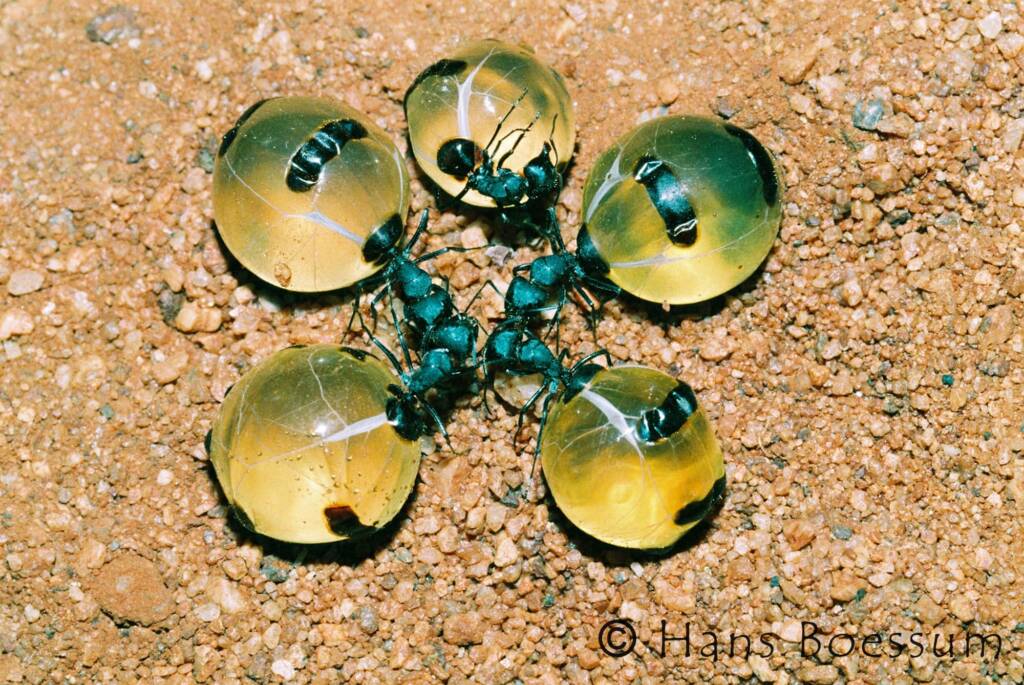
The sweet nectar makes it one of the popular bush tucker eaten by the Indigenous Aborigines of Australia, especially in Central Australia and the Northern Territory. Women search for the nests of the honey ants, found in the roots of a specific Mulga tree. The honey ants dig deep underground tunnels and chambers where they live. The women search for the drill holes under the trees, that give away their presences. Using their wooden digging sticks, although now this may be replaced by shovels and metal bars, the women dig down, following the honey ants tunnels (nyinantu), until they find the ants, which are collected in the coolamons.
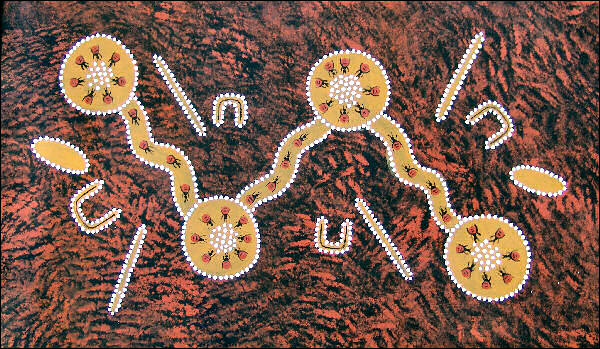
The symbolism in this story shows women with their digging sticks and coolamon hunting for honey ants. The painting depicts the honey ant chambers and the connecting tunnels.
Common name
Honey ant
Arrernte name: Yerrampe, Agkwarle Yerrampe
Luritja name: Tjupi
Pitjantjatjara name: Tjala
- Scientific Classification
- Kingdom: Animalia
- Phylum: Arthropoda
- Class: Insecta
- Order: Hymenoptera
- Family: Formicidae
- Subfamily: Formicinae
- Tribe: Camponotini
- Genus: Camponotus
- Species: Camponotus inflatus
The Honey Ant is said to be the earthly manifestations of the Seven Sisters, has their own ‘Honey Ant Dreaming’ and is a bush food delicacy. The honey ant is often depicted in many Aboriginal art work, especially those works about bush tucker.
The ‘Honey Ant Dreaming’ belongs to the Warlpiri people in Central Australia. Yuelamu is the home of ‘Honey Ant Dreaming’, as well as being the burial place of one of the Western Desert most famous sons, Clifford Tjapaltjarri Possum. Gabriella Possum Nungurayyi, daughter of the late Clifford Possum Tjapaltjarri, depicts the story of the seven Napaltjarri sisters being chased by a man named Jilbi Tjakamarra. In their journey, the sisters sat down at Uluru to search for honey ants. This is her dreaming (or creation story).2
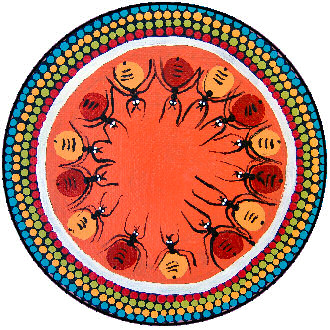
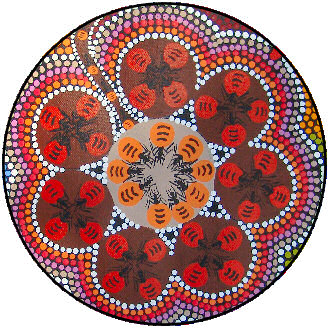
Aboriginal artist that have depicted the ‘Honey Ant Dreaming’ include Mick Wikilyiri, Lucy Kngwarreye Morton, Maureen Purvis, Melissa Ross, Sharon Numina, Janet Forrester Ngala, Cecily Napanangka Granites Granites, Nikkita Nangala Sampson.
Clifford Possum Tjapaltjarri ‘Yuelamu Honey Ant Dreaming’ has been reproduced with the permission of the artist as the feature coin in the 2007 Masterpieces in Silver coin range. The actual painting is part of the collection of the Art Gallery of South Australia.3
Footnote & References
- Mai Putitja and Irmangka-Irmangka (Bush Tuck and Bush Medicine), Tjala, Retrieved 3 July, 2008, http://bush-tucker.tripod.com/html/tjala.html
- Crystalinks, Pleiades – The Pleiades in Folklore, Retrieved 4 July, 2008, http://www.crystalinks.com/pleiades.html
- Royal Australian Mint, ‘Masterpieces in Silver’ artist to shine at the National Gallery of Australia, Retrieved 3 July, 2008, www.ramint.gov.au/press_releases/2007/2007_MPIS_NGA.cfm
- These sweet Australian ants are “the best honey you’ve ever tasted”, by Audrey Bourget, 6 Sep 2018, SBS – Food, https://www.sbs.com.au/food/article/2018/09/06/these-sweet-australian-ants-are-best-honey-youve-ever-tasted