Main’s FrogMain’s Frog – sheep and tadpoles
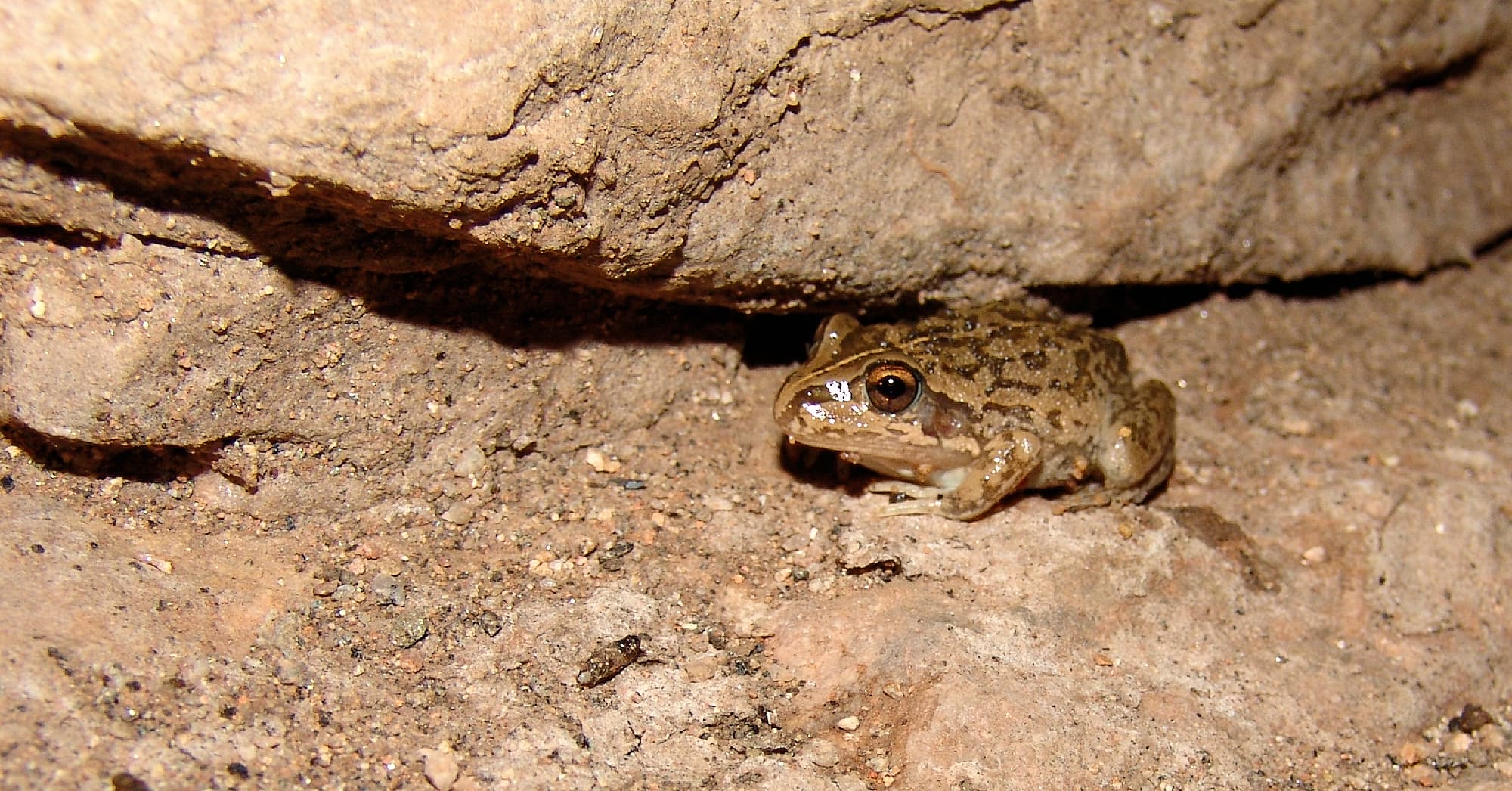
One of the many frogs species found at Simpsons Gap is the Main’s Frog (Cyclorana maini). Having adapted to desert conditions, this small stout water-holding frog has adapted to desert conditions. Emerging after significant rainfall, they can be found in temporary pools in watercourses, claypans and other short-lived bodies of water in the arid region of Central and Western Australia.
If you visit the MacDonnell Ranges and Central Australia region after significant rain, the Main’s Frog (among other species), can often be heard, if not seen. Also keep an eye out for the tadpoles, although they are harder to distinguish from other frog species, until after they develop their legs and emerge from the water.
One of the burrowing frogs, the Main’s Frog survives the dry periods by absorbing water into its body, burrowing deep underground, and encasing itself in a watertight bag (cocoon), awaiting the next major rain fall.
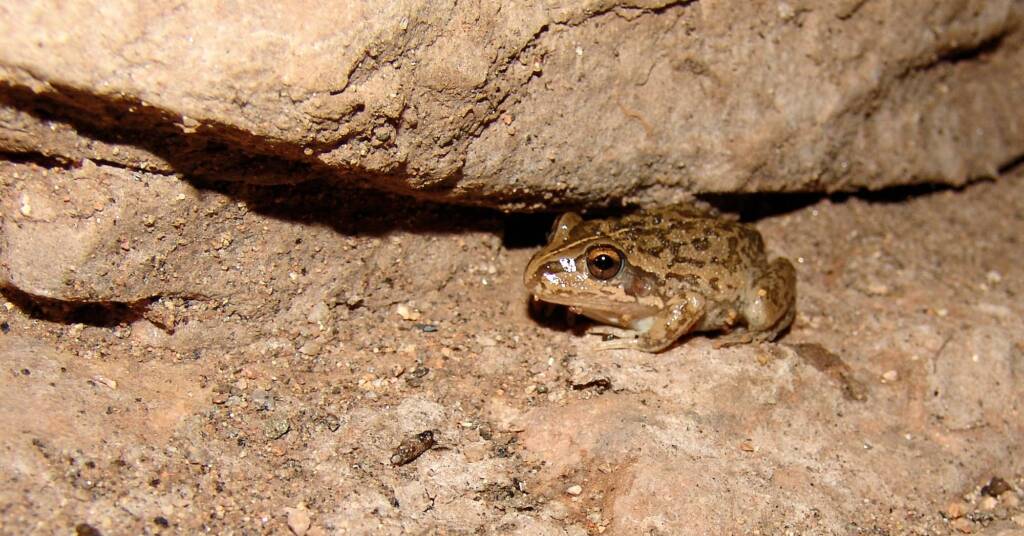
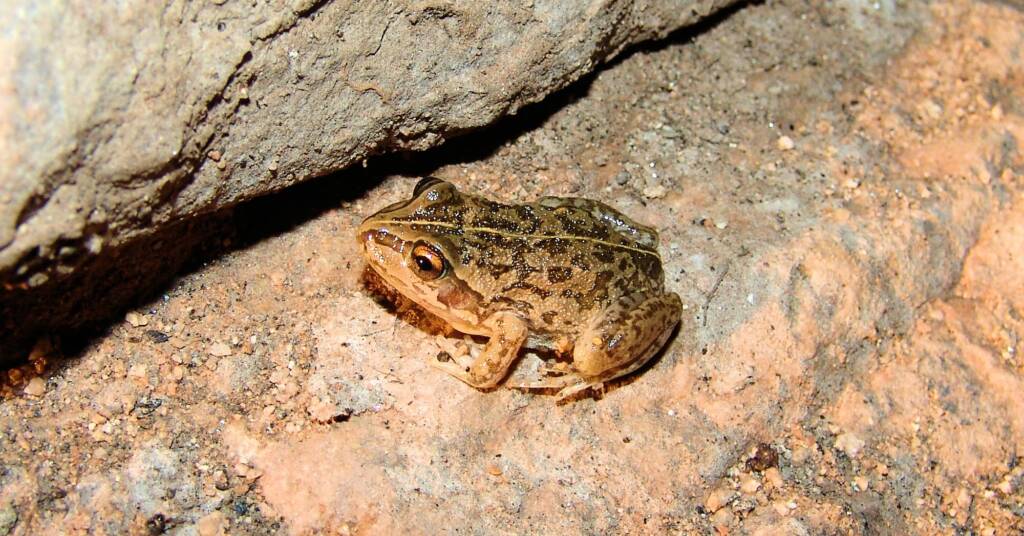
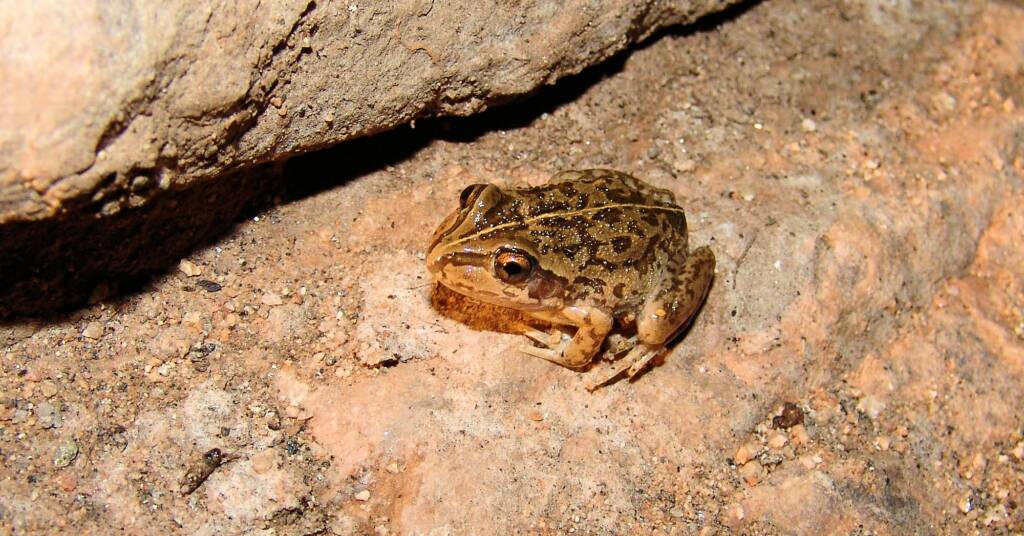
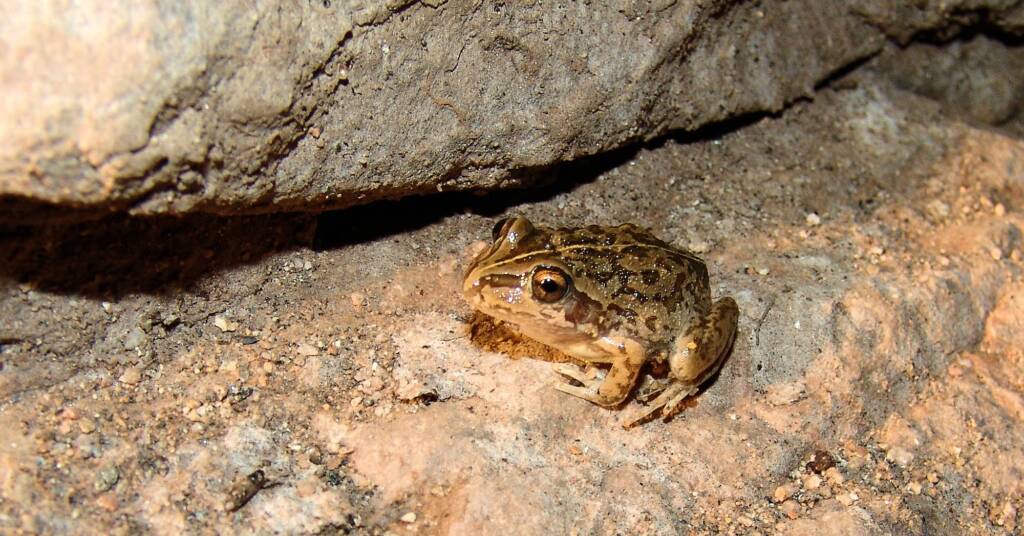
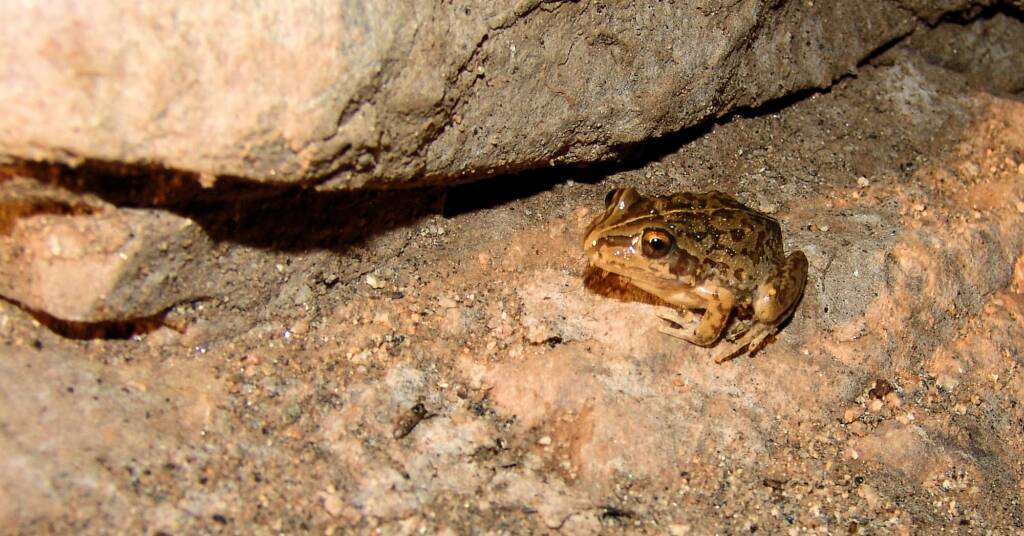
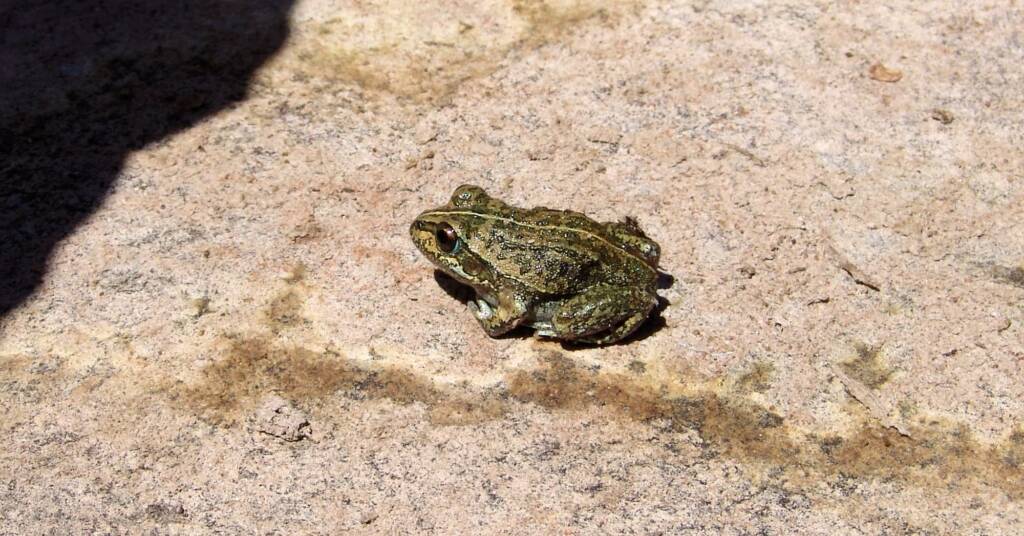
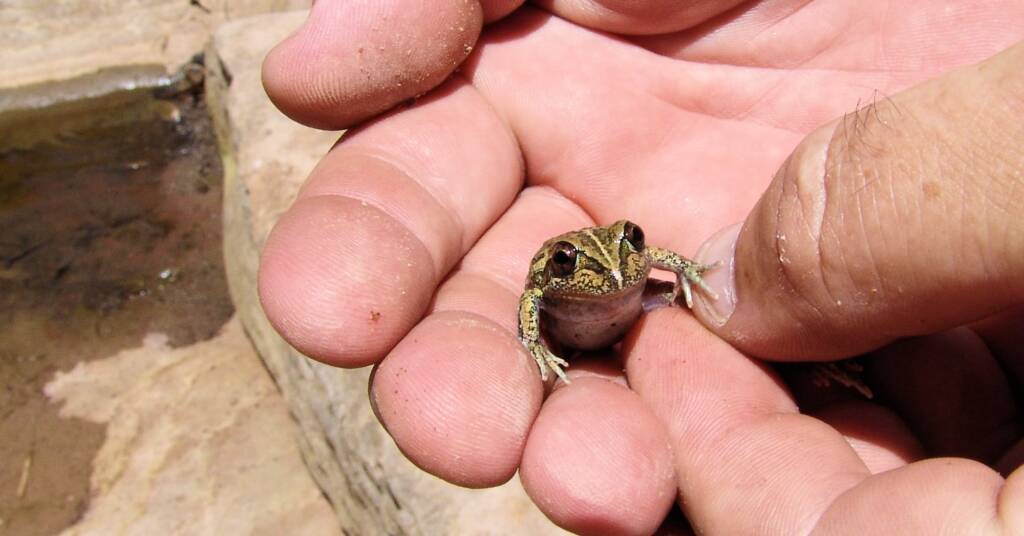
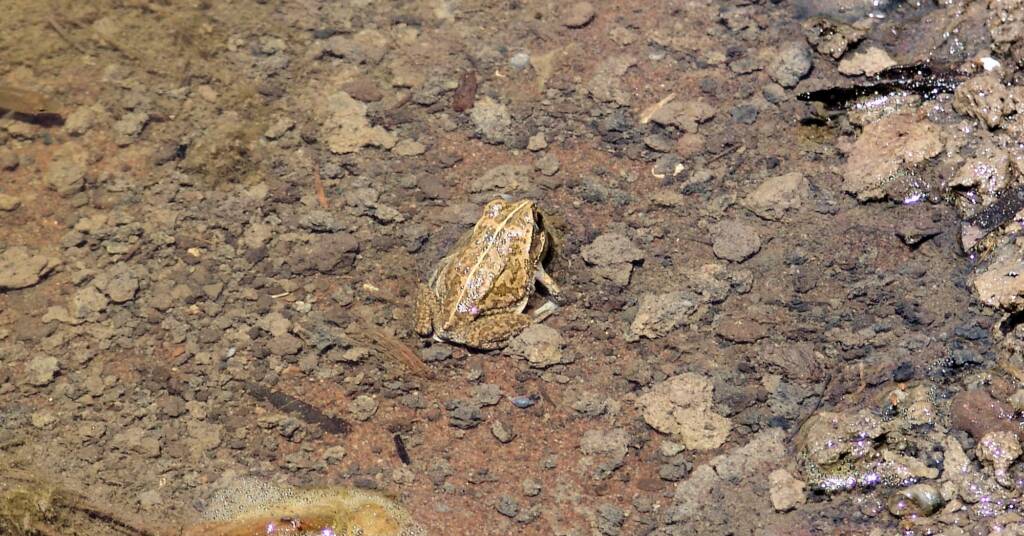
The skin of the Main’s Frog can vary from pale grey-brown to an olive-brown, with dull green on its back and darker patches. The back can be smooth or slightly rough or warty in appearance. The colour can look different, if submerged in brackish water and under different lighting conditions. Look for the distinct pale stripe that runs along the spine. There is often a contrasting light/dark lateral head stripe.
The male frogs breeding call sounds like the bleating of sheep, hence its other more common name of ‘Sheep Frog’.
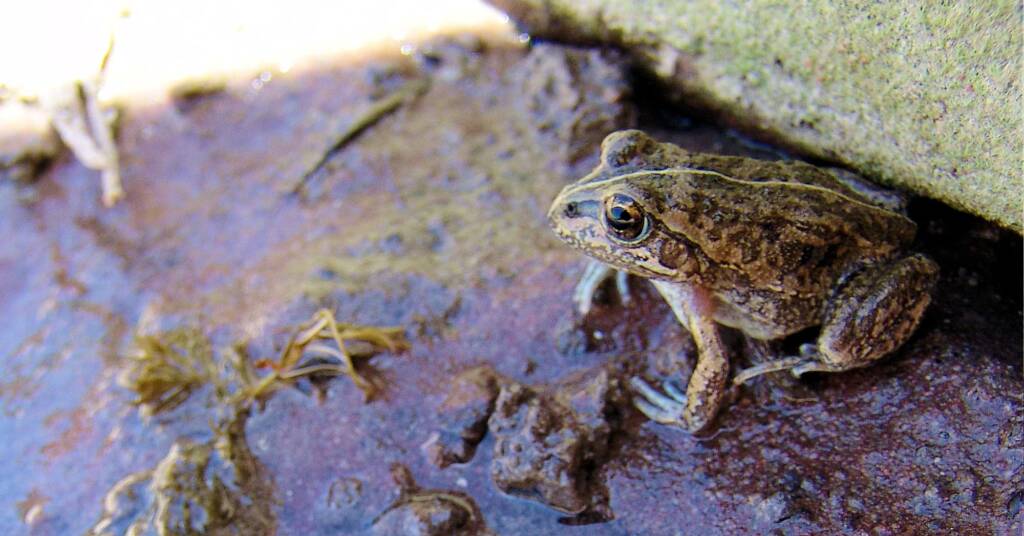
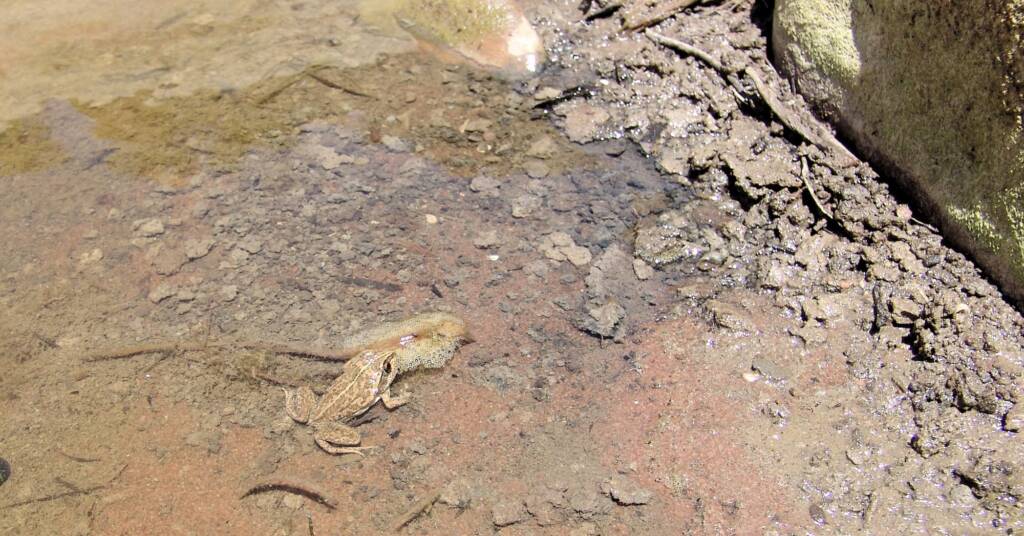
Following images are from Palm Valley, where there was still water after recent rains.
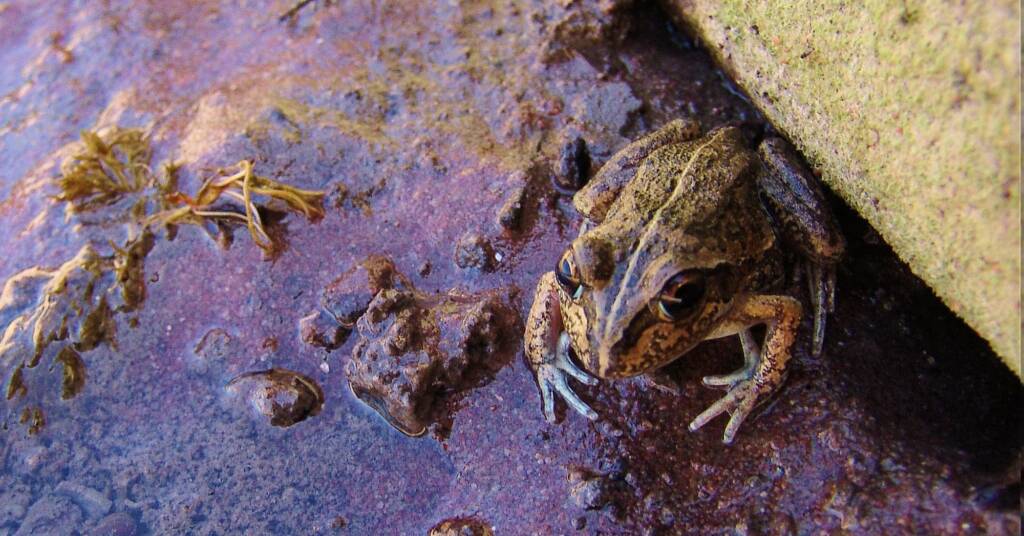
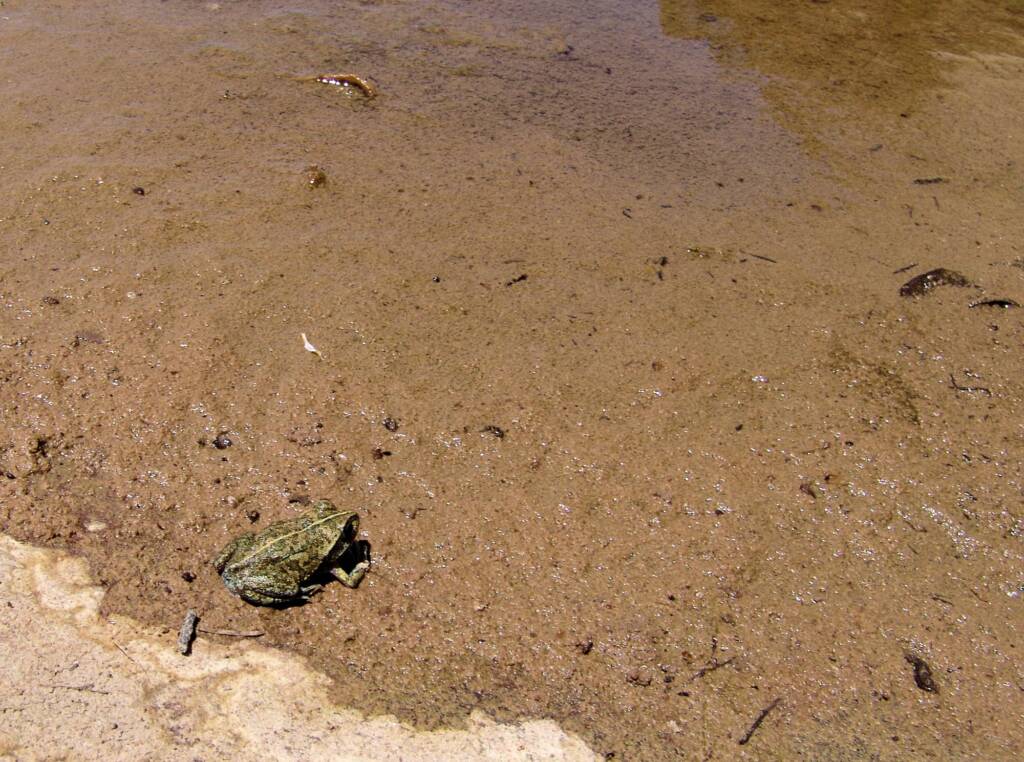
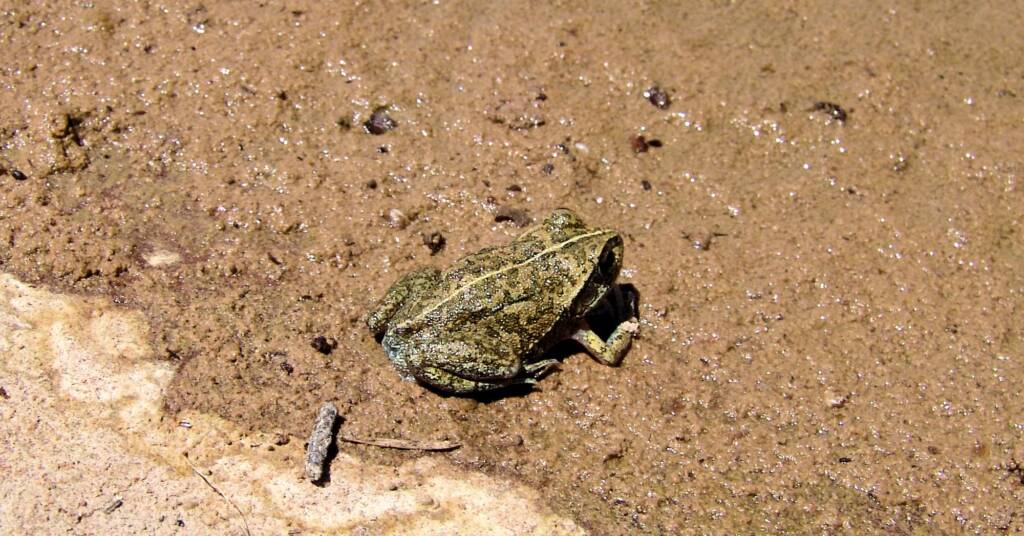
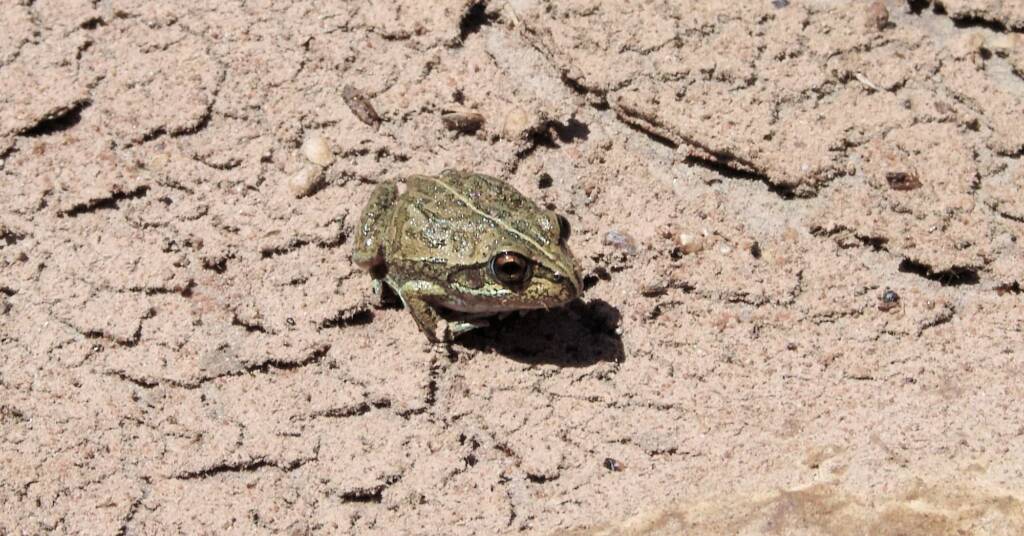
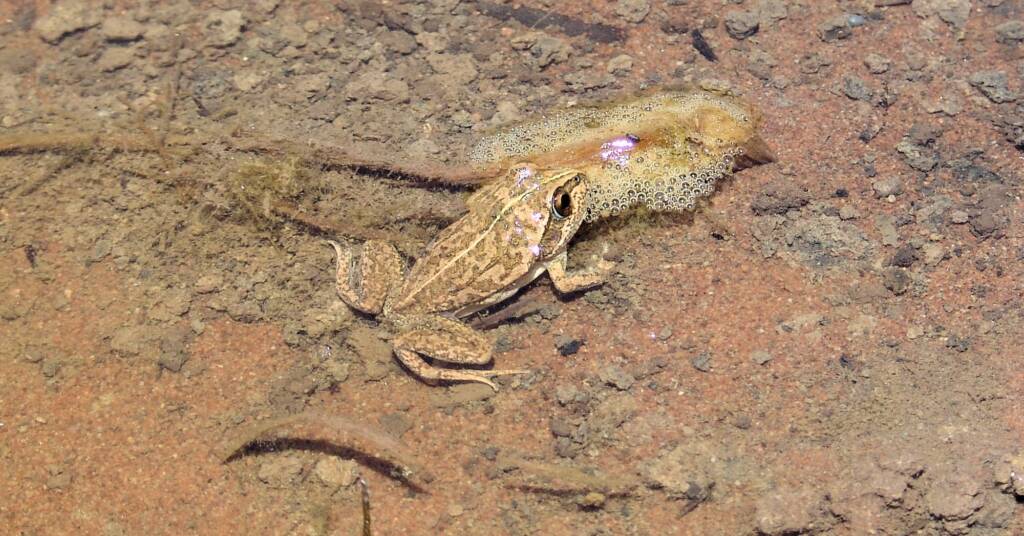
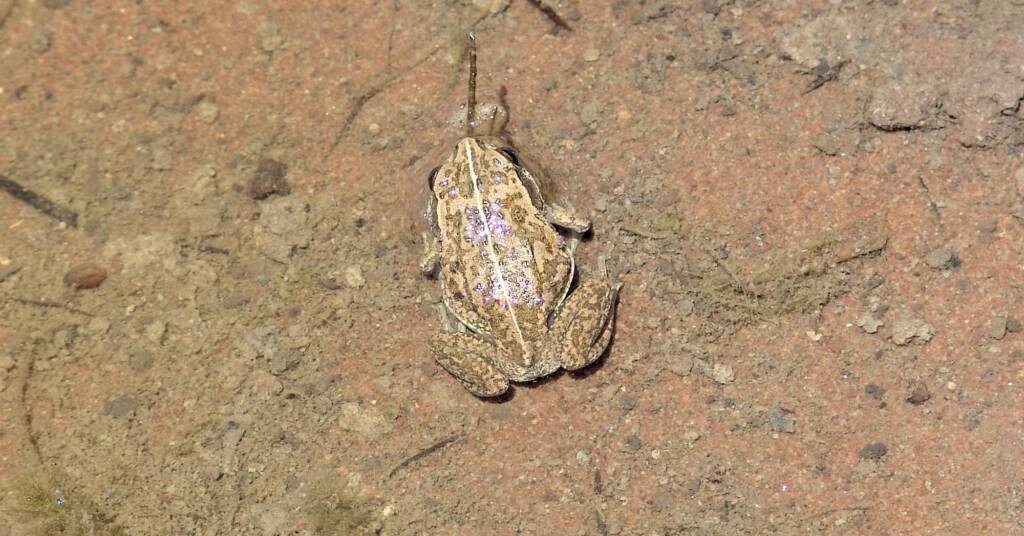
- Scientific classification
- Kingdom: Animalia
- Phylum: Chordata
- Class: Amphibia
- Subclass: Lissamphibia
- Order: Anura
- Family: Hylidae
- Species: C. maini
- Binomial name: Cyclorana maini
Footnote & References
- Cocoon Formation and Structure in the Estivating Australian Desert Frogs, Neobatrachus and Cyclorana, CSIRO Publishing, Australian Journal of Zoology, Retrieved September 9, 2008, from https://www.publish.csiro.au/zo/ZO9950429
- Sheep or Main’s Frog, Western Australian Museum, https://museum.wa.gov.au/explore/frogwatch/sheep-or-mains-frog
- Main’s Frog, FrogWatch, http://www.frogwatch.org.au/index.cfm?action=animal.view&pid=11 / Frogs database, http://www.frogwatch.org.au/index.cfm?action=animal.list
- Cyclorana maini – Main’s Frog, Frogs of Australia, https://frogs.org.au/frogs/species/Cyclorana/maini/
Main’s FrogMain’s Frog – sheep and tadpoles
FrogsFrogs Index Australian Green Tree Frog (Ranoidea caerulea) Centralian Tree Frog (Ranoidea gilleni) Desert Tree Frog (Litoria rubella) Desert Trilling Frog Great Barred Frog (Mixophyes fasciolatus) Main’s Frog Long-footed Frog (Cyclorana longipes) Motorbike Frog (Ranoidea moorei) Peron’s Tree Frog Spencer’s Burrowing Frog