
FrogsFrogs Index Australian Green Tree Frog (Ranoidea caerulea) Centralian Tree Frog (Ranoidea gilleni) Desert Tree Frog (Litoria rubella) Desert Trilling Frog Great Barred Frog (Mixophyes fasciolatus) Main’s Frog Long-footed Frog (Cyclorana longipes) Motorbike Frog (Ranoidea moorei) Peron’s Tree Frog Spencer’s Burrowing Frog
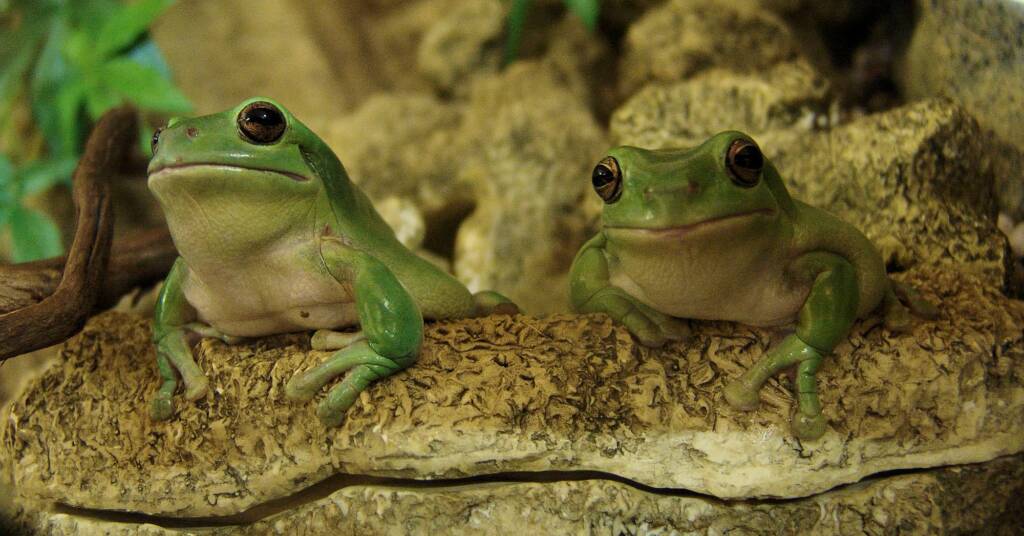
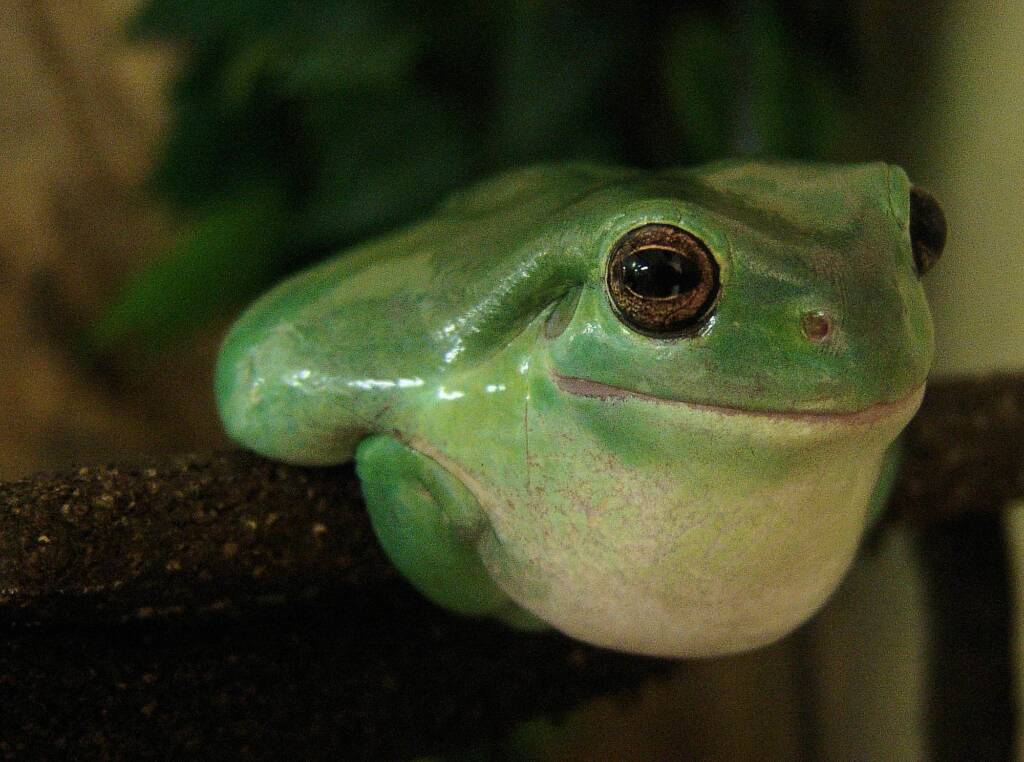
A popular Aussie icon, the Aussie green tree frog, is often pictured as a bright green and happy-looking frogs and are widely distributed across much of Australia.
Common name
Australian Green Tree Frog, Green Tree Frog, White’s Tree Frog, Dumpy Tree Frog, Common Green Tree Frog.
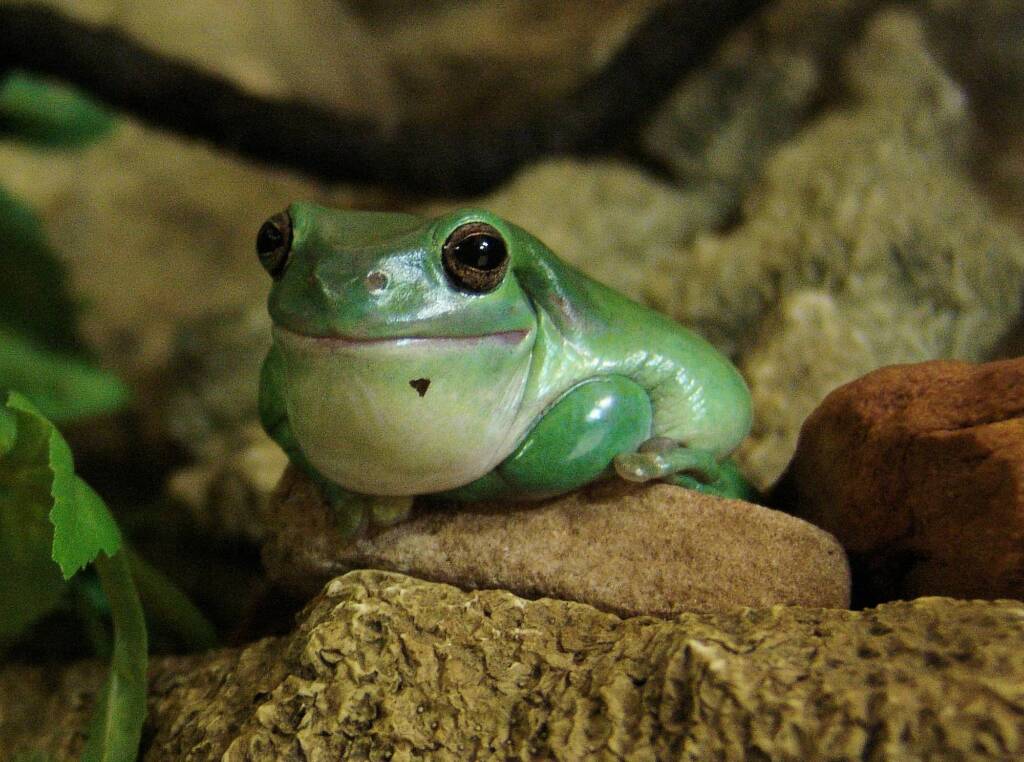
- Scientific classification
- Kingdom: Animalia
- Phylum: Chordata
- Subphylum: Vertebrata
- Class: Amphibia
- Order: Anura
- Family: Pelodryadidae
- Subfamily: Pelodryadinae
- Genus: Ranoidea
- Species: Ranoidea caerulea
formerly Litoria caerulea
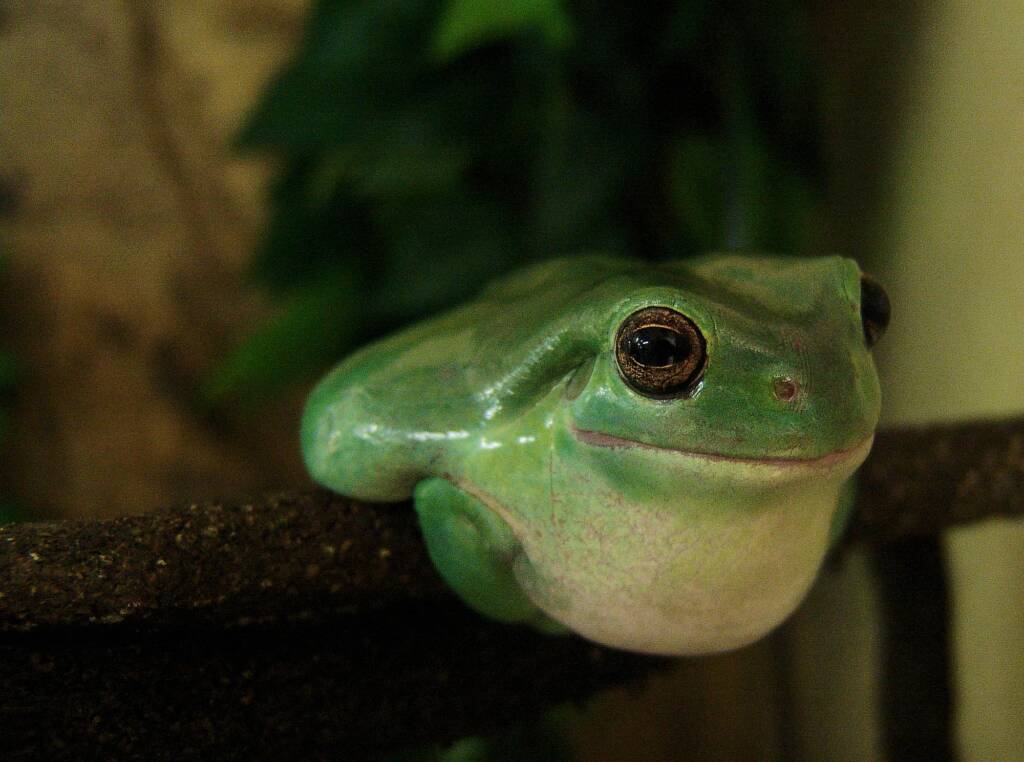
So this means now most Australian hylids (or pelodryadids) will be in the genus Litoria or the genus Ranoidea (plus two Australian species currently placed in Nyctimystes). So no longer is the dwarf tree frog in the same genus as the green frog (which are now Litoria fallax and Ranoidea caerulea respectively)…
Source: The Frog and Tadpole Study Group of New South Wales Inc (FATS), April 20, 2017, author Grant1
Footnote & References
- The Frog and Tadpole Study Group of New South Wales Inc (FATS), April 20, 2017, https://www.facebook.com/groups/FATSNSW/permalink/1470981209619592/
- Green Tree Frog (Ranoidea caerulea), iNaturalistAU, https://inaturalist.ala.org.au/taxa/517075-Ranoidea-caerulea
FrogsFrogs Index Australian Green Tree Frog (Ranoidea caerulea) Centralian Tree Frog (Ranoidea gilleni) Desert Tree Frog (Litoria rubella) Desert Trilling Frog Great Barred Frog (Mixophyes fasciolatus) Main’s Frog Long-footed Frog (Cyclorana longipes) Motorbike Frog (Ranoidea moorei) Peron’s Tree Frog Spencer’s Burrowing Frog