CicadaCicada Index Desert Screamer (Burbunga hillieri) Double Drummer (Thopha saccata) Floury Baker (Aleeta curvicosta) Green Grocer (Cyclochila australasiae) Masked Devil (Cyclochila australasiae) Orange Drummer (Thopha colorata) Razor Grinder (Henicopsaltria eydouxii) White Drummer (Arunta perulata)
— see Cicadoidea | Alice Springs Cicadas
Cicada — Order Hemiptera — Family Cicadidae / Tettigarctidae
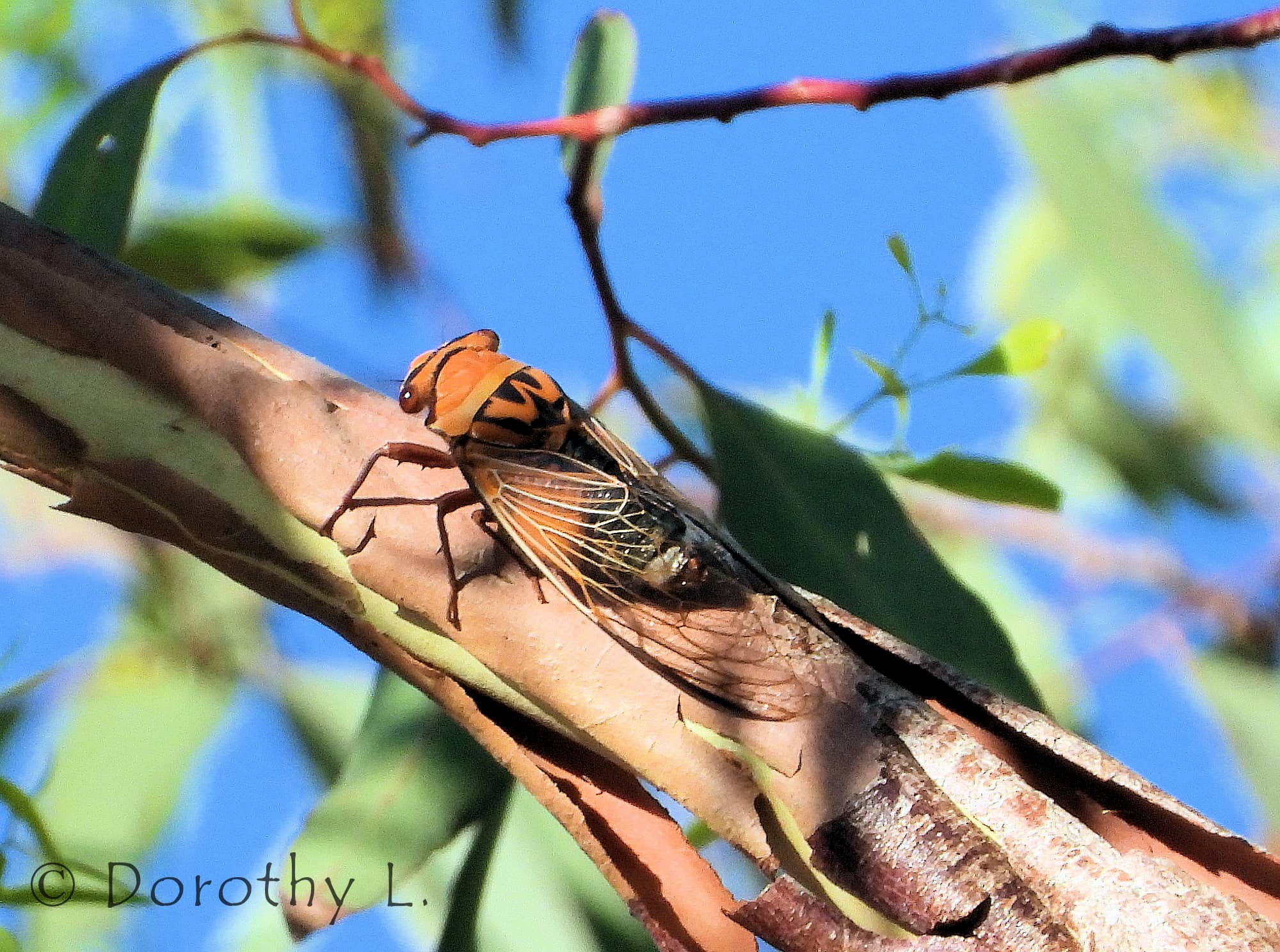
The loudest insect in the world, are cicadas. Their drone are one of the most recognisable sound in Australia, and herald the approaching summer. Once commonly and incorrectly called locusts…
‘Equally annoying with the dust was the loud, incessant, and indescribable noise of myriads of large and curious winged insects, commonly and incorrectly called locusts, but which are totally different from any kind of locusts I ever saw.’
Mrs C. Meredith, Notes and Sketches of New South Wales, 1844
Source: Julia Robinson, Loud, incessant, and indescribable: cicadas and their names, 2 March 2016
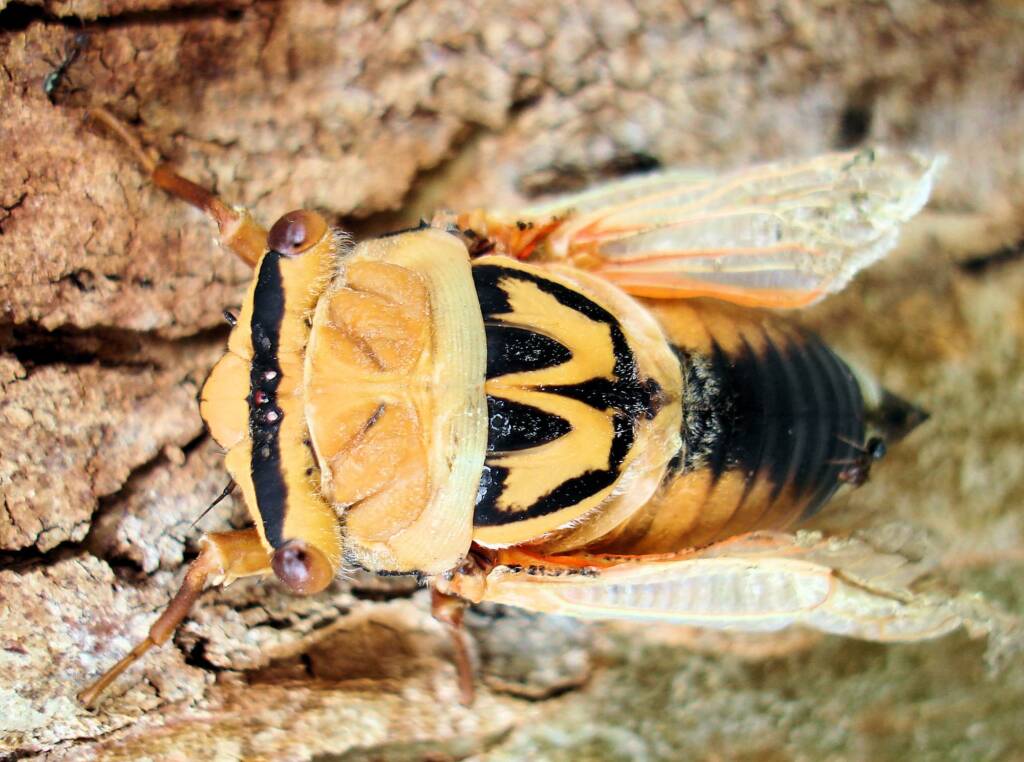
Cicadas are classified in the order Hemiptera, then the Homoptera, although the Homoptera is considered an order in its own rights, in some publications it is designated as a suborder of the Hemiptera. They are members of the superfamily Cicadoidea, the Family Cicadidae, or in the case of two unusual Australia species in the Family Tettigarctidae. The order Hemiptera include all insects with piercing and sucking mouth-parts, such as aphids and scale insects.
Cicadas are mainly found in warm-temperate to tropical habitats. There are more than 300 species of cicadas in Australia (although there is suggested that there may be up to 1,000 species that have yet to be identified), most of whom belong to the one large family, the Cicadidae. There are about 1,500 species world-wide.

Singing
The song of the cicada is only produced by the males as a mating call. Each species has its own distinctive call and will only attract females of its own kind, even though similar species may co-exist. Some large species such as the Green Grocer, Yellow Monday, and Double Drummer produce a noise in excess of 120 decibels at close range, this is approaching the pain threshold of the human ear. In contrast, some smaller species have songs so high in pitch, that the noise is beyond the range of human hearing.
How they produce their songs is still being researched today, but the organs that produce the sound are the tymbals, a pair of ribbed membranes at the base of the abdomen. Contracting the internal tymbal muscles causes the tymbals to buckle inwards and produce a pulse of sound. By relaxing these muscles, the tymbals pop back to their original position. In some species of cicadas, a pulse of sound is produced as each rib buckles.
Both male and female cicadas have organs for hearing. A pair of large, mirror-like membranes, the tympana, receive the sound. The tympana are connected to an auditory organ by a short tendon. When the male sings, it crease it’s tympana so that it won’t be deafened by its own noise.

Many species of cicada sing during the warmth of the day. This noise actually repels birds, probably because the noise is painful to the birds’ ears and interferes with their normal communication. The males of many cicada species group, such as the Green Grocer, Yellow Monday and Double Drummer, group together when singing. This increases the volume of noise, makes it harder to locate where the sound is coming from and reduces the chances of bird predation. Other species of cicada only sing at dusk. These species tend to be weak fliers, such as the Bladder Cicada. They gain some measure of protection from birds by confining their activity to dusk.

In addition to the calling or mating song, many species possess a distress song. This is usually a broken and erratic noise emitted when an individual is captured. Some species also have a courtship song, a quiet call that is sung only after a female has been attracted nearby using the calling song.
Feeding
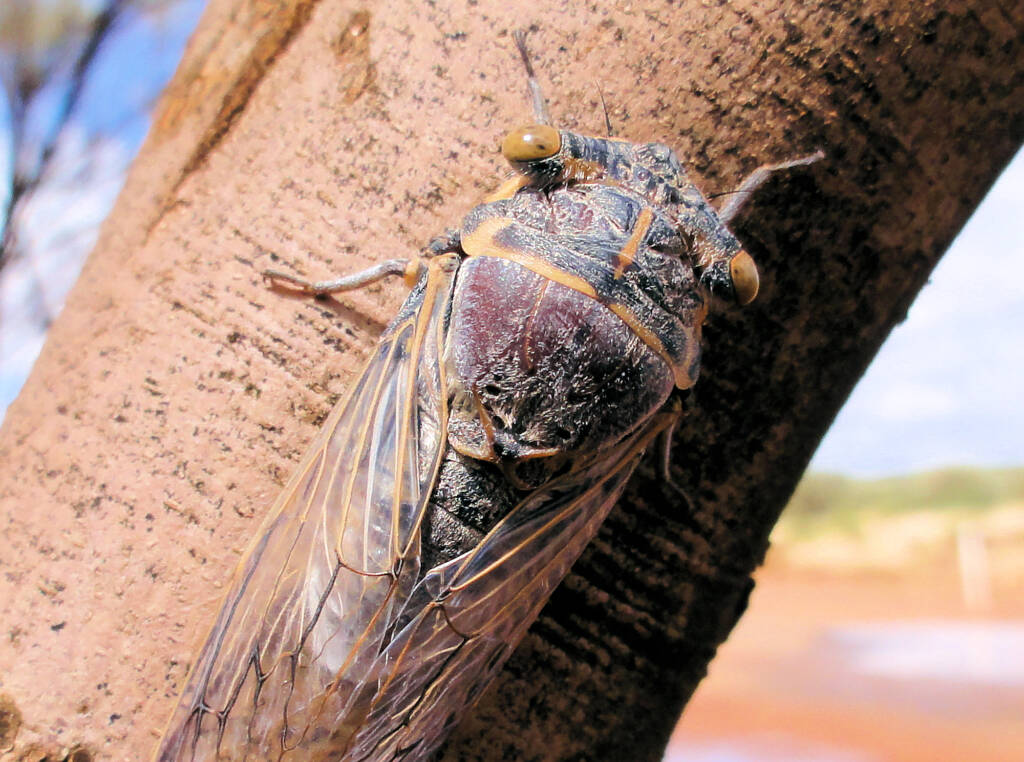
Cicadas feed on a huge range of plants, including eucalypts and grasses. They feed by piercing the surface of plants with their mouth stylets. The sap is then sucked up through a tube formed by the concave surfaces of two of the stylets. They are not harmful to trees, although in some cases the growth of the tree may slow, due to the amount of sap consumed. Cicadas do not bit, even when handled, although their claws may feel sharp as they cling to the skin.
Birds, bats, spiders, ants, mantids and tree crickets all prey on cicadas. They also provide food for the larva of the Cicada-killer Wasps and are also parasitised by the larvae of Feather-horned Beetles (family Rhipiceridae).

Lifecyle
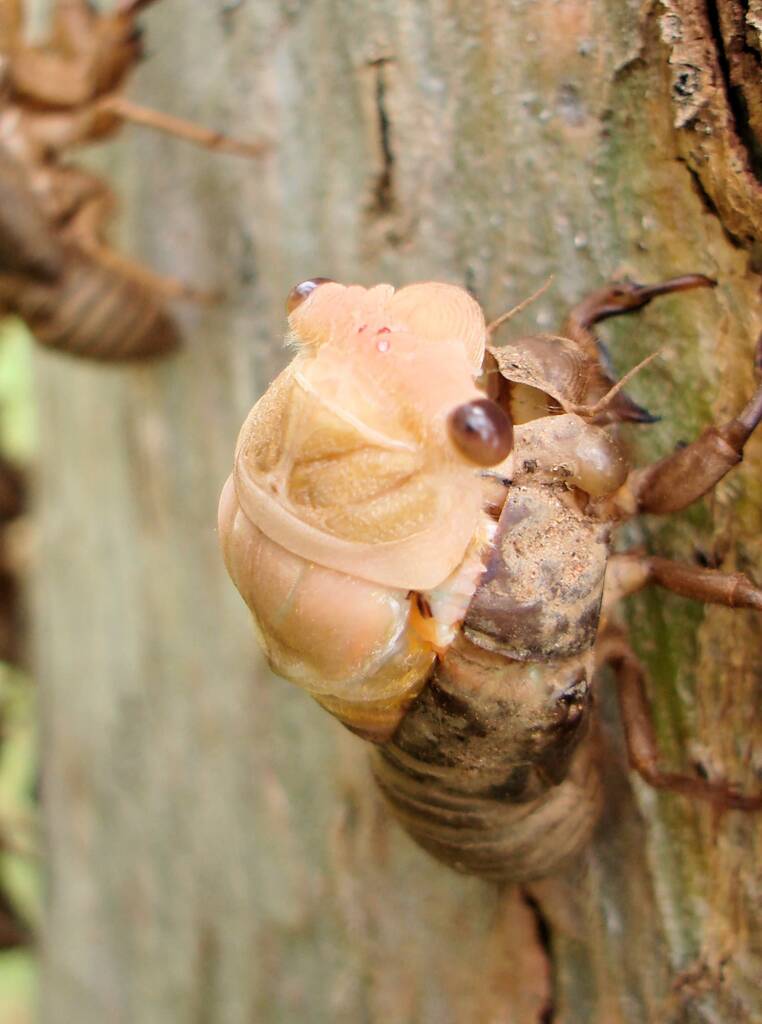
It is thought that the nymphs of the larger, common Australian species of cicada may live underground for around 6-7 years. This may explain why adult cicadas are more abundant during some seasons than others, with peaks occurring every few years.
In contrast to its nymph stage, the life of the adult cicadas is very short, lasting a matter of weeks. Once the adult cicadas have mated, the female cicada lays its eggs by piercing the plant stems and inserting the eggs into the slits. The eggs hatch into small wingless cicadas known as nymphs. They fall to the ground and burrow below the surface, where they live on the sap from plant roots. Over the period of several years, the nymphs grow, shedding their skin at intervals.
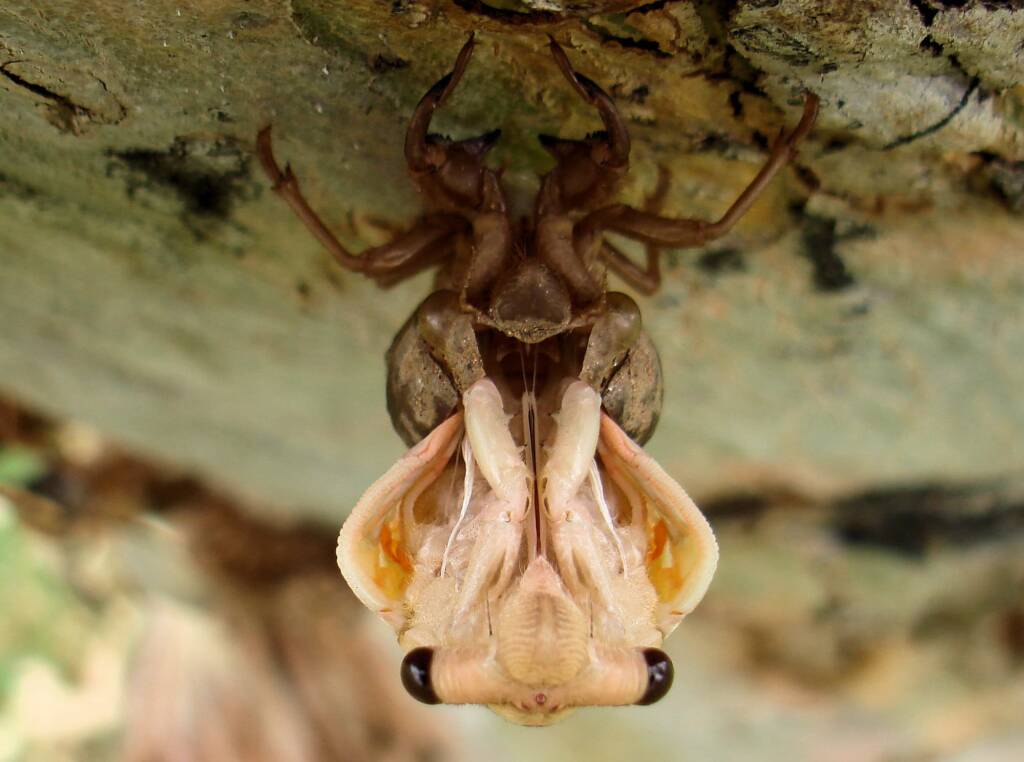
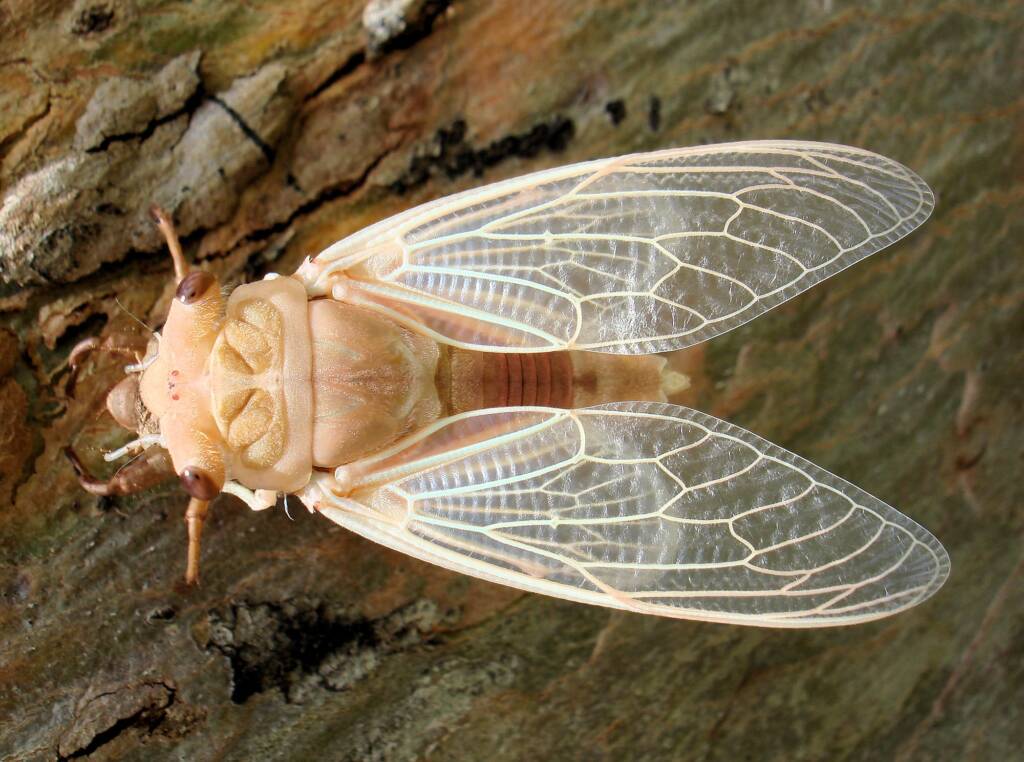
Once the nymph reaches full size, it will dig its way to the surface with specially adapted front legs. It usually surfaces as night falls in the late spring or early summer. Then, climbing the nearest tree trunk or other fixture, it will shed its skin for the last time, emerging as a fully-winged adult cicada.
Defense mechanism
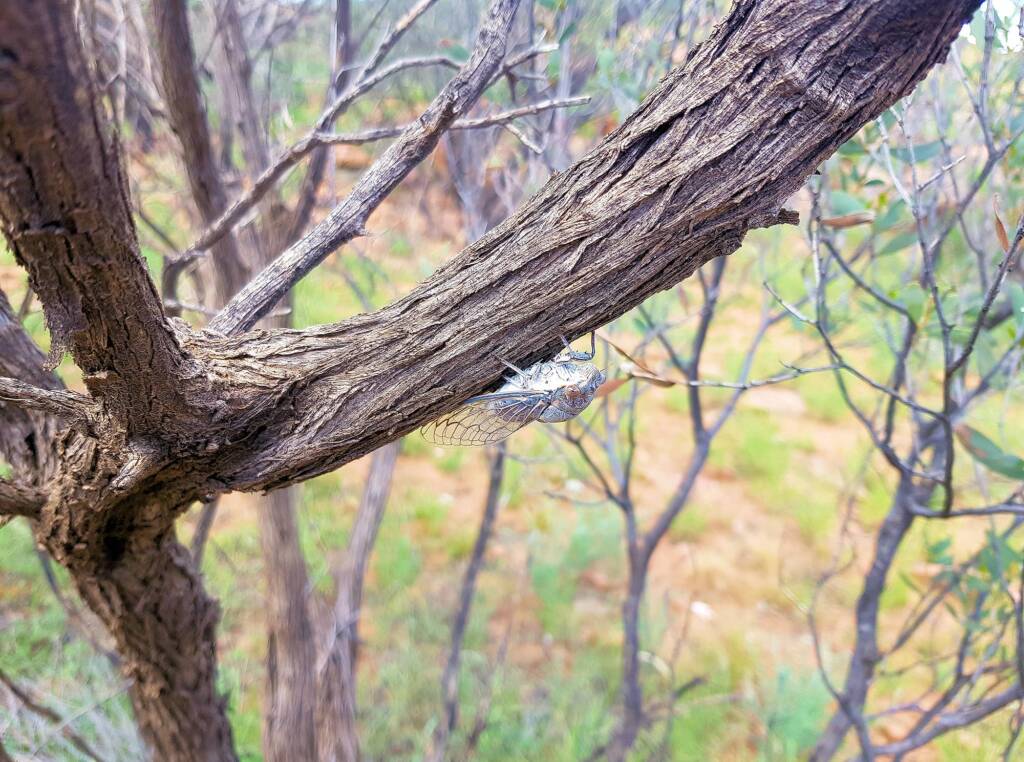
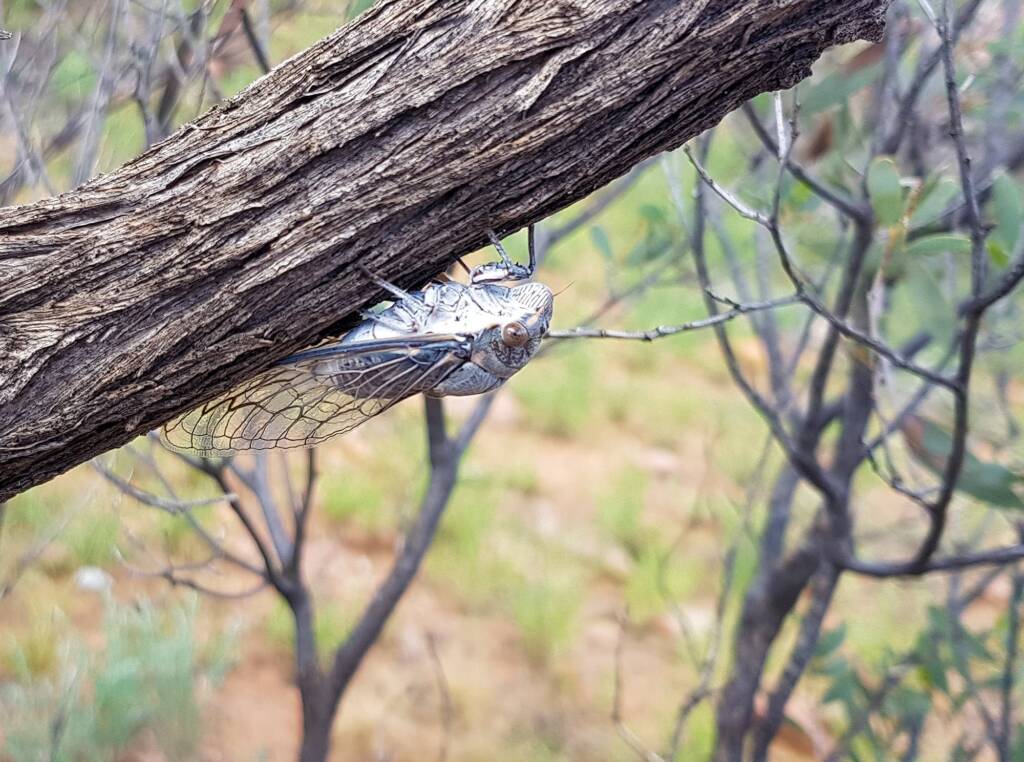
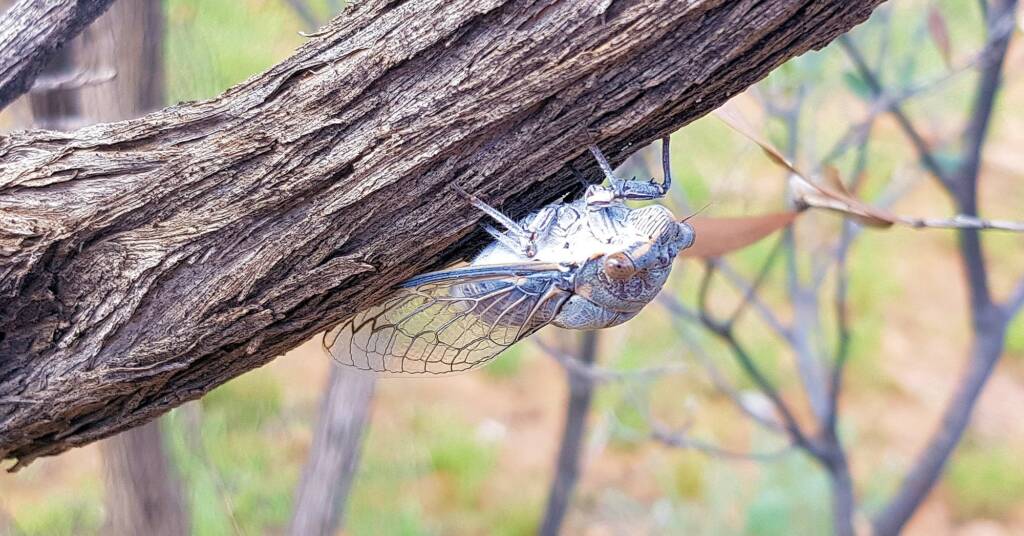
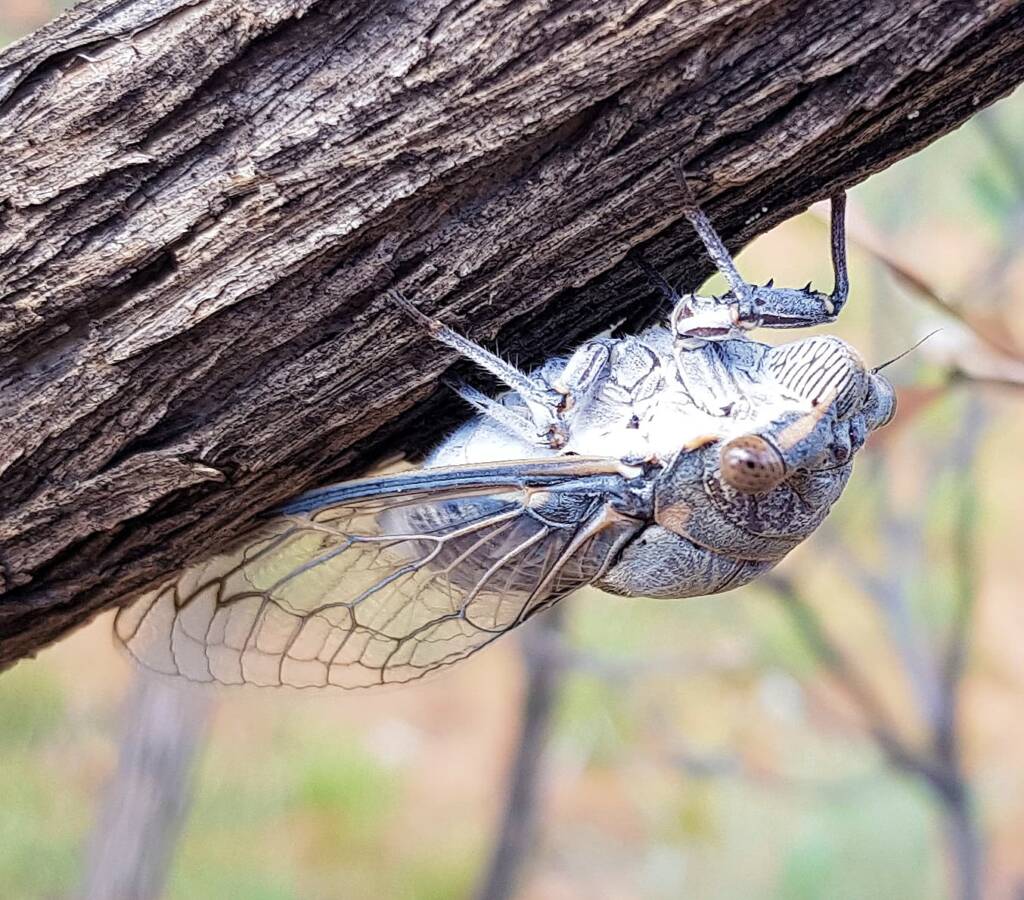
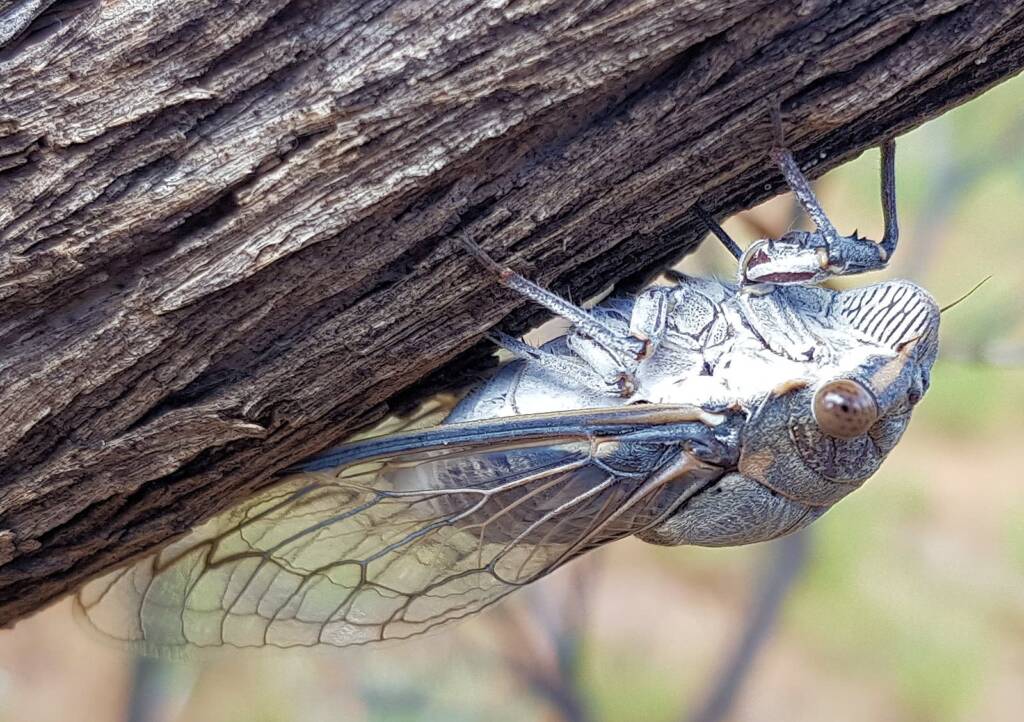
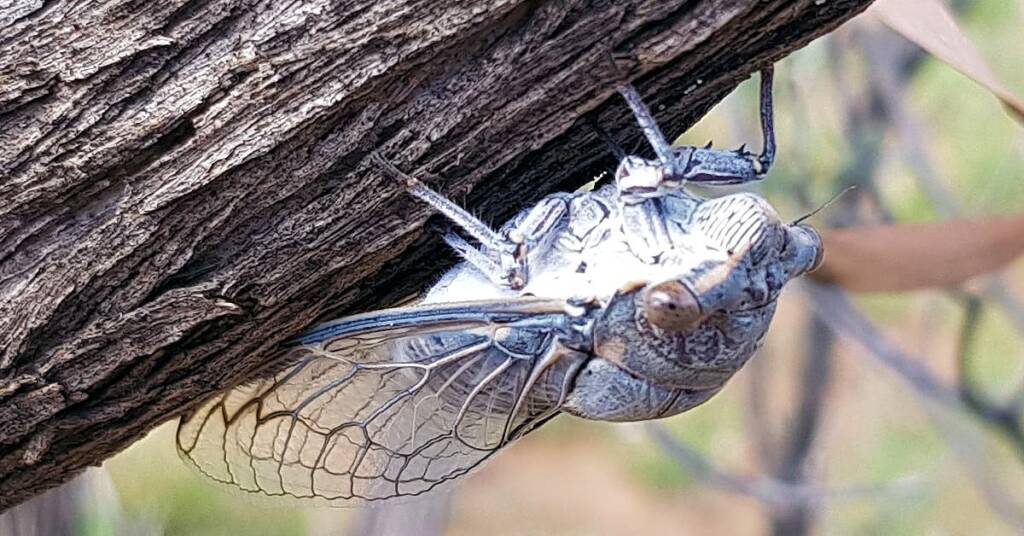
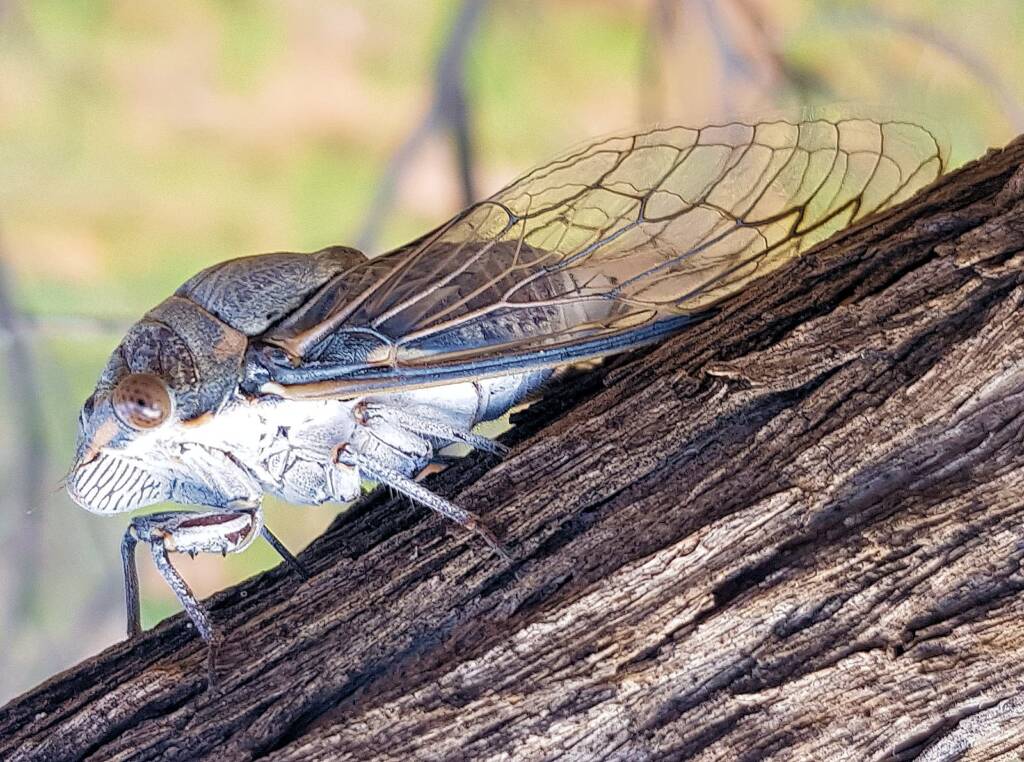
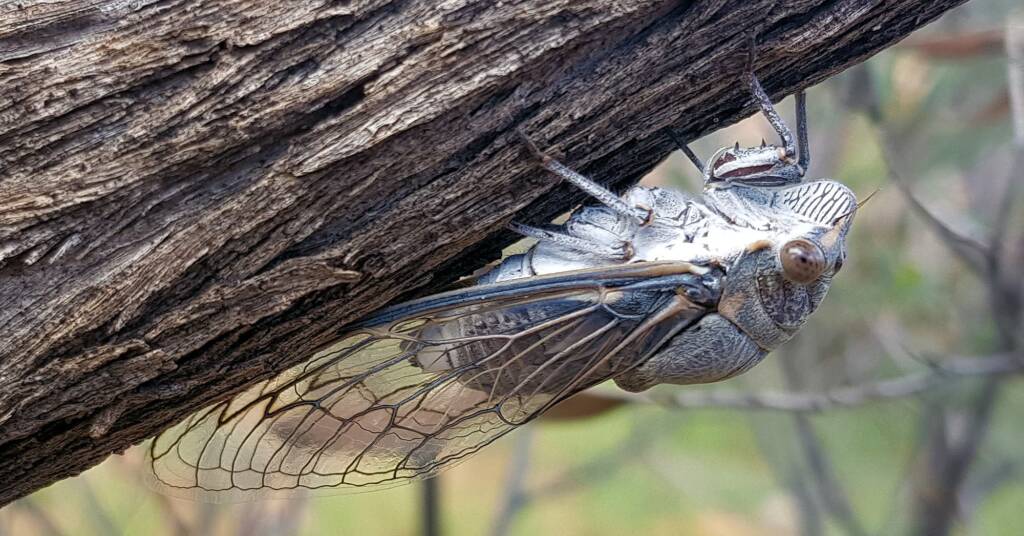
Adult cicadas can reply on a number of defense mechanisms for their survival. Aside from the mass emergence (known as predator satiation or predator saturation), some cicadas ‘play dead’ by tucking their legs tightly to the sides. Other cicada will fly away in a flash when it sense danger, with some known to eject fluid when flying away (referred to as ‘pisser’ being a cicada that squirts a liquid when disturbed). There are also cicada that blend in against the background that they are on, a form of camouflage, blending in often with the tree they rest against.
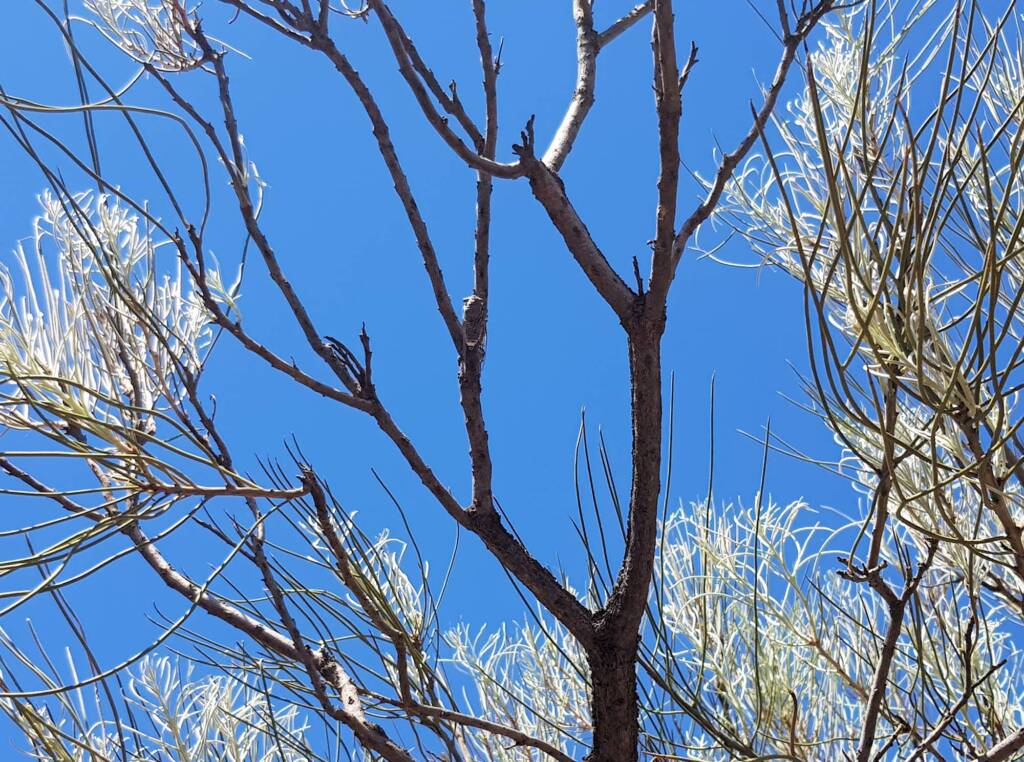
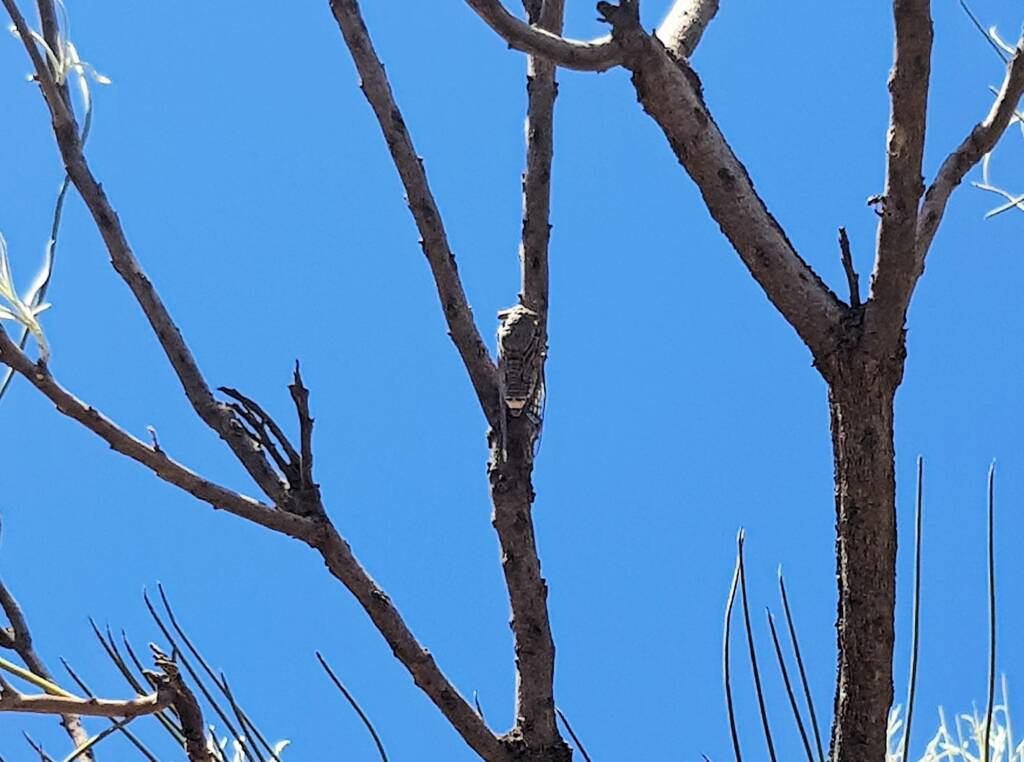
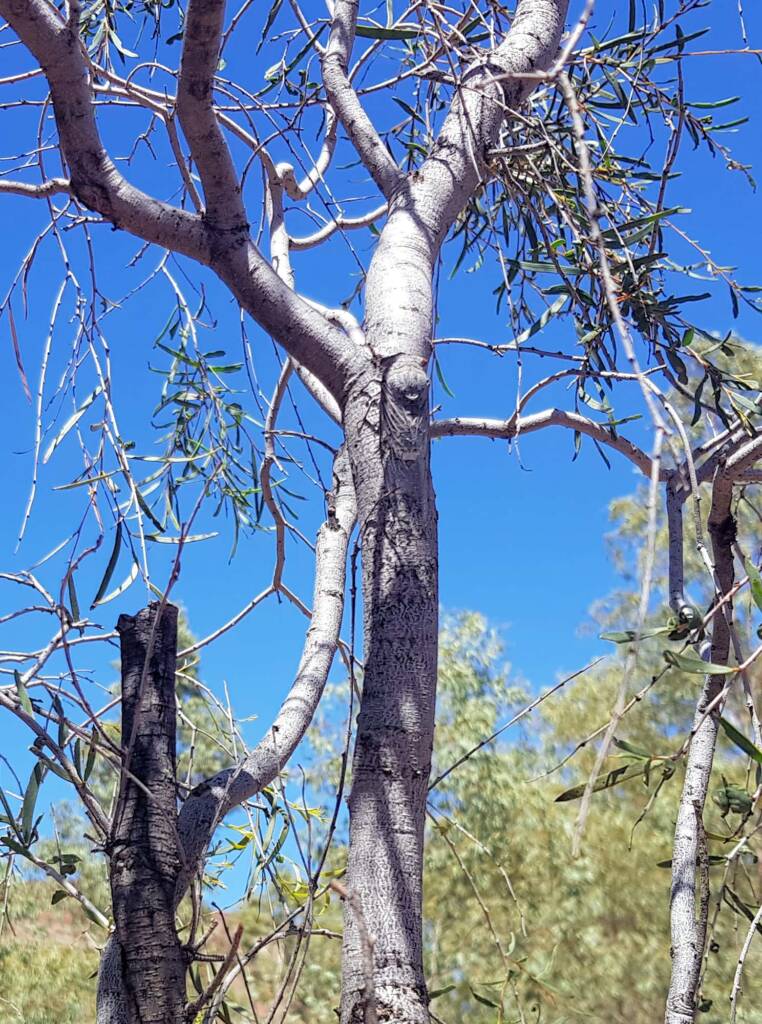
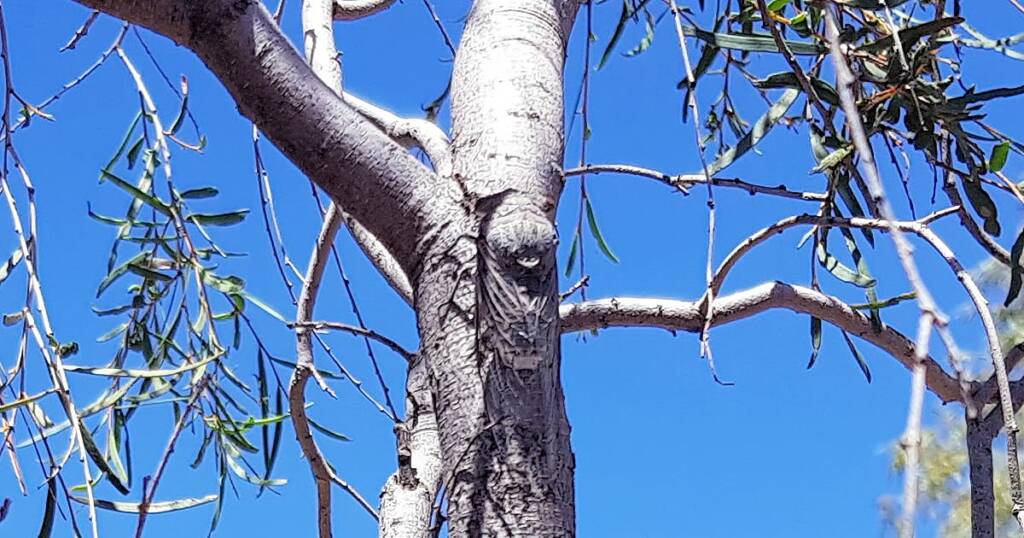
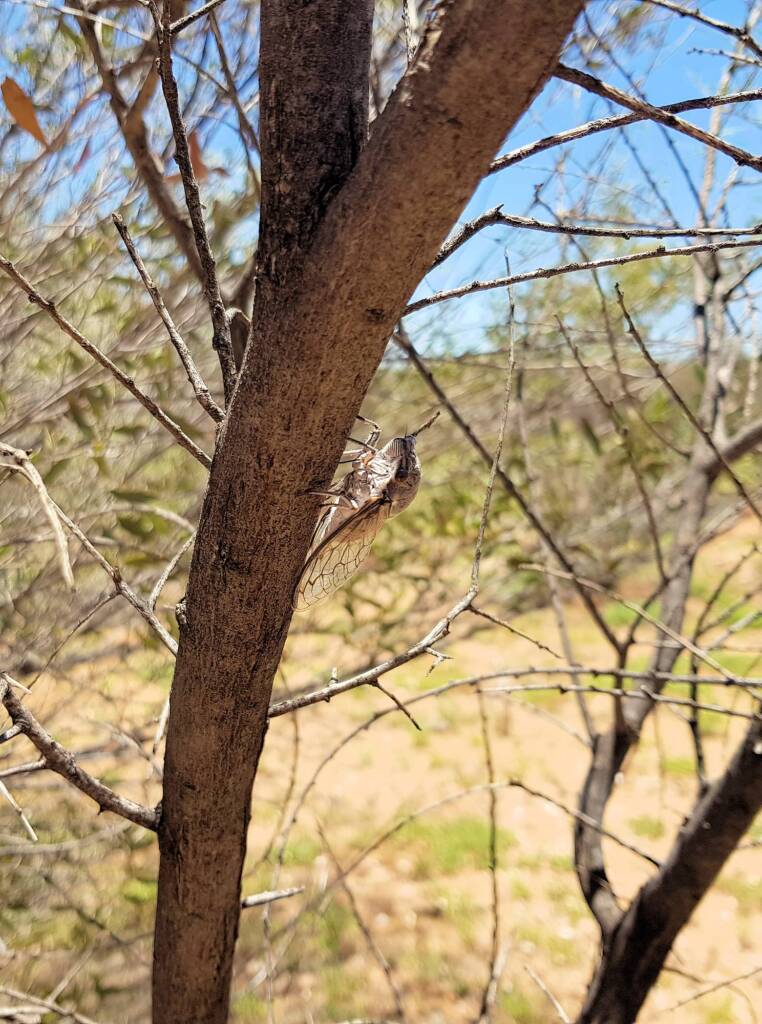
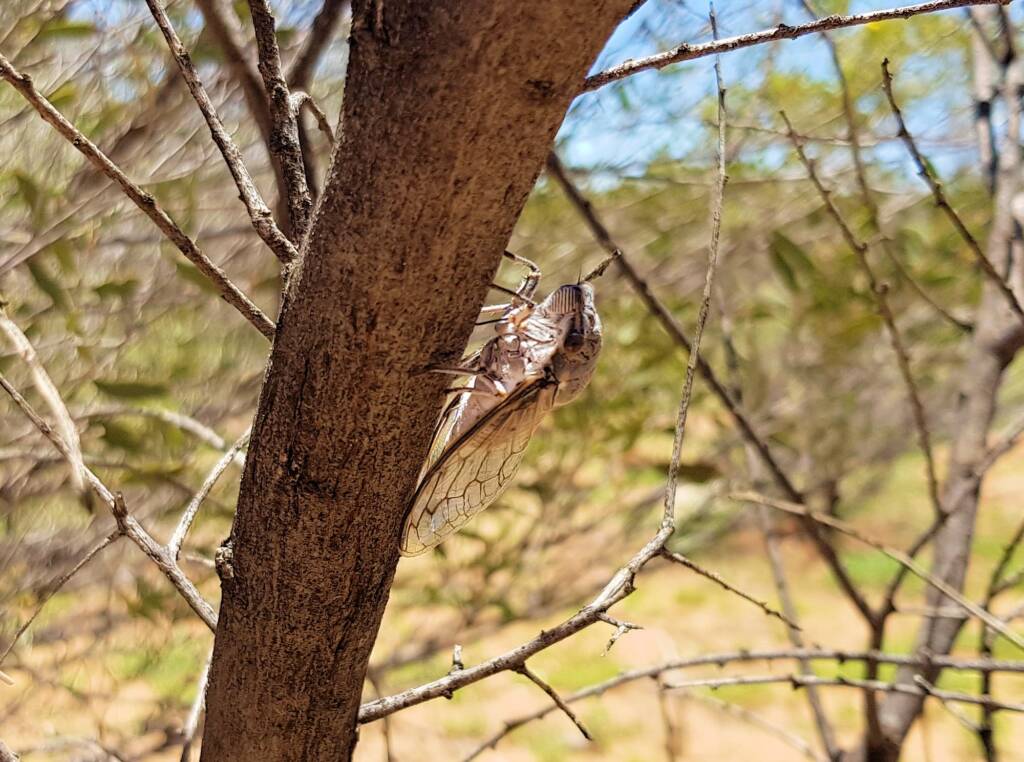
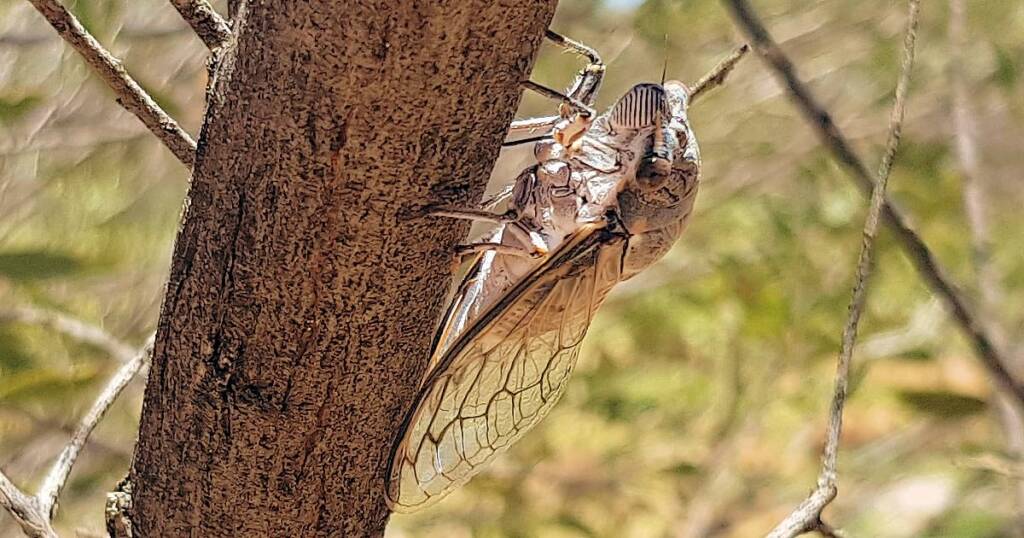
Check out our blog on The Camouflaged Pisser.
Common names
Cicadas are known by many names in Australia, with many of the common names given to cicadas being created by children. Some examples of their names include:
.
| Common Name | Scientific Name | Where Found |
| Black Prince | Psaltoda plaga | NSW, QLD |
| Bladder Cicada | Cystosoma saundersii | NSW, QLD |
| Bottle Cicada | Glaucopsaltria viridis | QLD |
| Brown Bunyip | Tamasa tristigma | QLD |
| Cherrynose, Whisky Drinker | Macrotristria angularis | NSW, QLD, SA, VIC |
| Corroboree Cicada, Green Whizzer | Macrotristria intersecta | NT, QLD, WA |
| Desert Screamer | Burbunga hillieri | NSW, NT, QLD, SA, VIC, WA |
| Double Drummer | Thopha saccata | NSW, QLD |
| Floury Baker | Abricta curvicosta | NSW, QLD |
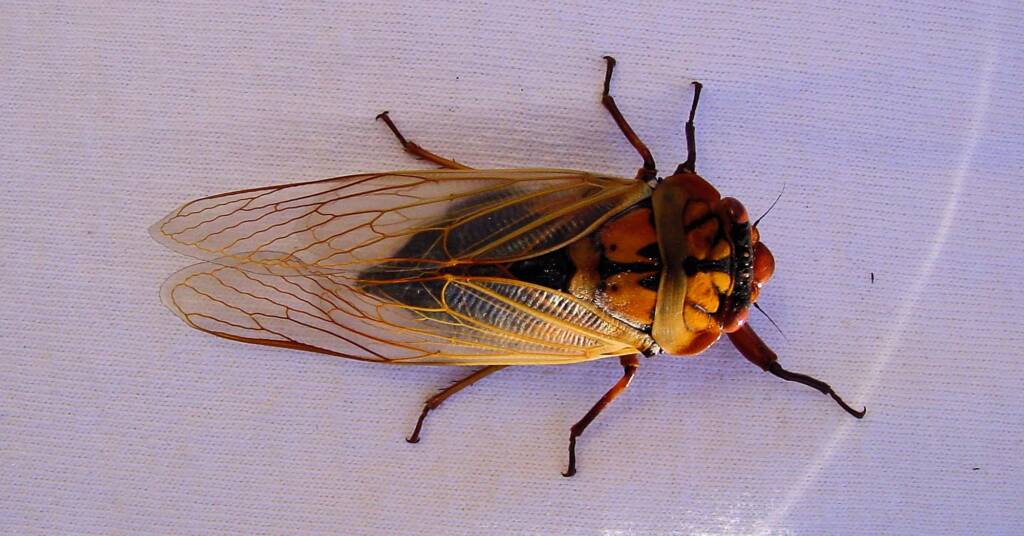
| Golden Drummer, Orange Drummer | Thopha colorata | NT |
| Great Montane Squeaker | Pauropsalta rubristrigata | QLD |
| Green Grocer, Yellow Monday, Masked Devil | Cyclochila australasiae | NSW, QLD, SA, VIC |
| Hairy Cicada | Tettigarcta crinita | NSW, VIC |
| Mangrove Cicada | Arunta interclusa | QLD |
| Northern Cherrynose | Macrotristria sylvara | QLD |
| Razor Grinder | Henicopsaltria eydouxii | NSW, QLD |
| Redeye | Psaltoda moerens | NSW, QLD, SA, TAS, VIC |
| Tasmanian Hairy Cicada | Tettigarcta tomentosa | TAS |
| Tiger Prince | Macrotristria godingi | QLD |
- Scientific classification
- Kingdom: Animalia
- Phylum: Arthropoda
- Class: Insecta
- Informal: Pterygotes
- Order: Hemiptera
- Suborder: Auchenorrhyncha
- Infraorder: Cicadomorpha
- Superfamily: Cicadoidea
- Family: Cicadidae
- Genus: Many
- Family: Tettigarctidae
- Genus: Tettigarcta
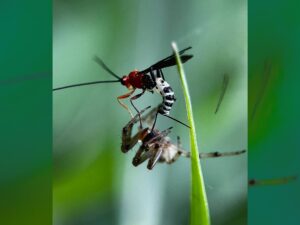
Cicada-Killer Wasps, Genus Exeirus
Found throughout Australia and sometimes mistaken for hornets because of their size, there are no hornets in Australia, Cicada-killer wasps hunt in trees for cicadas. Once found, the wasp stings and paralyses its victim, then the paralysed cicada is flown or dragged to the wasp’s underground nest where an egg is laid on it. The wasp then seals the nest, having provided its larva with fresh food. Sometimes the wasp returns to the exact spot where it captured its prey to feed on the sap that leaks from the hole made by the cicada in the tree, where it was feeding.
Cicada-killer wasps are up to 4 cm in length, and are found in urban areas, health, forest and woodlands habitat.
Footnote & References
- Australian Museum: Cicada – Superfamily Cicadoidea, Retrieved 21 October 2020, https://australian.museum/learn/animals/insects/cicadas-superfamily-cicadoidea/
- The Wonderful World of Insects: The Singing Cicadas, Retrieved 12 November 2019, https://www.earthlife.net/insects/cicadidae.html
- Australian Museum: Cicada-killer wasps, Retrieved 28 Feb 2019, https://australian.museum/learn/animals/insects/cicada-killer-wasps/
- Citizen scientists urged to answer the call and record where can you find the loudest cicadas. By Luke Wong, ABC Radio Sydney, 19 Dec 2017, https://www.abc.net.au/news/2017-12-19/loudest-cicada-sydney-australia-summer-insects-sounds/9268656
- Cicadas having ‘bumper season’, leaving ears ringing and communities deafened – Stand outside on a warm summer’s day in Orange, in the New South Wales Central West, and you will struggle to hold a conversation. Or hear when your coffee is ready. By Mollie Gorman, ABC Central West, 1 Dec 2020, https://www.abc.net.au/news/2020-12-01/cicada-boom-in-nsw-has-ears-ringing/12934490
- Cicadarama, www.cicadarama.square.site / www.facebook.com/cicadarama
- The Great Cicada Blitz (NSW, Australia), iNaturalist, https://www.inaturalist.org/projects/the-great-cicada-blitz-nsw-australia
- Cicadas of Australia, iNaturalist, https://www.inaturalist.org/projects/cicadas-of-australia
- Typical Cicadas (Family Cicadidae), iNaturalist, https://www.inaturalist.org/taxa/50186-Cicadidae#Subfamilies
- Cicadas, (Superfamily Cicadoidea), iNaturalist, https://www.inaturalist.org/taxa/50190-Cicadoidea
- Loud, incessant, and indescribable: cicadas and their names, by Julia Robinson, 2 March 2016, Ozwords, http://ozwords.org/?p=7701
CicadaCicada Index Desert Screamer (Burbunga hillieri) Double Drummer (Thopha saccata) Floury Baker (Aleeta curvicosta) Green Grocer (Cyclochila australasiae) Masked Devil (Cyclochila australasiae) Orange Drummer (Thopha colorata) Razor Grinder (Henicopsaltria eydouxii) White Drummer (Arunta perulata)
InsectsInsects Index Insects Life Cycle… Bees Beetles Blattodea Butterflies Coleoptera Cicada Crabronidae Diptera Dragonflies & Damselflies Formicidae Hemiptera Heteroptera Mantodea Moths Neuroptera Orthoptera Orthopteroid Processionary Caterpillar Stink Bugs, Shield Bugs and Allies Wasps Water Scorpion (Laccotrephes tristis) Witchetty Grub