
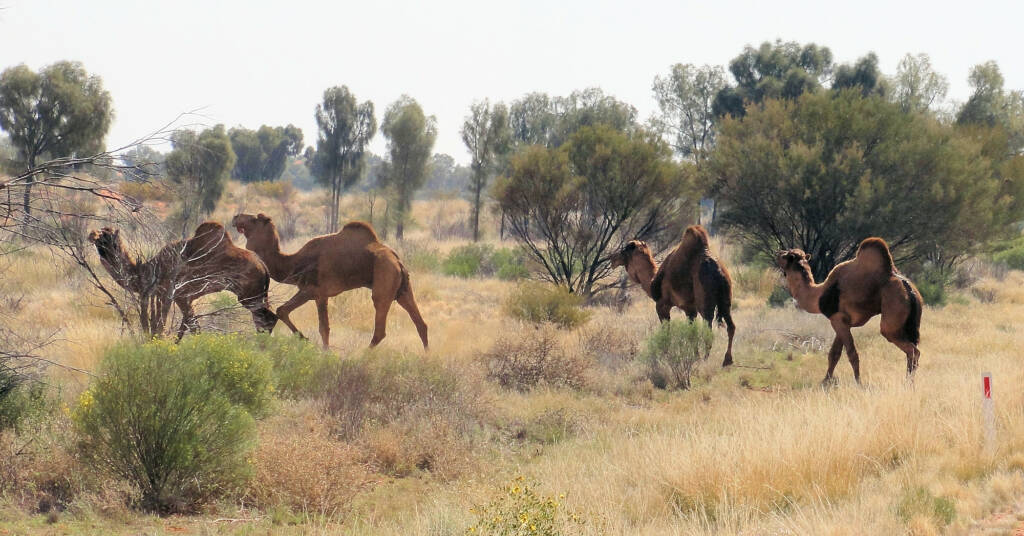
A study was done back in 2001 that there were approximately 300,000 feral camels Australia wide (Dr Glenn Edwards, Senior Scientist, Northern Territory Parks and Wildlife Commission1). In 2005, the number had increased to 700,000, with the number expected to double in eight years, if the population was allowed to continue unchecked2.
There are two types of camels in the world: the Arabian camel (also called dromedary, having one hump) and the Bactrian camel (with two humps), although there are cross bred camels between the species, with the camels used widely in Asia.
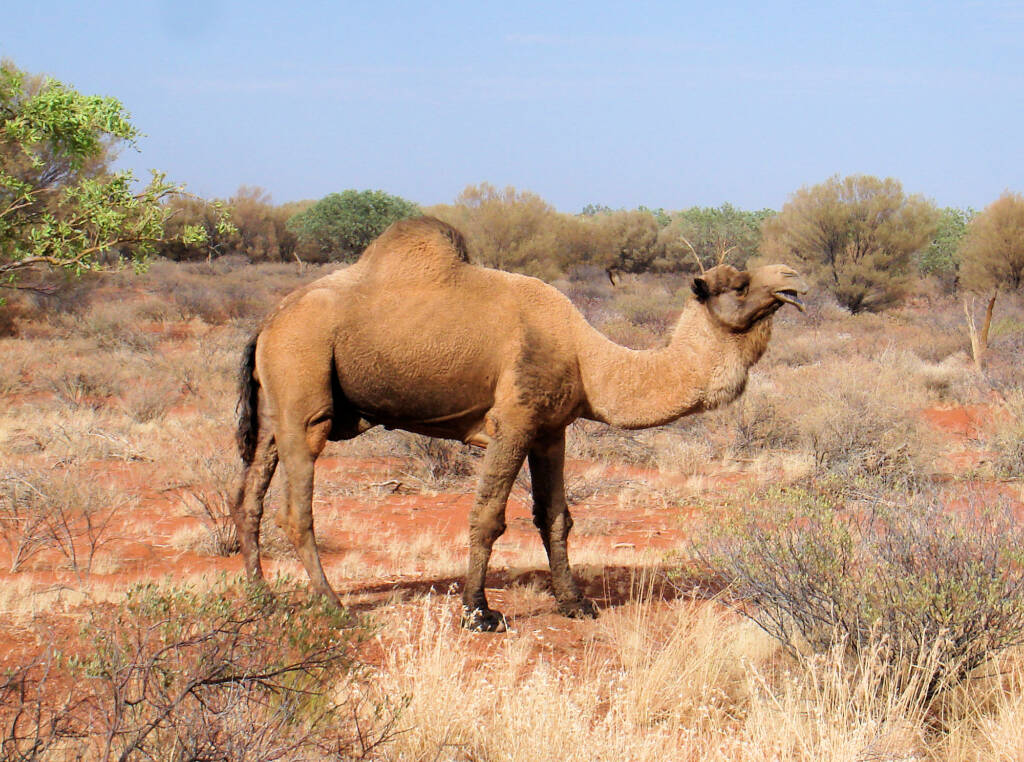
Both camels were originally native to the dry desert regions of Asia and northern Africa, living anywhere between 30 to 50 years. Of the Dromedaries, most of the remaining 13 million around the world are descendent of domesticated stock and can be found in countries including Botswana, India, Namibia, Somalia, South Africa and Australia.
The first dromedary camel was imported into Australia in 1840 in an expedition into the northern part of South Australia. The camel was destroyed after accidentally causing its owner’s death, but camels continued to be imported into Australia for exploration and station work in the harsh arid environment of the Australian outback. The ill-fated Bourke and Wills expedition used camels in 1860. In 1866, camel studs were set up by Sir Thomas Elder at Beltana Station in South Australia, providing high-class breeders for the growing camel population throughout Australia.
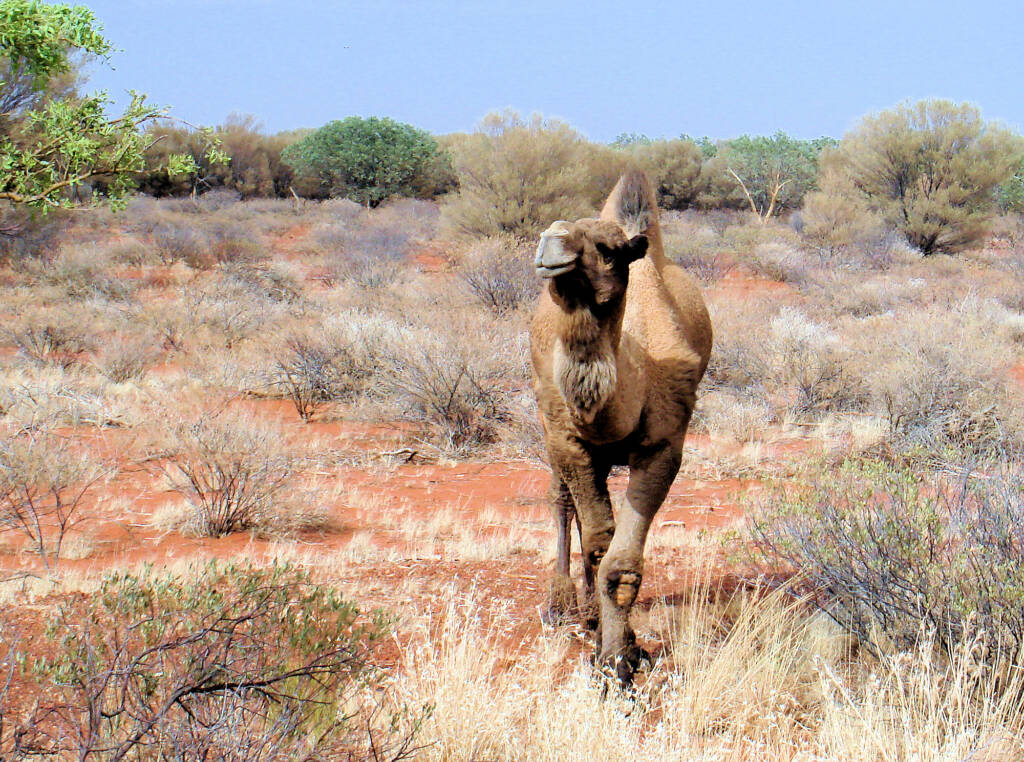
Camel teams became a common sight, when up to 70 camels with 4 Afghans could be seen travelling the desert outback. Camels were used in the construction of the Overland Telegraph Line, carried pipe sections for the Goldfields Water Supply, the supply of goods to inland towns, mining camps, sheep and cattle stations and Aboriginal Communities. They were used to haul wool, as well as in the construction of dams and plough work on farms, although they were mainly used in the arid parts of Australia.
With the introduction of motorised transport in the 1920’s, the days of ‘working camels’ were numbered. Camels were released into the wild, and quickly established themselves in an environment that suited them to the ground. Visitors today can often seen camels roaming throughout Central Australia in numbers that are said to exceed 500,000. Such is the number that they are often culled.
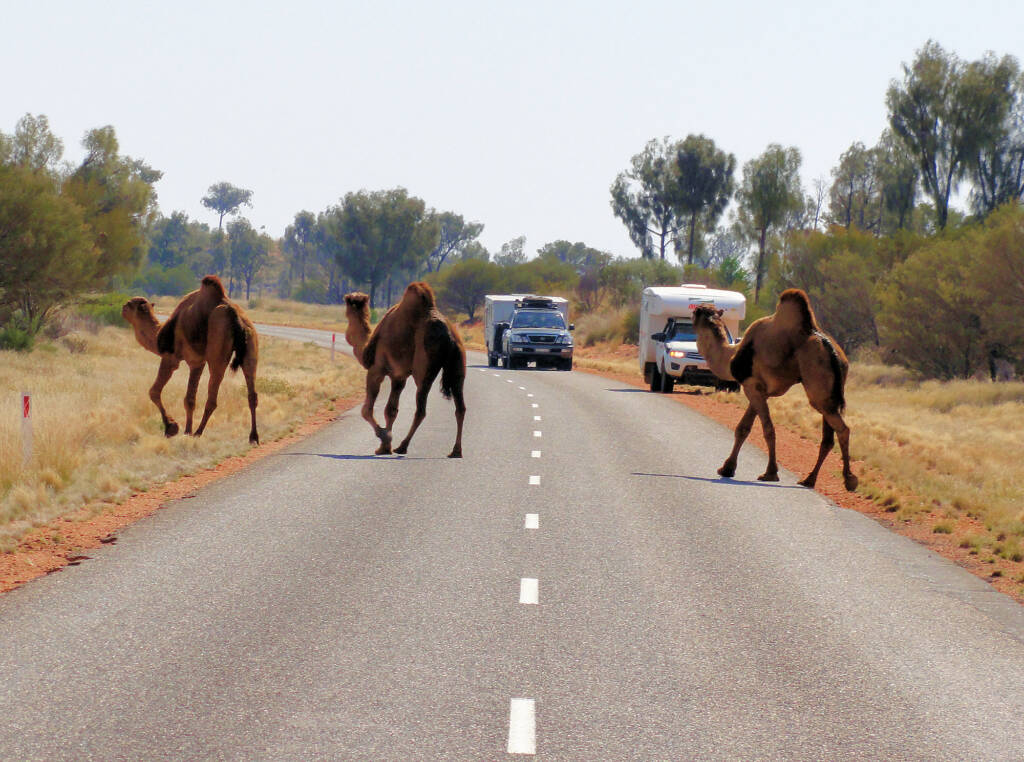
As well as a mode of transport and beast of burden, camels have been used for milk and meat. It was in 1988 at the Wamboden Abattoir in Alice Springs that camels were slaughtered for human consumption. This has since ceased, although an abattoir at Peterborough in South Australia now processes camels for the domestic and export consumption3.
Camel wool (down) is used in many countries with camels, being spun into yarn for knitting.
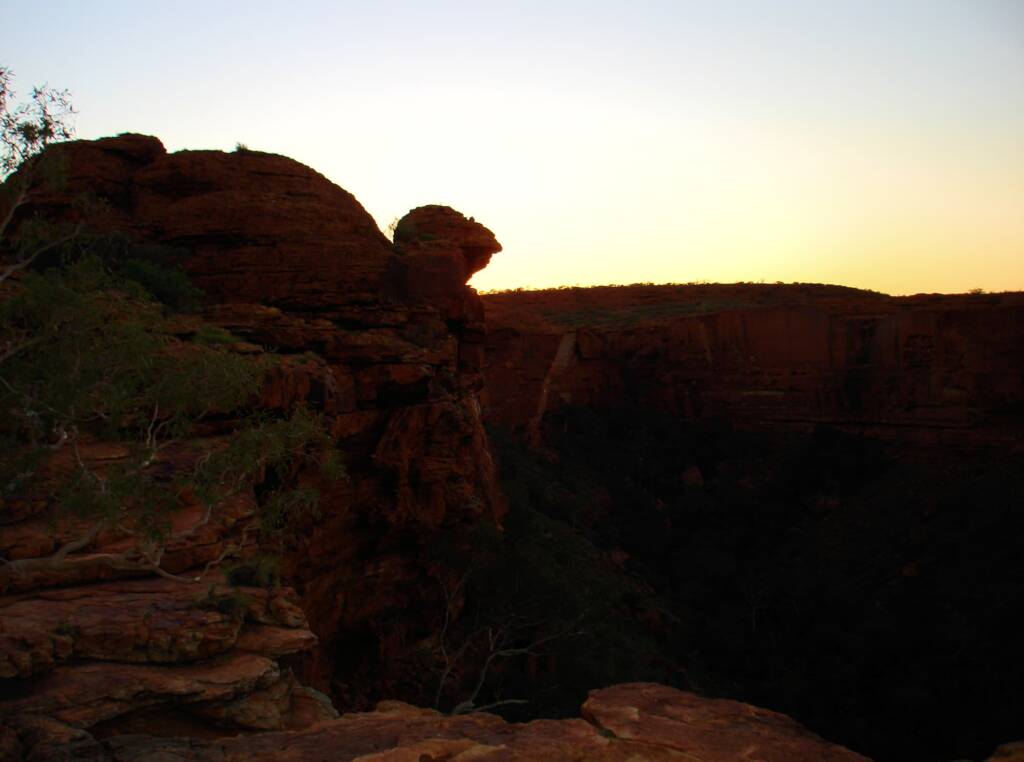
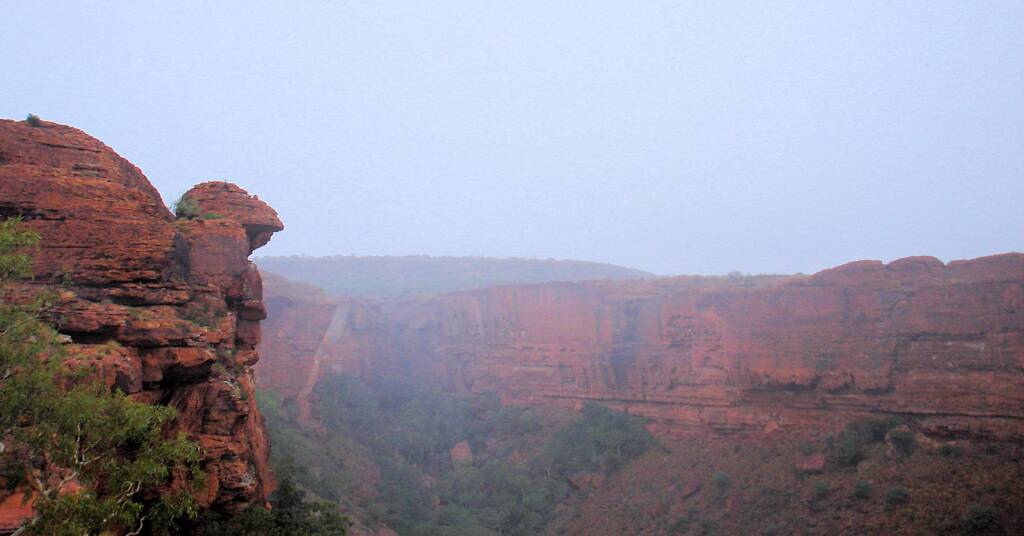
There are some camel related things to see including “Camel Lookout” on the Kings Canyon Rim Walk…
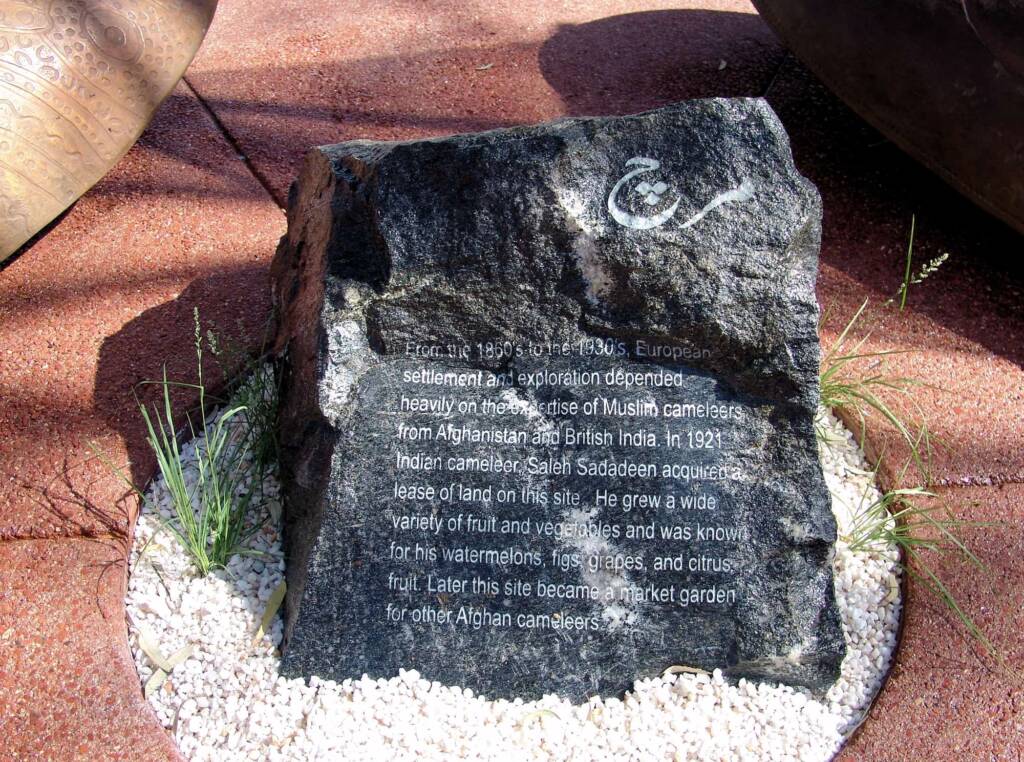
An historical nod to the importance of the Afghan Cameleers in opening up the heart of Australia, at the Gathering Garden in Alice Springs…
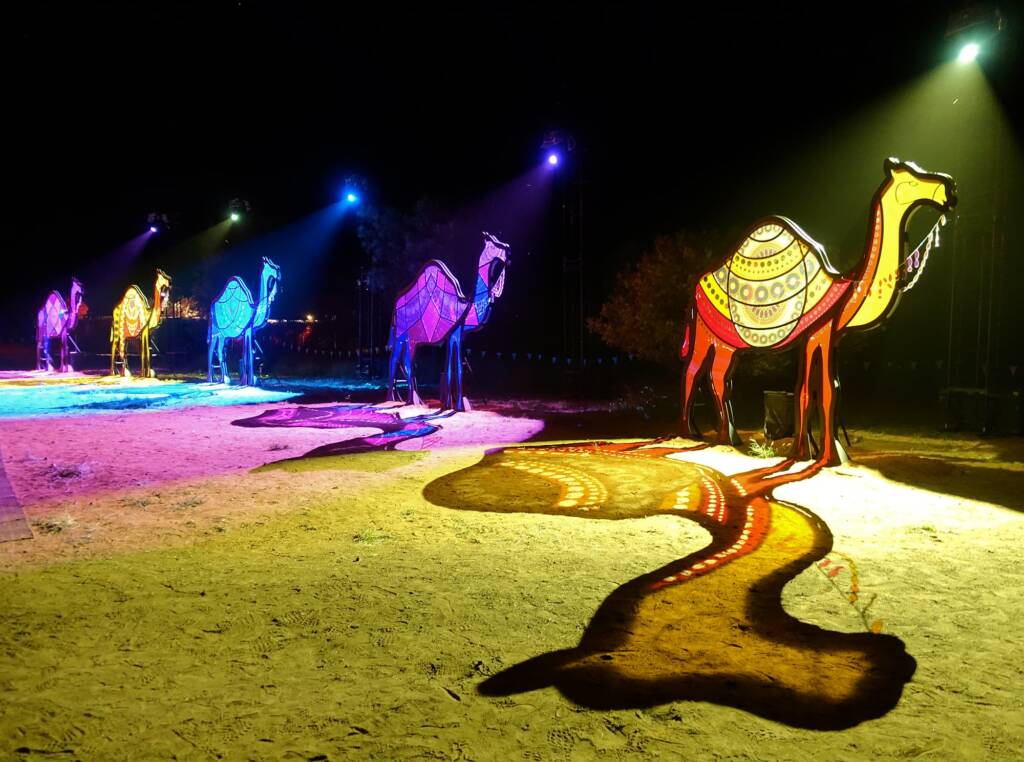
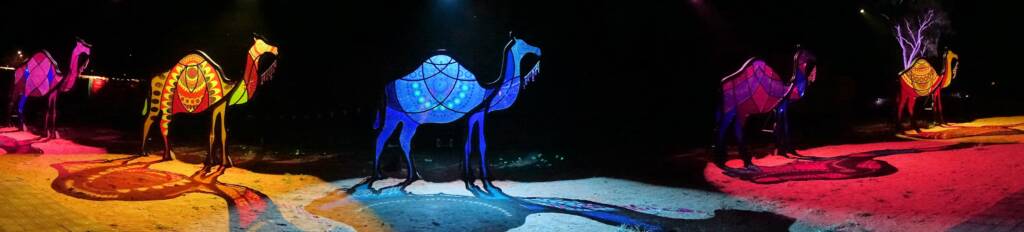
For those able to enjoy the Parrtjima Festival, the camels from the Future Kultcha – Merging Kultcha event in 2021, were impressive…
Check out our Uluru Australian Camel information.
- Scientific classification
- Kingdom: Animalia
- Phylum: Chordata
- Class: Mammalia
- Order: Artiodactyla
- Family: Camelidae
- Genus: Camelus
- Species:
Camelus bactrianus
Camelus dromedarius
Footnote & References
- Wildlife Research Management and Conservation CSIRO: Population trend of feral camels in the Northern Territory, Australia (aerial survey between 20 August and 12 October 2001), former link address: www.publish.csiro.au/paper/WR03073.htm
- ABC News Online: National plan sought to manage camel population, former link address: www.abc.net.au/news/newsitems/200504/s1344199.htm
- Department of Water, Land and Biodiversity Conservation (Government of South Australia): Policy on Camels in South Australia (2003), former link address: www.dwlbc.sa.gov.au/files/lbsap_CamelPolicy_2003_nrm.pdf
- Wildlife Research Management and Conservation CSIRO: Population trend of feral camels in the Northern Territory, Australia (aerial survey between 20 August and 12 October 2001)
- The Camel Book, 2006; Moloney J, Mooney M, Tangentyere Land & Learning Program Staff, Tangentyere Landcare, Ninti One Limited; https://www.nintione.com.au/resources/rao/the-camel-book/
- Australian Government / Department of Agriculture, Water and the environment, search terms: feral camel, https://www.environment.gov.au/
FaunaFauna Index Bats (Chiroptera) Birds Camel Chilopoda Crustacea Dingo Frogs Gastropoda Horse Hyrtl’s Catfish Insects Macropodidae Mammalia Marsupials Monotreme Reptiles Rodentia Class Mammalia Spiders Spinifex Hopping Mouse