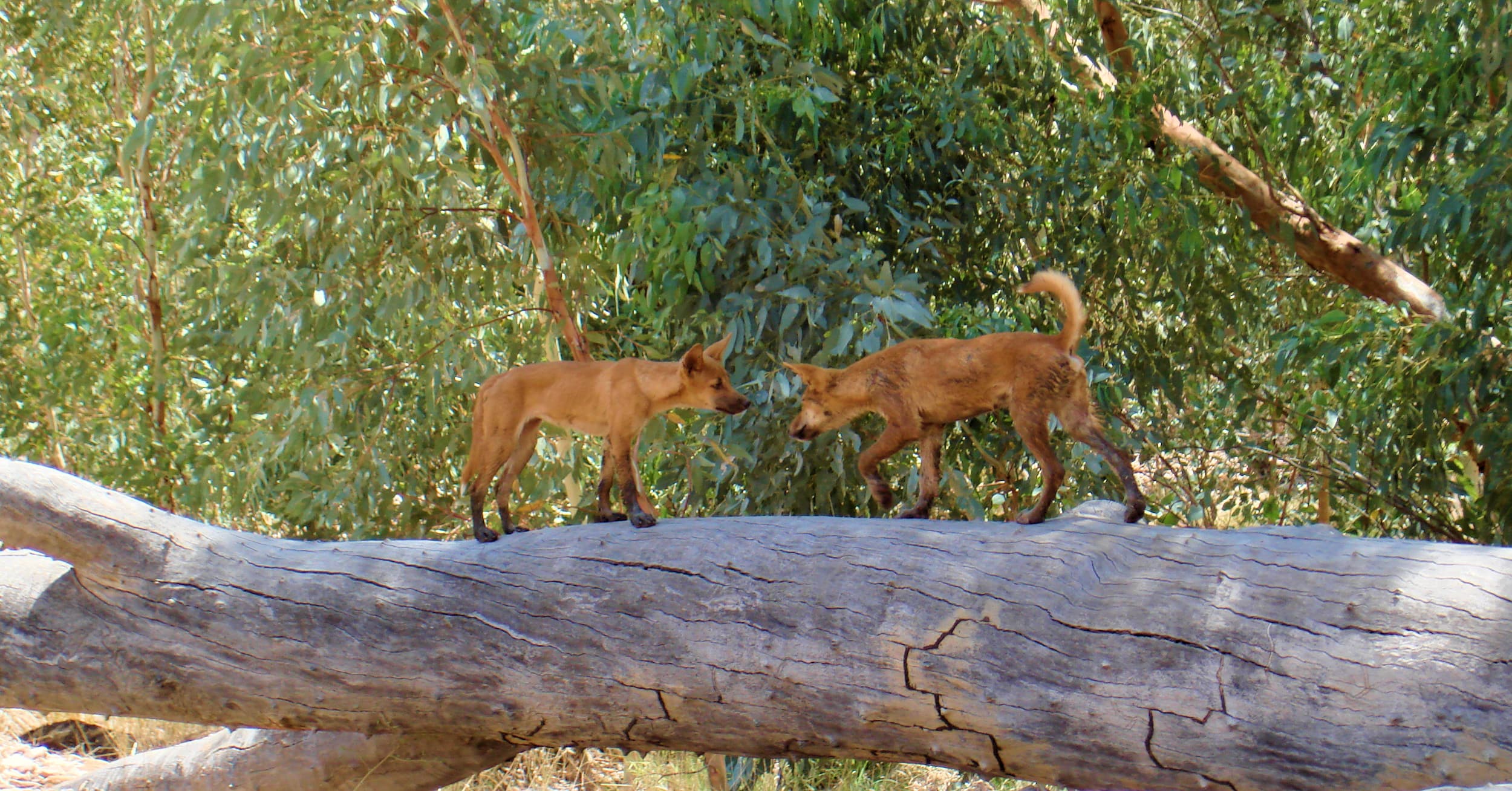
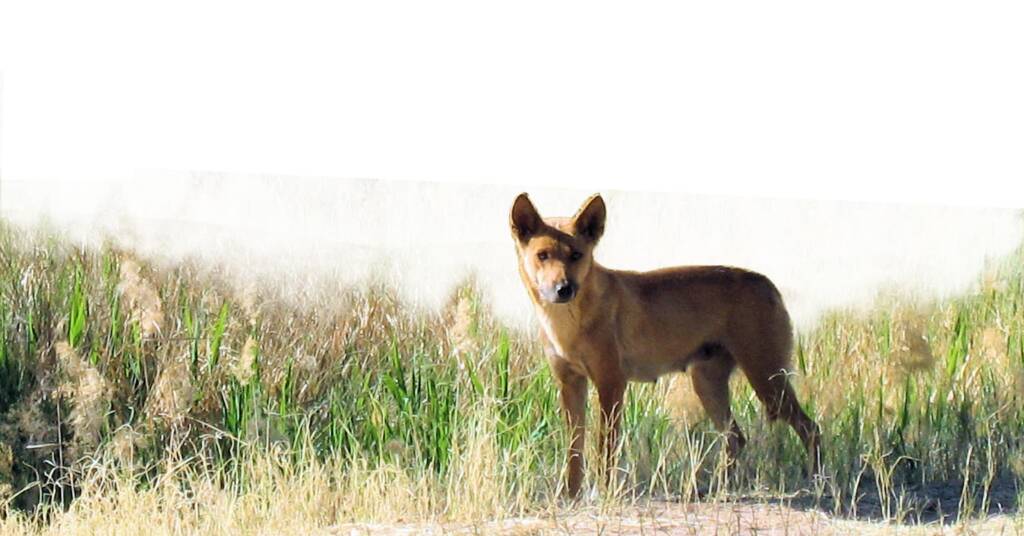
Dingo | Dingo pup ◦
Canis familiaris (formerly Canis dingo and Canis lupus dingo) belong to a group of primitive dogs characterised by short coats, erect ears, characteristic skull shape and teeth. They breed once a year, unlike domestic dogs that breed twice a year.
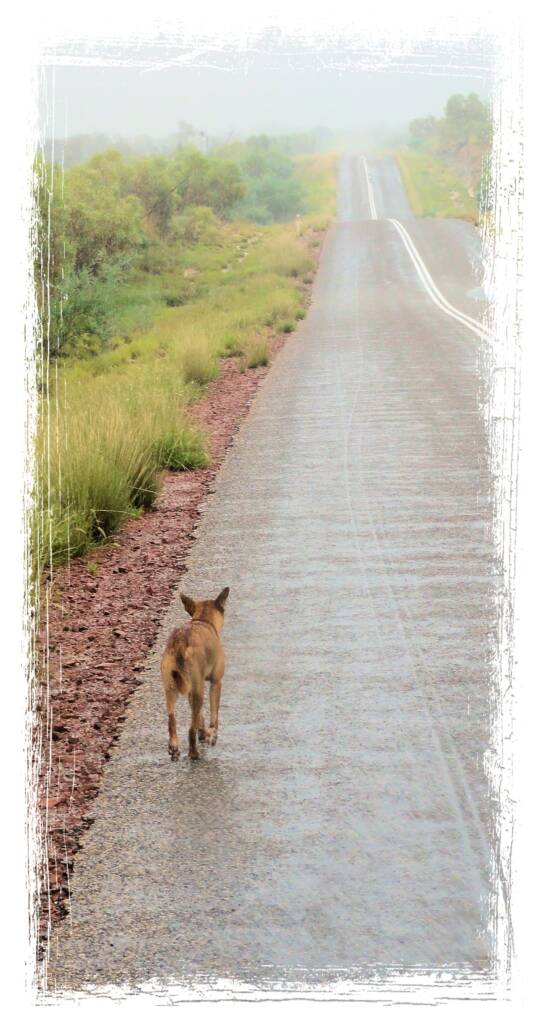
It was thought that the dingo was probably descended from the Indian Wolf (Canis lupus pallipes), and is commonly thought of as an Australian wild dog, although it is now considered its own species.
Whilst its taxonomic classification is being debated, it is described as a medium-sized canine, with a lean body adapted for speed, agility and stamina.
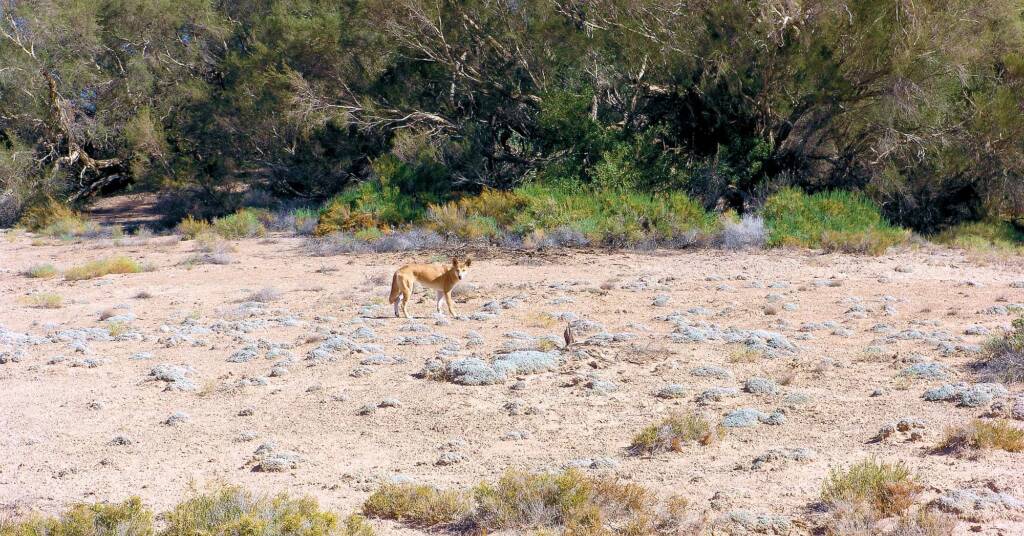
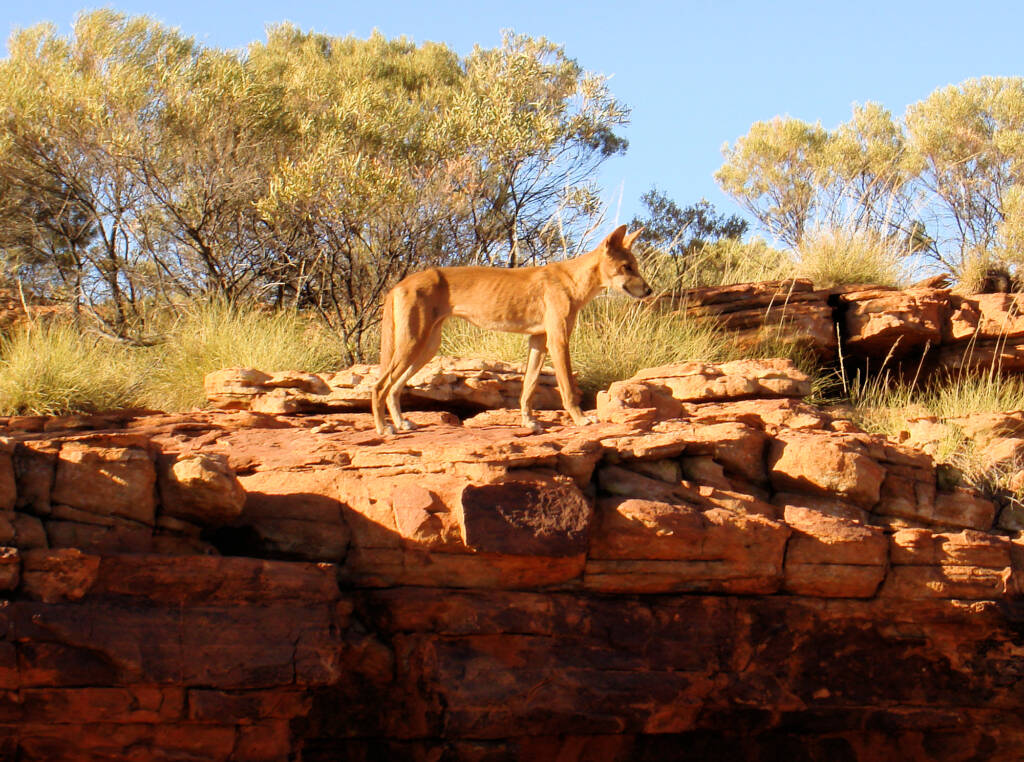
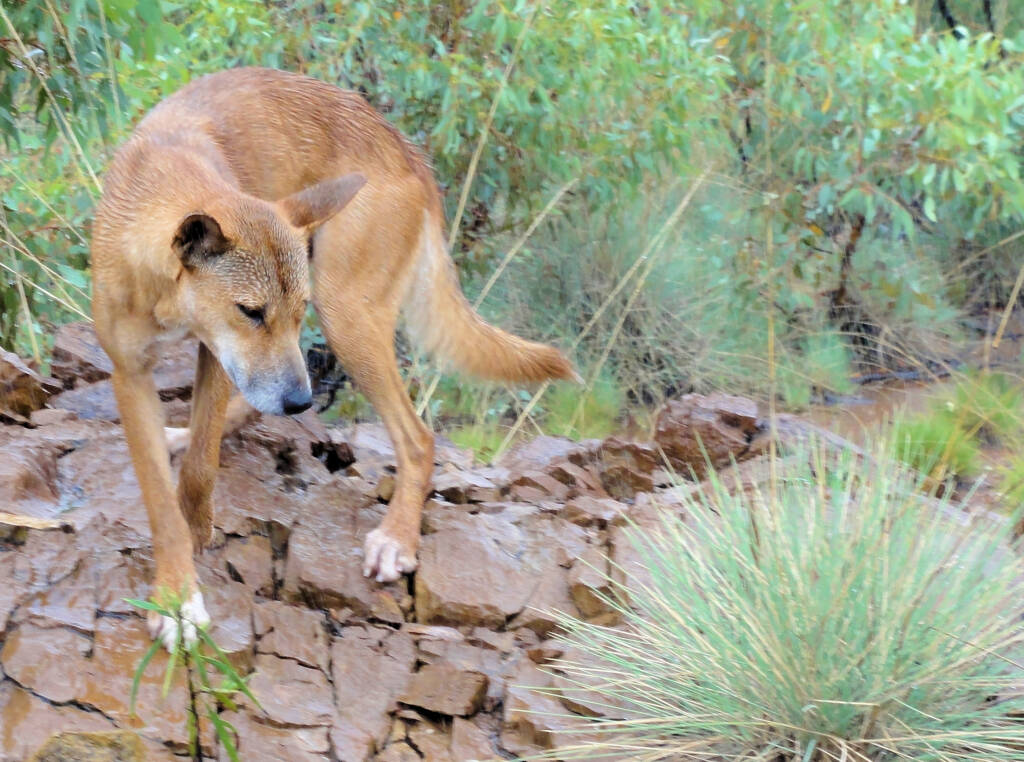
The dingo are described as having a ginger colouration, with a whitish chest and paws, although there are three main colourations, ginger or tan, black and tan, or cream white colour.1,2 They have a flatish, tapering tail, that is carried low, curving over the back under certain circumstances. The dingoes in the alpine regions have different coloration to those elsewhere and have a more bushy tail. In Central Australia most pure-breed dingoes are of the yellow form, with about one in twenty being coloured black and tan.
The dingo and domestic dog can successfully interbreed. Dingoes whose colouration include streaks of grey, brown or patchy colouration indicate cross breeding.
The dingo differ from domestic dog in that they rarely bark. They tend to howl, particularly at night, dust and dawn. The howling appears to be their form of communication to attract pack members or to ward off intruders.

The dingo is found throughout most of mainland Australia, preferring habitats that include forest or woodlands merging with grassland. They are also found in the arid habitats of Central Australia, although this is only where there is fresh water available. They are known to hang around Alice Springs, and have been sighted within town (there have been reported attacks on people’s pets). Other regions where they have been sighted are:
- MacDonnell Ranges (NT)
- Finke Gorge National Park (NT)
- Dalhousie Springs (SA)
- Kings Canyon (NT)
Other locations include:
- Lake Eyre, SA
- Nadgee Nature Reserve, NSW
- Napier Range, WA
- K’gari (Fraser Island), QLD
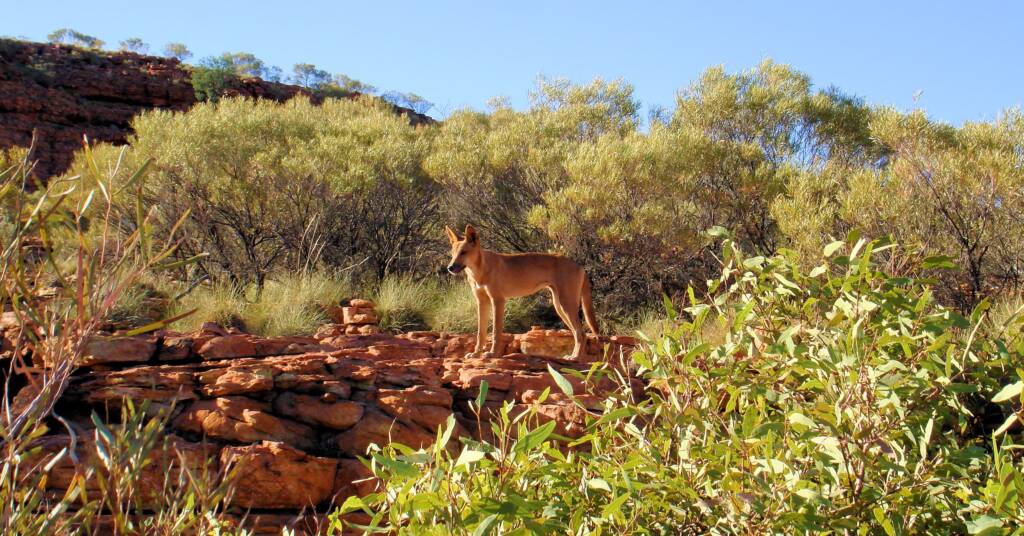
It is though that the dingoes of K’gari (Fraser Island) is the purest strain of the dingo Australia. Here they freely roam the rainforest, bushland and beaches and have become quite accustomed to the presence of humans, both locals and tourist. Indeed it is this familiarity with humans and the tendency of some tourists to feed them, that causes problems. Once they associate people with food, they may attack those whom they perceive as weaker than themselves, that includes young children and babies. Some people have become blasé about the fact that dingoes are wild animals, and have been ignoring the signs to not feed them, resulting in a number of attacks, resulting not only in people getting hurt, but also in the dingoes being put down.
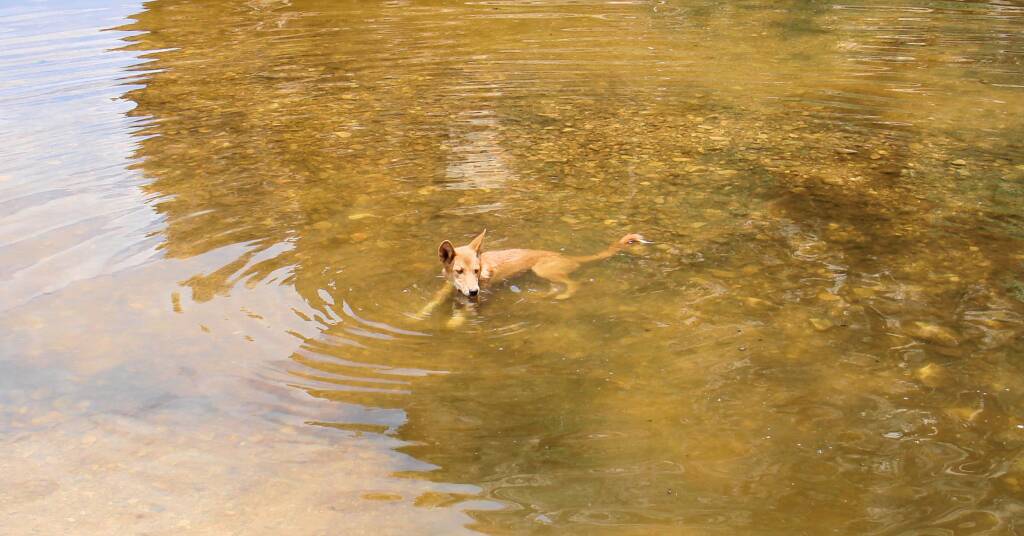
The Queensland Parks and Wildlife Service have information about the subject of dingoes and safety:
More recent genetic studies have found that the dingo have an Asian ancestry. Whilst the arrival date in Australia is unclear, it is estimated that the dingo ancestors were brought here by humans some c.5000 years ago, possibly as food and/or traded commodity (for further information check out some of our listed references below).
The name ‘dingo’ comes from the language of the Eora Aboriginal Tribe, who were the original inhabitants of the Sydney area in New South Wales, Australia.

The Dog Fence
In Australia there is a fence stretching some 5,400 km from Queensland’s Darling Downs, borders part of New South Wales and to the Great Australian Bight near Fowlers Bay in far-western South Australia, which was built to keep the dingoes out of grazing lands. Built in the 1950s, this man made structure is known as the ‘Dog Fence’ and is still being maintained today. One problem the fence faces is the continual trampling of the fence by wild camels.
Some places you can view the fence from include Marree and The Breakaway Reserve near Coober Pedy.
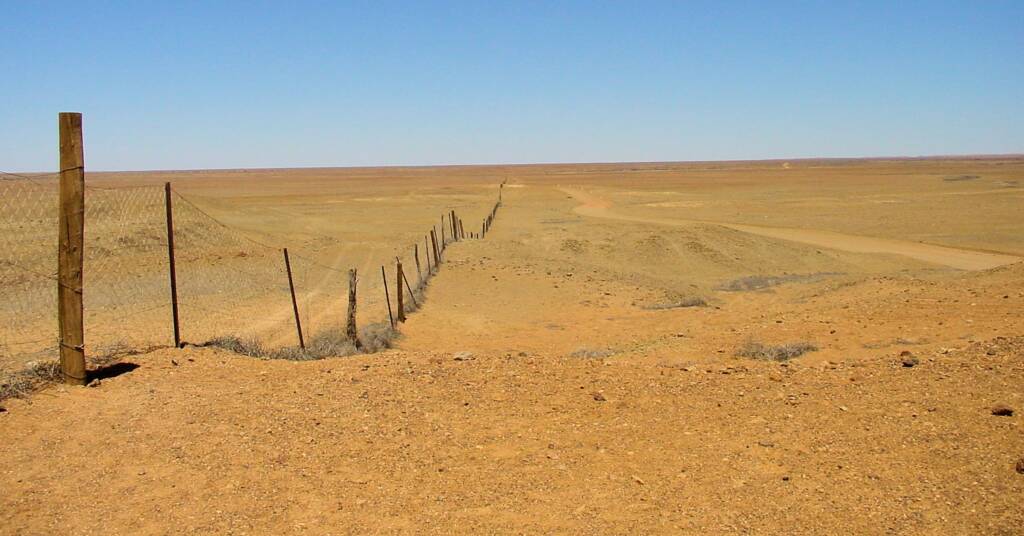
The dog fence is now being upgraded with a new fence. Some of the fence are more than 100 years old and over time have been damaged by native and feral animals, weather events and sand erosion. Work commenced in May 2020 of the rebuild of the 1,600 km fence.
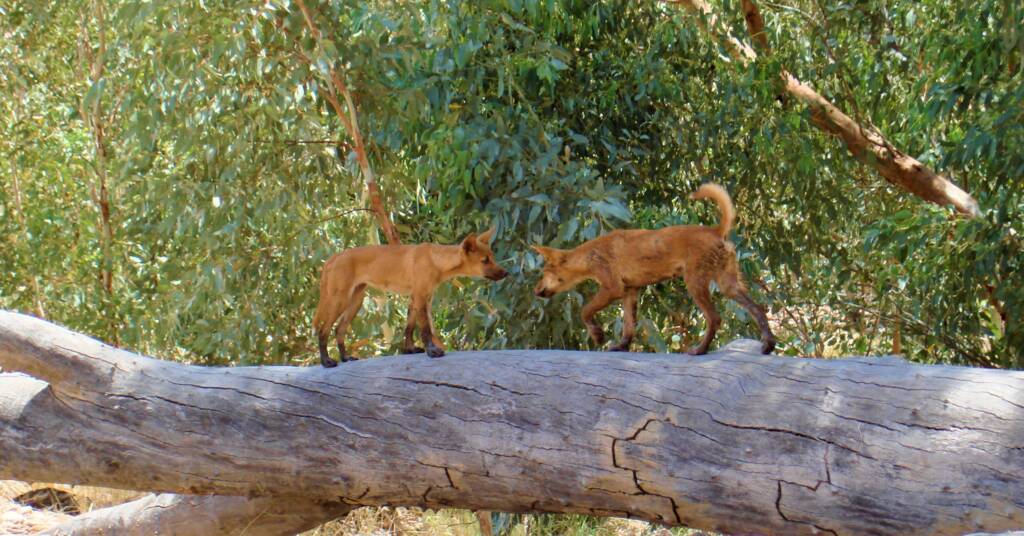
Note: Did you know that the ‘rabbit-proof fence’ referred to in the movie of the same name, is actually the ‘dog fence’. However the ‘rabbit-proof fence’ refers to an 800 km fence built in Western Queensland in the late 1880s in an attempt to prevent the rapidly expanding rabbit population from spreading further north. Part of the fence ran north from the South Australian-Queensland border 20 km west of Eyre Creek to a point 240 km north of Poeppel Corner in the Simpson Desert. It of course failed to stop the rabbits from spreading and now lays half buried by sand, marking part of the Queensland park’s eastern border.
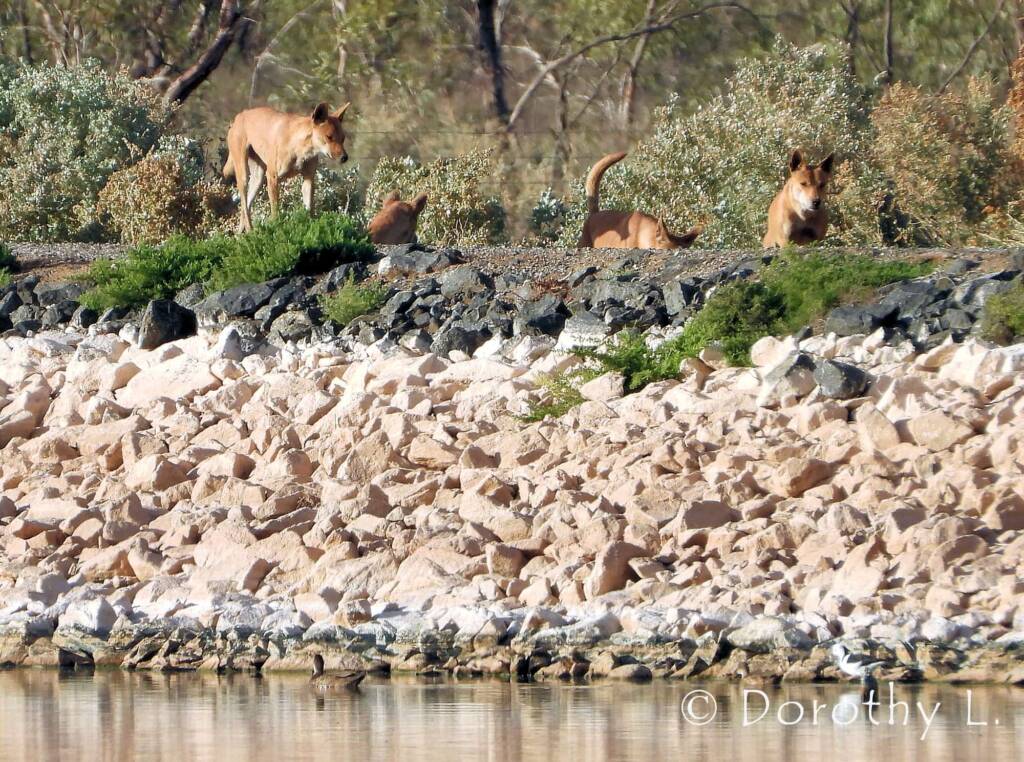
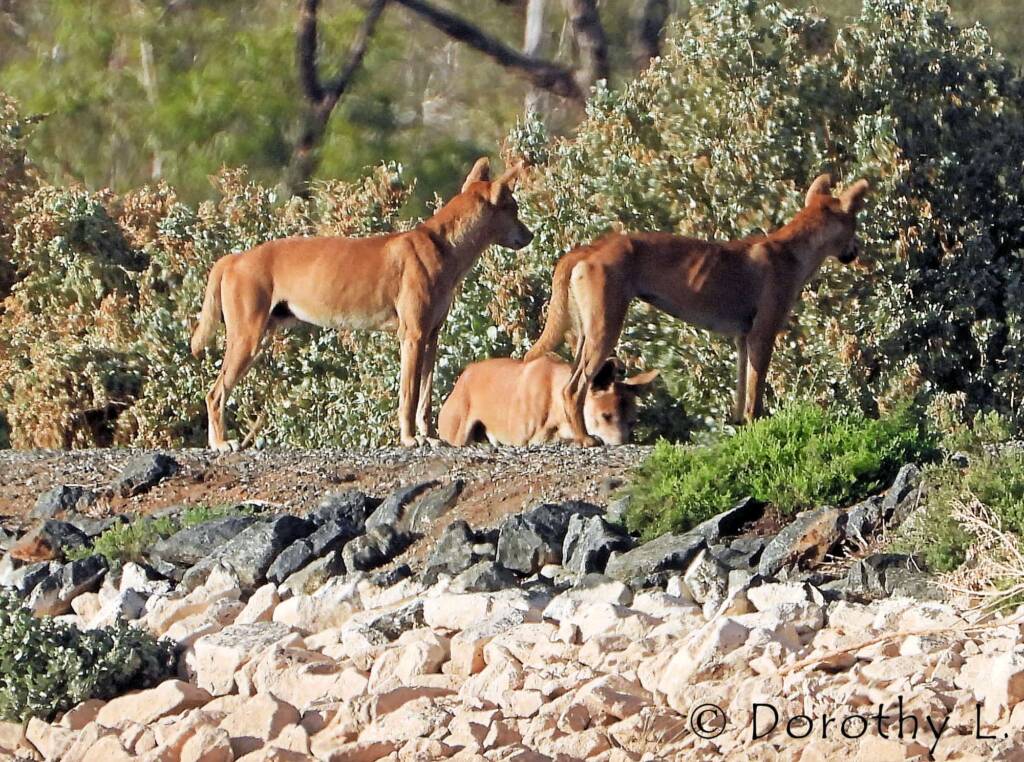
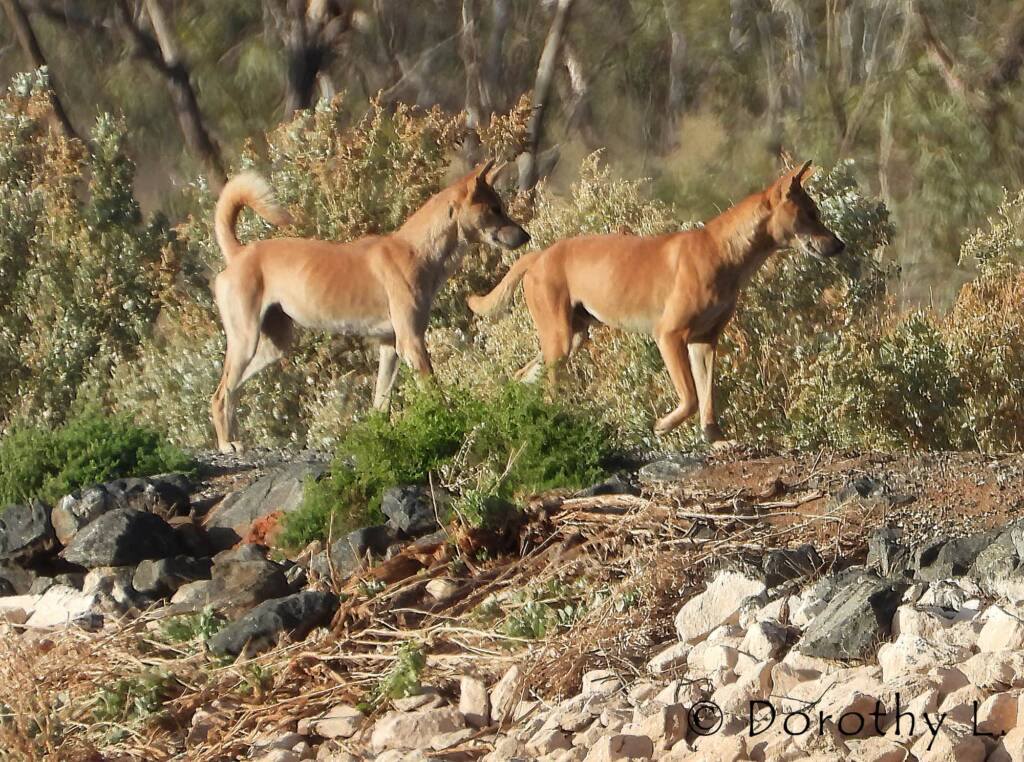
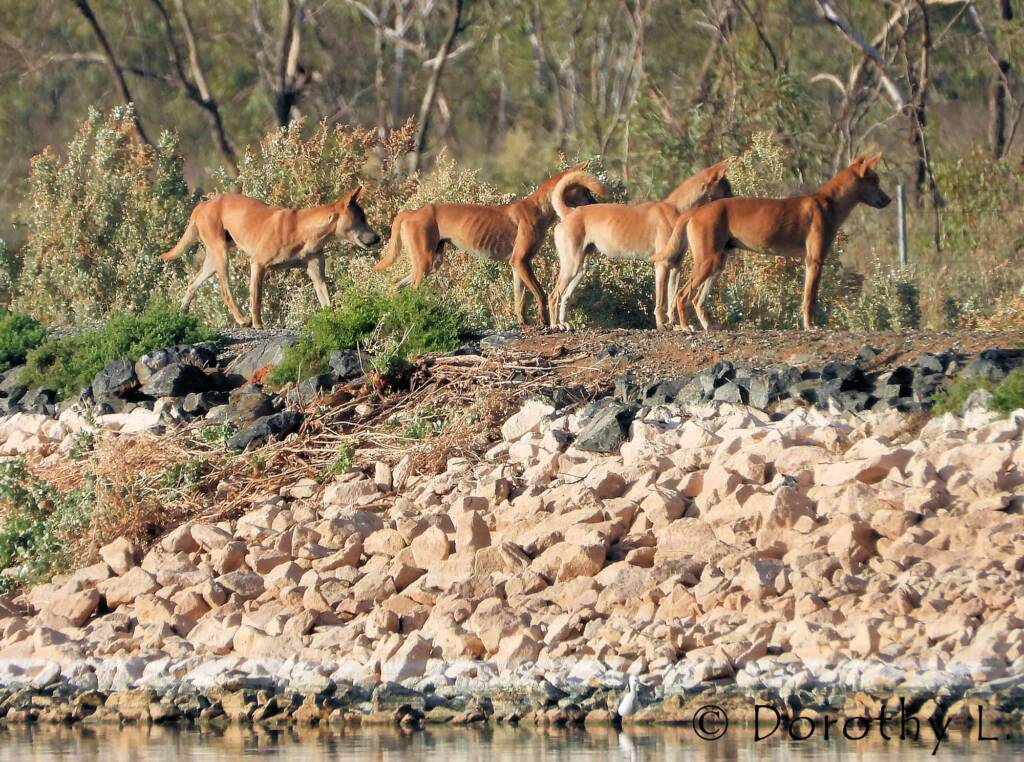
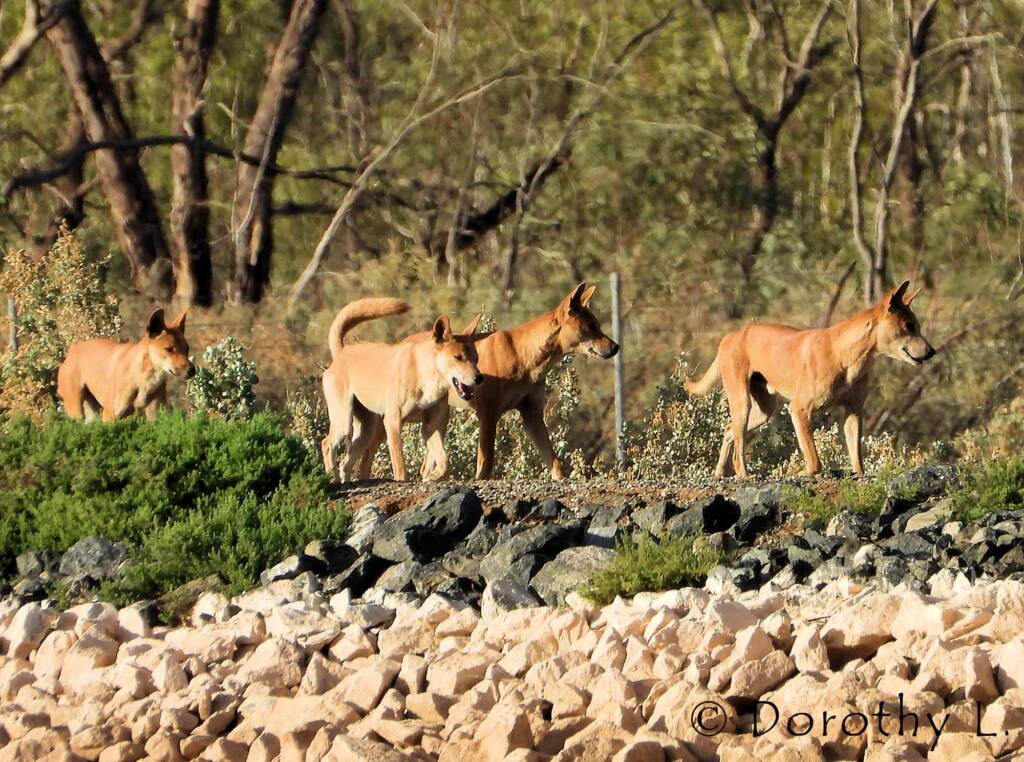
Check out our images of Dingo Pups. Dingoes are also mentioned at Ellery Creek Bighole, Watarrka National Park, Dingo at Alice Springs Desert Park and Dingoes at the Pond.
- Scientific Classification
- Kingdom: Animalia
- Phylum: Chordata
- Class: Mammalia
- Order: Carnivora
- Family: Canidae
- Genus: Canis
- Species: Canis familiaris
- Synonyms: Canis dingo
Footnote & References
- Smith, Bradley, ed. (2015). The Dingo Debate: Origins, Behaviour and Conservation. CSIRO Publishing, Melbourne, Australia. ISBN 9781486300303
- Purcell, B. (2010). Dingo. CSIRO Publishing. ISBN 9780643096936.
- Dingo, Wikipedia, The Free Encyclopedia, 29 November 2020, 07:49 UTC, <https://en.wikipedia.org/wiki/Dingo> [accessed 30 November 2020]
- Gunn, Robert & Whear, R.L. & Douglas, L.C.. (2010). A Dingo Burial From the Arnhem Land Plateau. Australian Archaeology. 71. 11-16. 10.1080/03122417.2010.11689380. The skeleton of a mature dingo was found wrapped in paperbark and cached on a ledge in a rockshelter on the Arnhem Land plateau. Such burials have not previously been recorded from the region and are considered uncommon by contemporary Jawoyn elders. Radiocarbon dating of a vertebra from the skeleton provided a conventional radiocarbon age of 77±35 BP. This finding is discussed in relation to other recorded aspects of the dingo’s relationship with humans in the ethnography and also its presentation in the rock art of Arnhem Land and elsewhere in Australia. https://australianarchaeologicalassociation.com.au/wp-content/uploads/2013/06/gunn_etal_2010.pdf [accessed 30 November 2020]
- The trouble with dingoe, by Kevin Thiele, 19 April 2019, Taxonomy Australia, https://www.taxonomyaustralia.org.au/post/the-trouble-with-dingoes
- Dingoes originated in China 18,000 years ago, by Natalie Muller • September 13, 2011, https://www.australiangeographic.com.au/news/2011/09/dingoes-originated-in-china-18000-years-ago/ [accessed 30 November 2020]