Kangaroo, Wallaroo, Euro, WallabyKangaroos Black-footed Rock Wallaby Eastern Grey Kangaroo Red Kangaroo Wallaroo Western Grey Kangaroo
The genus Macropus and Osphranter, in the family Macropodidae, is a group of marsupials commonly known as kangaroos, wallaroos and wallabies.
In 1770 Captain Cook and his crew spent 7 weeks ashore in North Queensland repairing their ship, the Endeavour, which had been damaged on the Great Barrier Reef. While there they saw Australia’s extraordinary hopping mammals for the first time.
Cook wrote:
‘ I saw myself this morning a little way off from the ship, one of the animals before spoke of: it was of a light mouse colour and the full size of a greyhound with a long tail….Its progression is by hopping or jumping 7 or 8 feet at each hop upon its hind legs only….It bears no sort of resemblance to any European animal I ever saw.’
Northern Territory Government – Nature Notes – Fleet-Footed Furries (Agile Wallaby)
For many years scientists wondered what kangaroo Captain Cook and his men saw. Some thought it might have been the Agile Wallaby which is found in North Queensland as well as the Top End. However, it’s more likely it was the Whiptail Wallaby Macropus parryi. It looks a lot like an Agile but is smaller, grey rather than sandy coloured, and has a long slender tail like a whip.
The story goes that the local Aboriginal people replied ‘kangaroo’ when the white
men pointed to these animals. They assumed this was the Aboriginal name for the
creatures. It was often thought that the word kangaroo actually meant ‘go away’!1 This is now recognised as a myth.
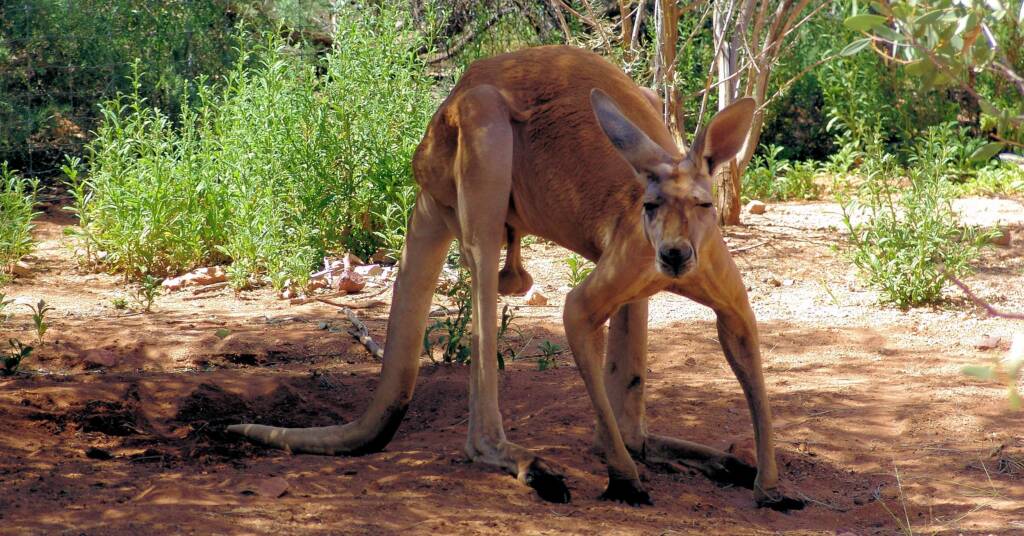
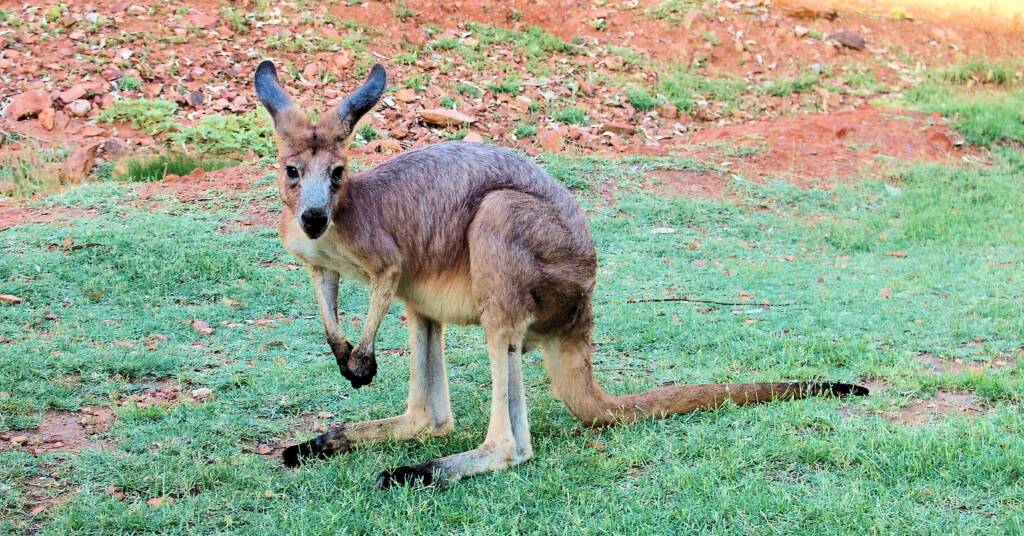
Kangaroos
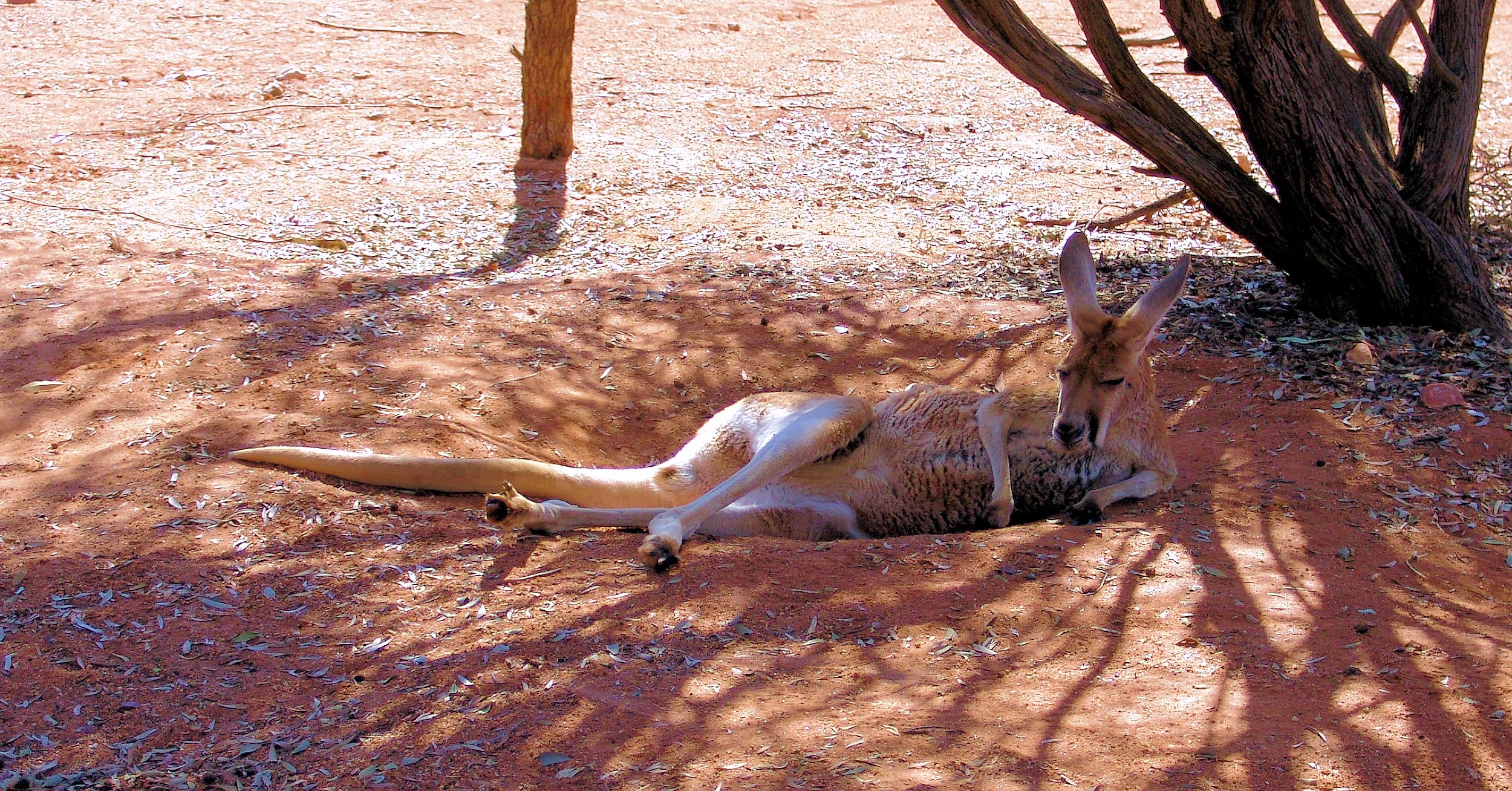
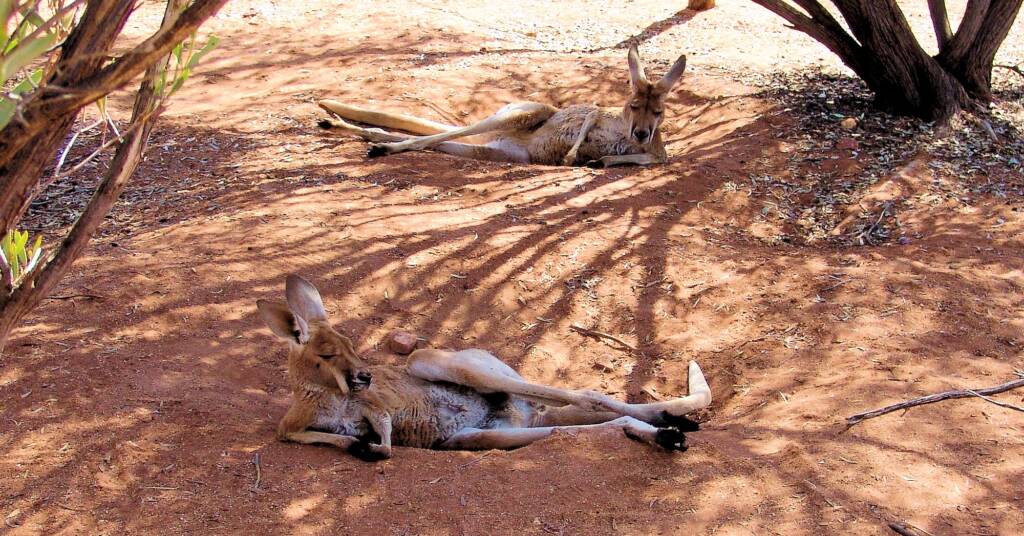
— these are our larger herbivorous animals, that can often be seen in their natural environment in national parks and outback regions. Kangaroos include the Red Kangaroo (or Big Red), Eastern Grey Kangaroo and Western Grey Kangaroo. The Eastern Grey and Western Grey are in the genus Macropus, whilst the Red Kangaroo is in the genus Osphranter.
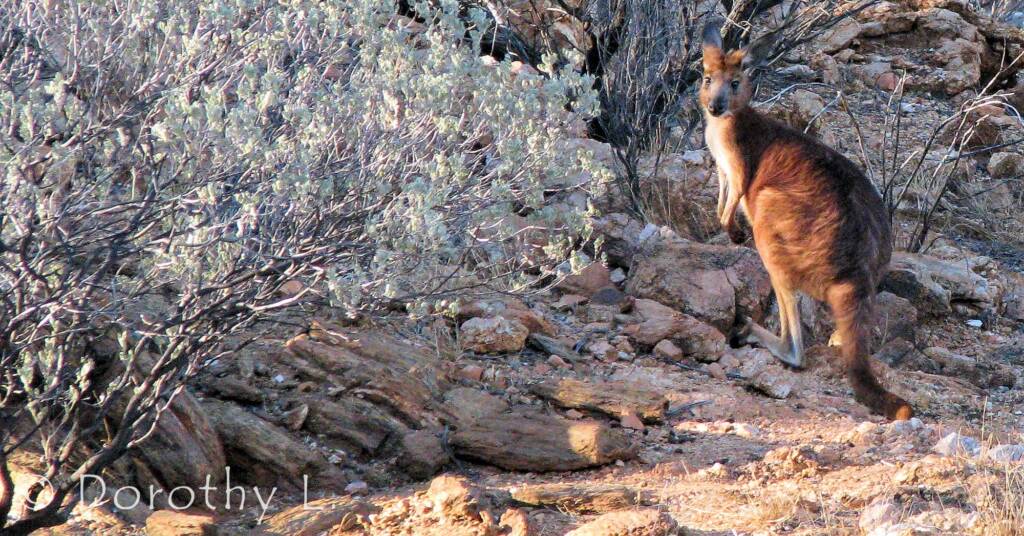
Wallaroos
— The Wallaroo (in the genus Osphranter) are kangaroos that live in the hilly or rocky areas of Australia. Other distinguishing features include the large ears, black nose, often in a distinctive upright stance. They have a number of different common names around Australia including Hills Kangaroo, Hills Wallaroo, Euro, Common Wallaroo.
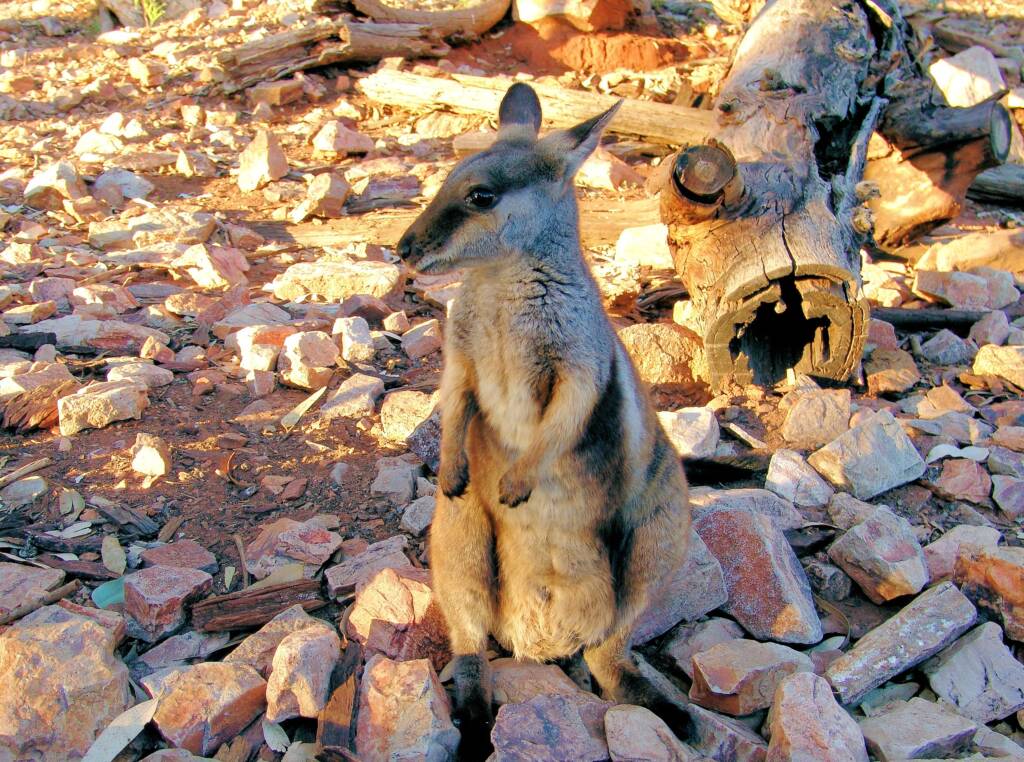
Wallabies
— Wallabies (genus Petrogale) is a common name used to describe our medium size macropods, such as the Black-footed Rock Wallaby. With their smaller size, they tend to be found in rocky regions or habitats with dense undergrowth.
There are 10 genus (at the time of writing 9 November 2024) in the subfamily Macropodinae, that include the following 3 genus:
- Macropus
- Notamacropus
- Osphranter
The genera includes four species of large terrestrial kangaroos, two species of wallaroos, and eight extant species of wallabies (a ninth species is extinct). The term is derived from the Ancient Greek that describes “long” and “foot”. There are thirteen known extinct species that are recognised.
The genus Notamacropus include:
- Agile Wallaby (Notamacropus agilis)
- Black-striped Wallaby (Notamacropus dorsalis)
- Parma Wallaby (Notamacropus parma)
- Red-necked Wallaby (Notamacropus rufogriseus)
- Tammar Wallaby (Notamacropus eugenii)
- Toolache Wallaby (Notamacropus greyii) – extinct
- Western Brush Wallaby (Notamacropus irma)
- Whiptail Wallaby (Notamacropus parryi)
- Scientific classification
- Kingdom: Animalia
- Phylum: Chordata
- Subphylum: Vertebrata
- Informal: Gnathostomata
- Class: Mammalia
- Subclass: Marsupialia
- Order: Diprotodontia
- Suborder: Phalangerida
- Superfamily: Macropodoidea
- Family: Macropodidae
- Subfamily: Macropodinae
- Genus: Notamacropus
The type species for the genus Macropus include:
- Scientific classification
- Kingdom: Animalia
- Phylum: Chordata
- Subphylum: Vertebrata
- Informal: Gnathostomata
- Class: Mammalia
- Subclass: Marsupialia
- Order: Diprotodontia
- Suborder: Phalangerida
- Superfamily: Macropodoidea
- Family: Macropodidae
- Subfamily: Macropodinae
- Genus: Macropus
The genus Osphranter include:
- Antilopine Kangaroo (Osphranter antilopinus)
- Black Wallaroo (Osphranter bernardus)
- Red Kangaroo (formerly Macropus rufus, now redefined as genus Osphranter, species Osphranter rufus)
- Wallaroo (Osphranter robustus)
The genus Petrogale include:
The Black-footed Rock Wallaby (Petrogale lateralis), also known as the Black-flanked Rock Wallaby or Warru, is one of several rock-wallabies species in the genus Petrogale.
- Scientific classification
- Kingdom: Animalia
- Phylum: Chordata
- Subphylum: Vertebrata
- Informal: Gnathostomata
- Class: Mammalia
- Subclass: Marsupialia
- Order: Diprotodontia
- Suborder: Phalangerida
- Superfamily: Macropodoidea
- Family: Macropodidae
- Subfamily: Macropodinae
- Genus: Petrogale
Footnote & References
- Northern Territory Government – Nature Notes – Fleet-Footed Furries https://nt.gov.au/__data/assets/pdf_file/0007/200005/agile-wallaby.pdf
Kangaroo, Wallaroo, Euro, WallabyKangaroos Black-footed Rock Wallaby Eastern Grey Kangaroo Red Kangaroo Wallaroo Western Grey Kangaroo