
The Echidna belongs to a group of mammals called Monotremes, of which there are only two, the other being the Platypus.
There are two species of echidnas, one of which is restricted to the New Guinea highlands. The Short-beaked Echidna (Tachyglossus aculeatus), or spiny ant eaters, are found throughout Australia.
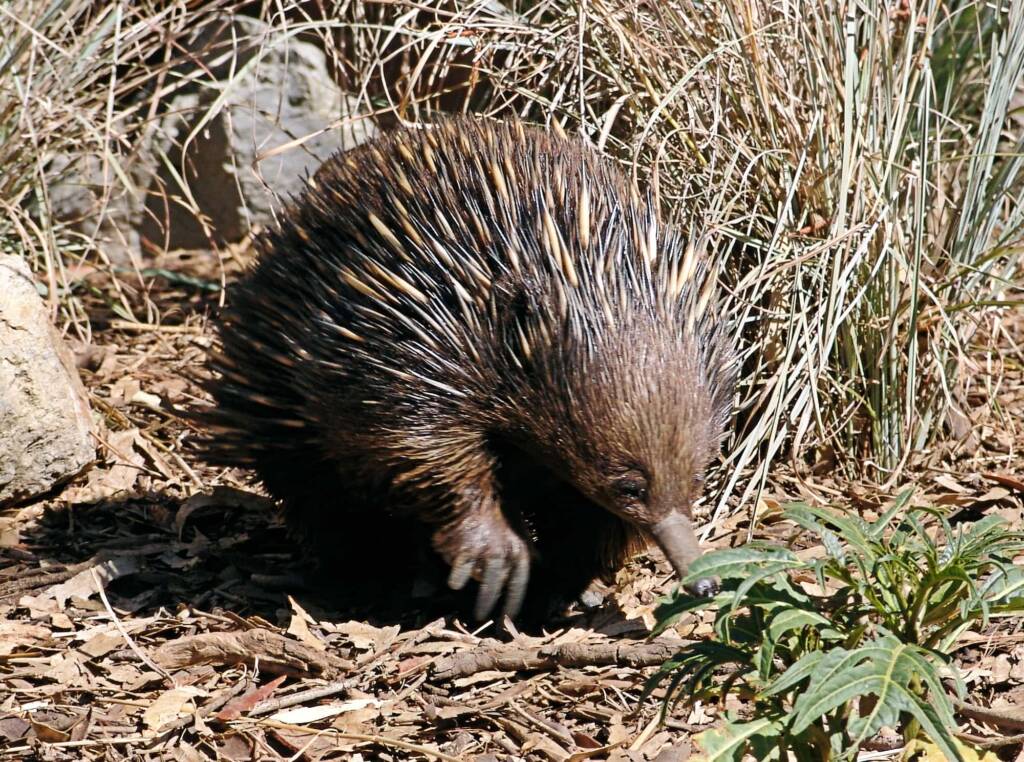
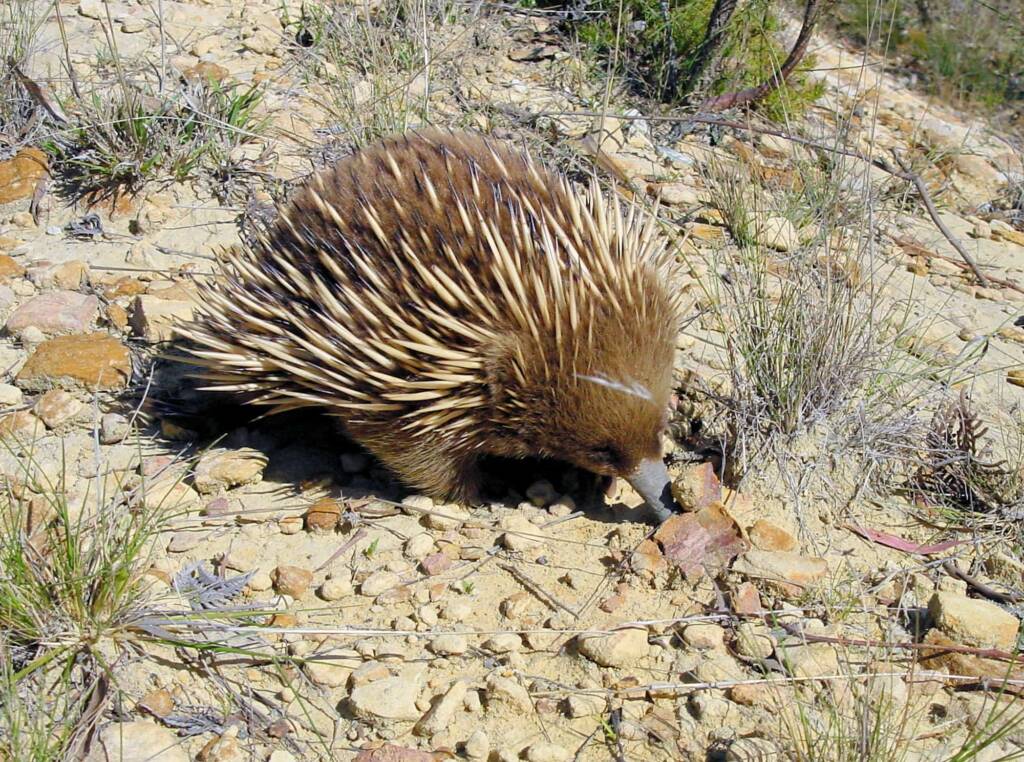
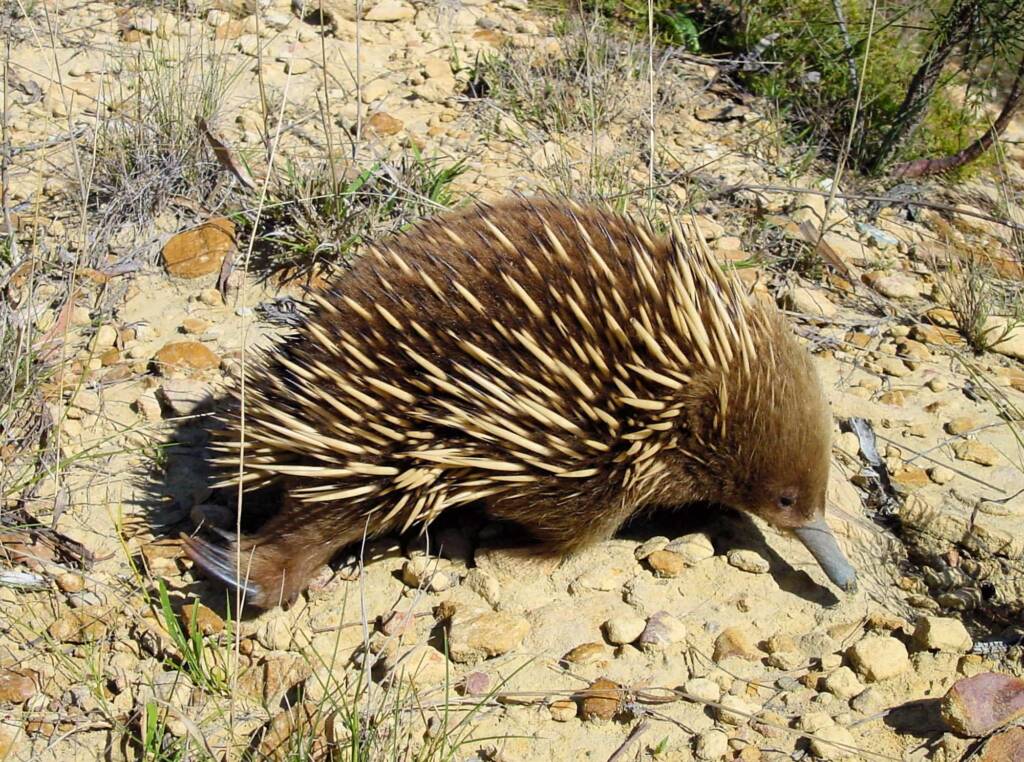
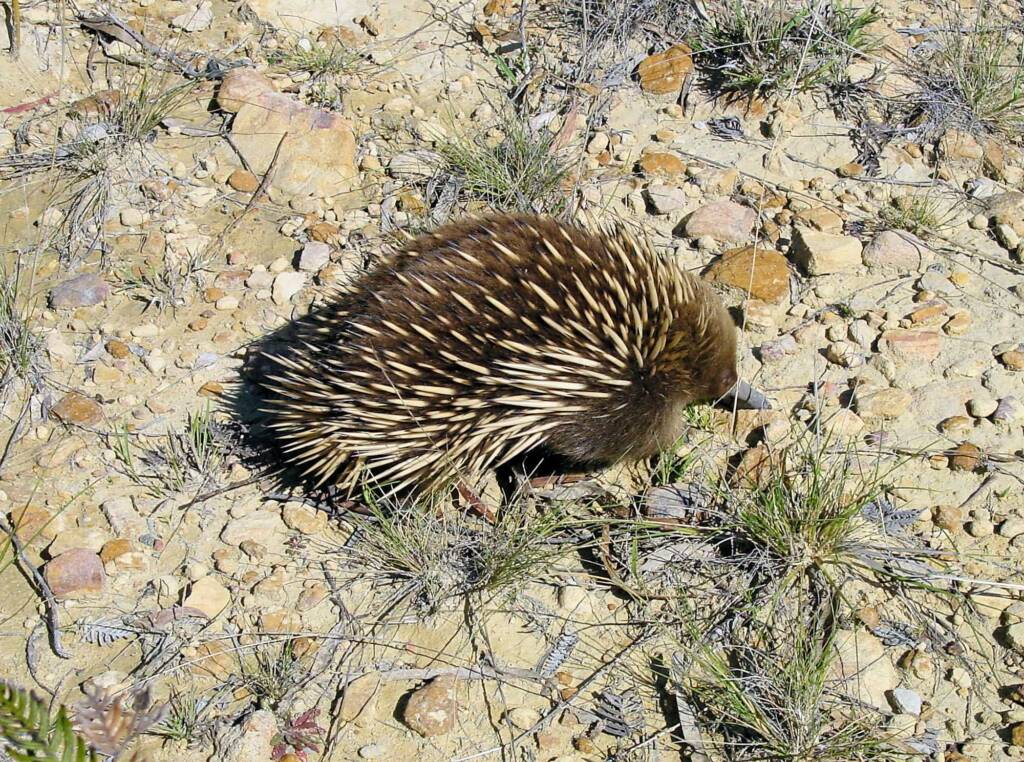
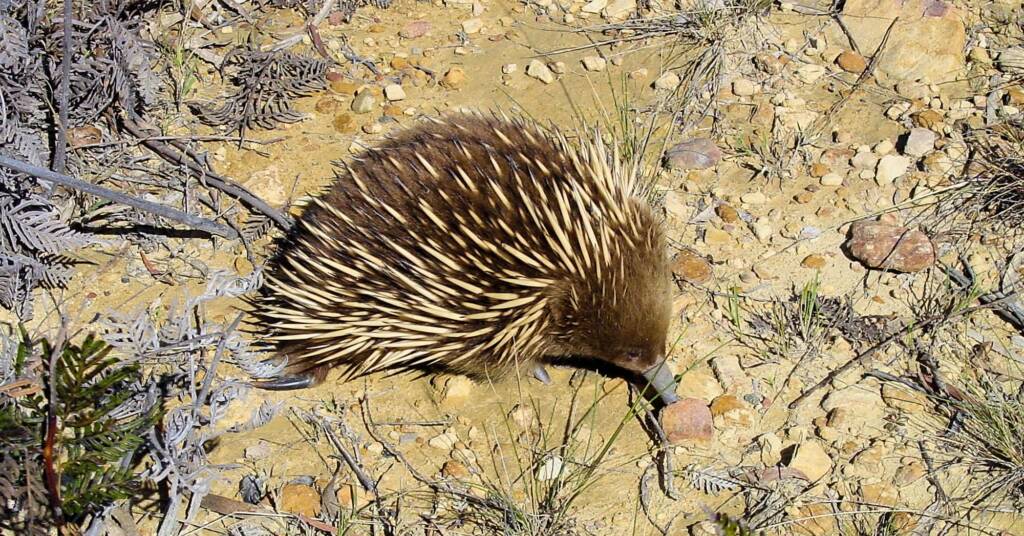
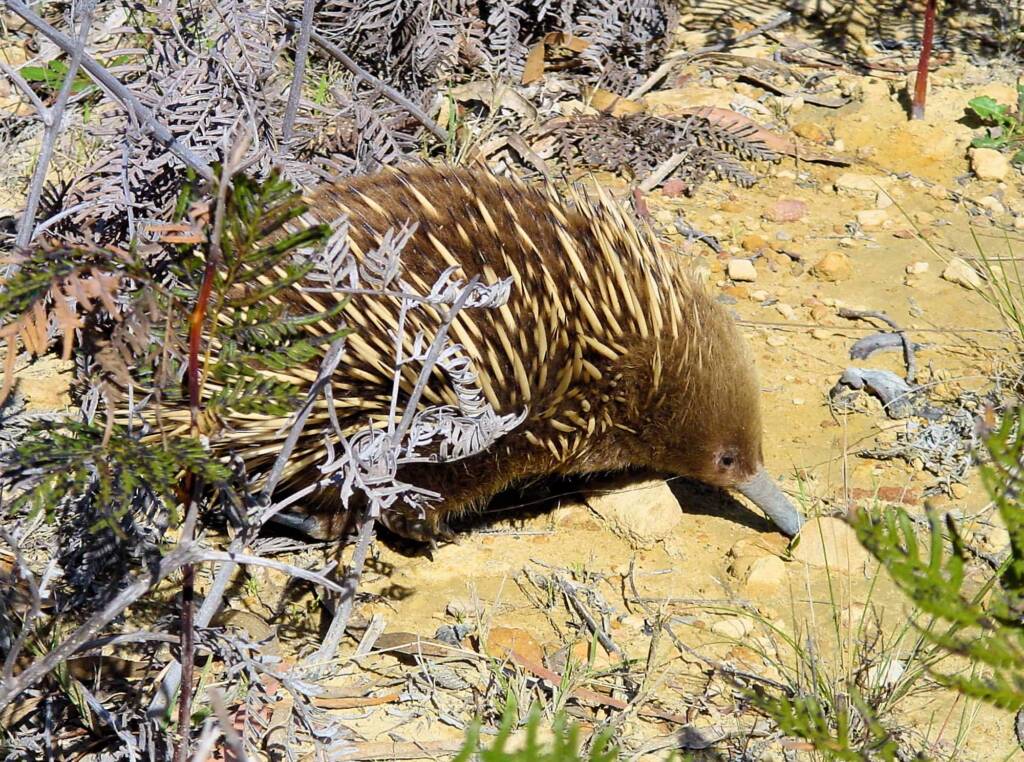
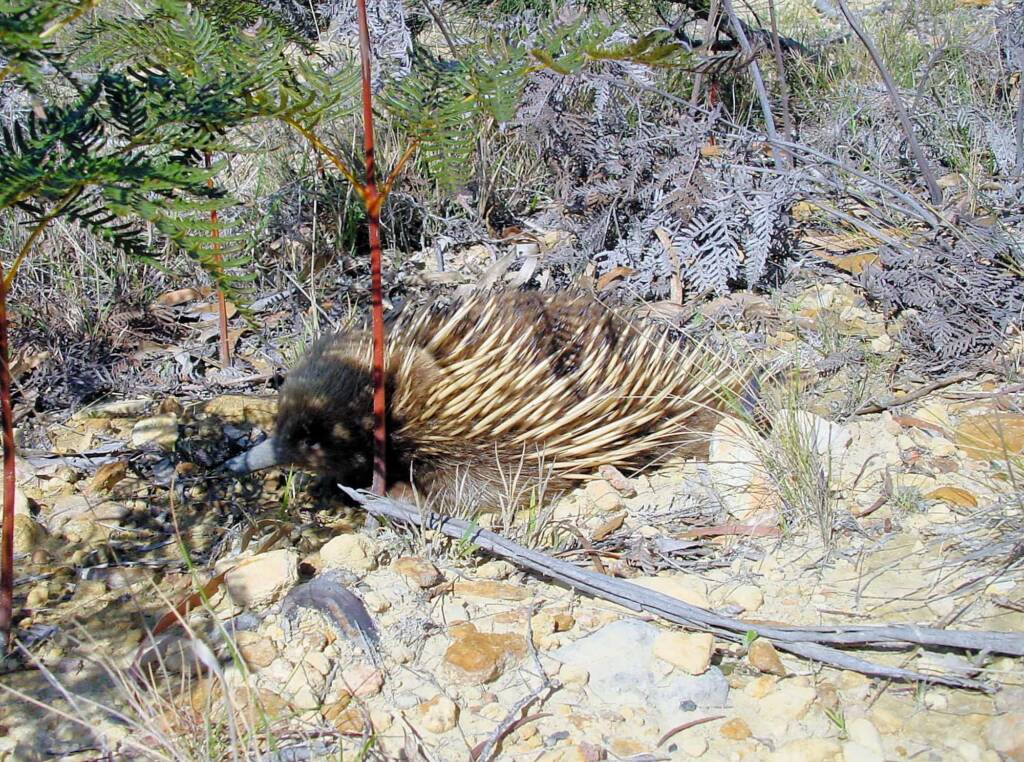
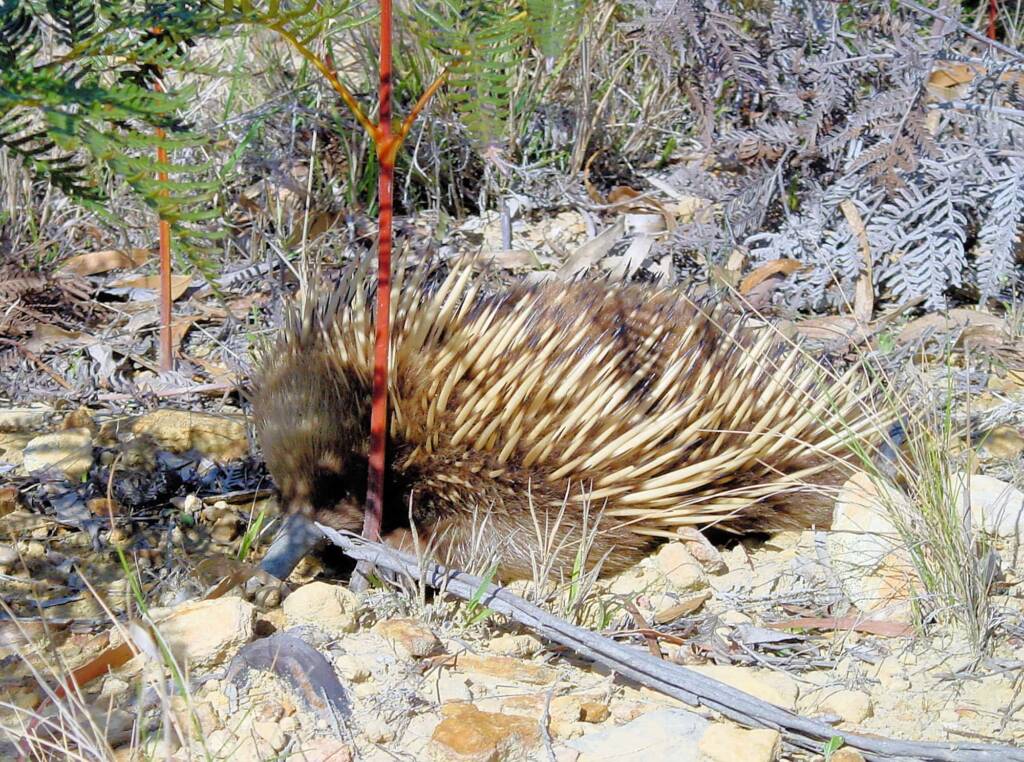
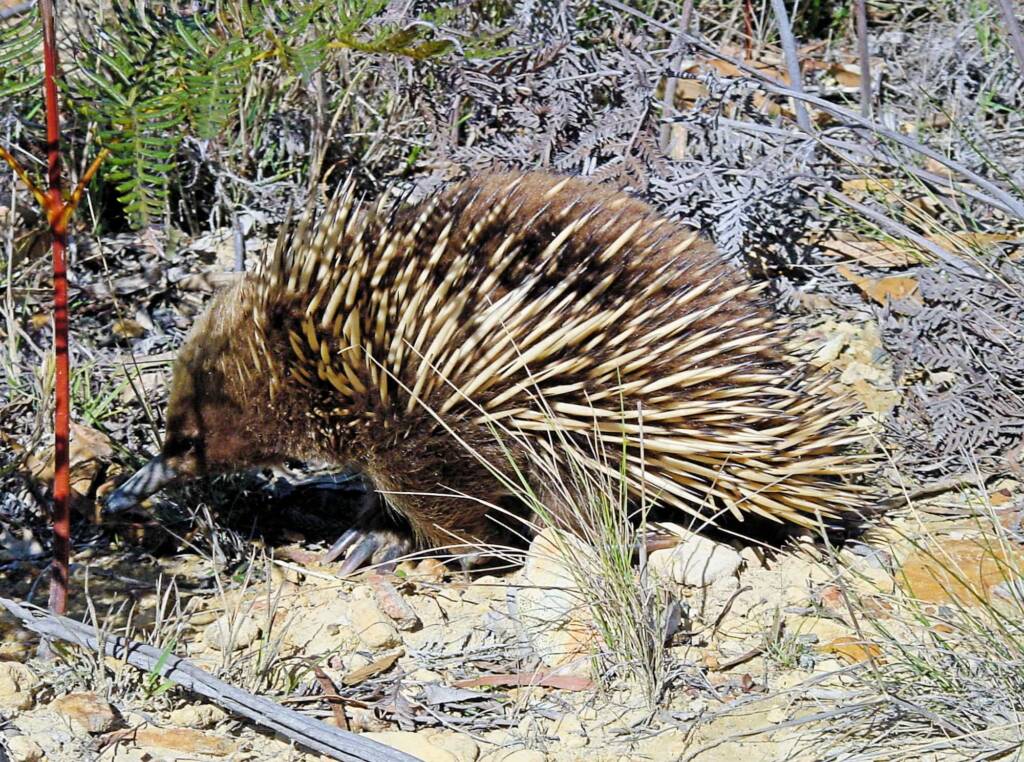
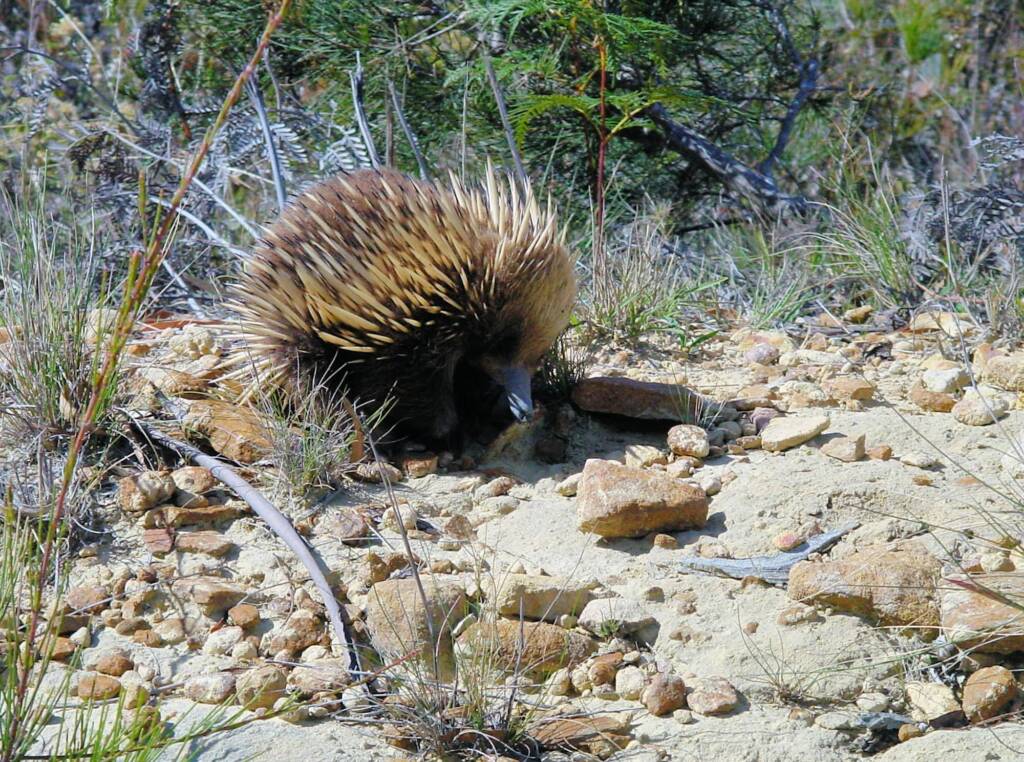
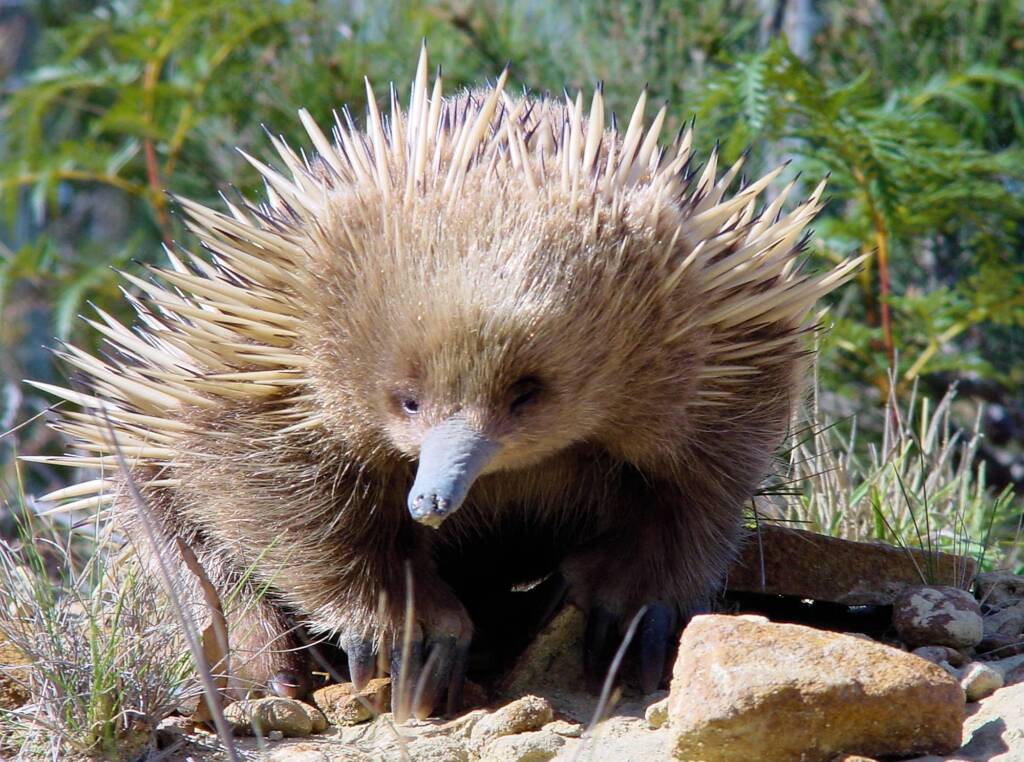
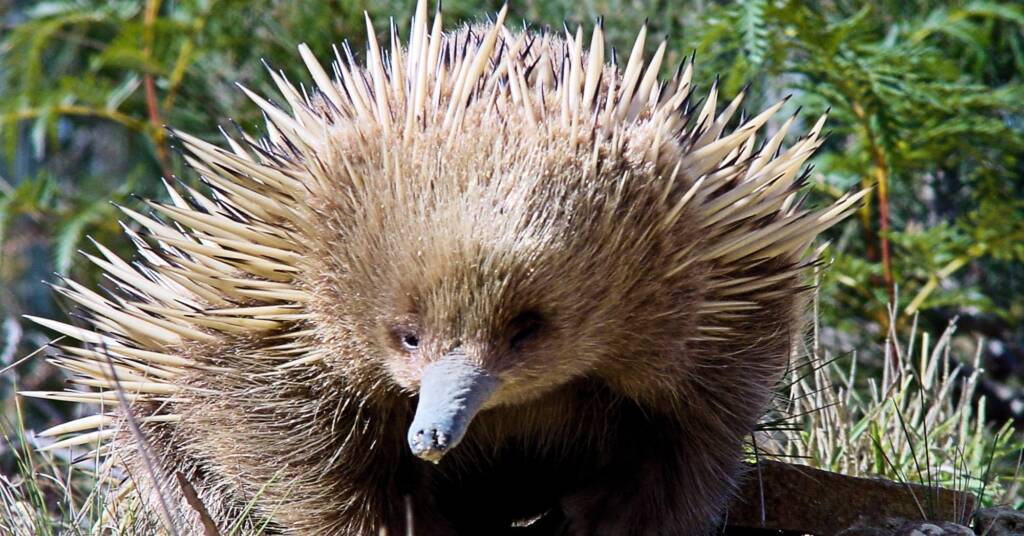
Short-beaked Echidnas are dark brown in colour, although young echidna are lighter, and have hair and long spines covering their back, with only hair covering their soft under belly. They have ear openings but no external ears. The eyes are small and beady. The echidna has a long sensitive tube like snout, and a long thin tongue with sticky saliva that thrusts in and out of their small mouth at the end of the snout, and is the perfect tool for reaching into the ant and termite nests.
Echidnas are one of Australia’s most widespread native mammals, and although not seen often they are found in a range of environments, from arid deserts, rainforest, alpine mountains and urban parklands. To survive extremes weather conditions, they shelter under rock crevices, hollow logs, vegetation, burrow themselves in soil and even burrows of other animals such as rabbits and combats.
The Short-beaked Echidnas are solitary, wanderers and have a large, overlapping ranges of up to 50 hectares, having a fixed address when rearing their young in a burrow. The echidnas are also capable swimmers and have been sighted swimming with their snout and some of their spines above the water level.
You know when a female echidna is ready for breeding, as she will be trailed by up to a dozen males. This can last for weeks at a time and usually it is the male that has the longest stamina that will eventually mate with the female.
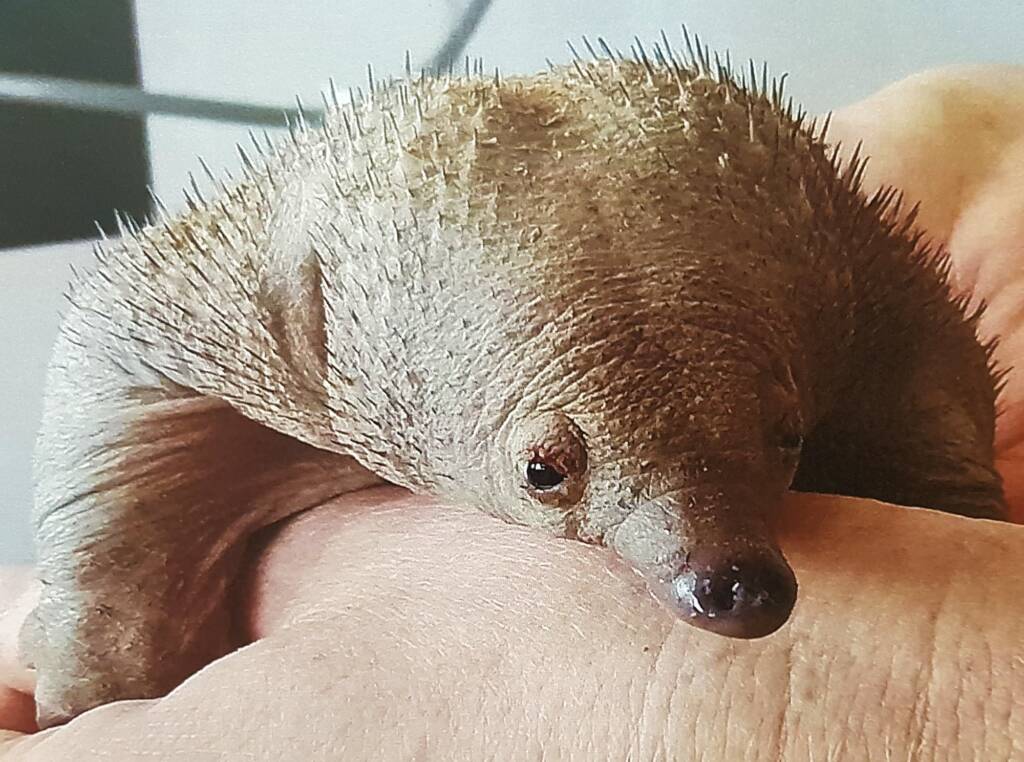
The female will then lay a single tiny egg (about 0.16cm in length), which she incubates in her pouch. When the egg is about the size of a jellybean, the egg will hatch and a young echidna, called a puggle emerges. The mother carries the puggle in her pouch for around three months, where the puggle suckles on her mammary glands. Once the puggle grows spines, it then leaves the pouch, although it stays suckling from the mother until about six months of age.
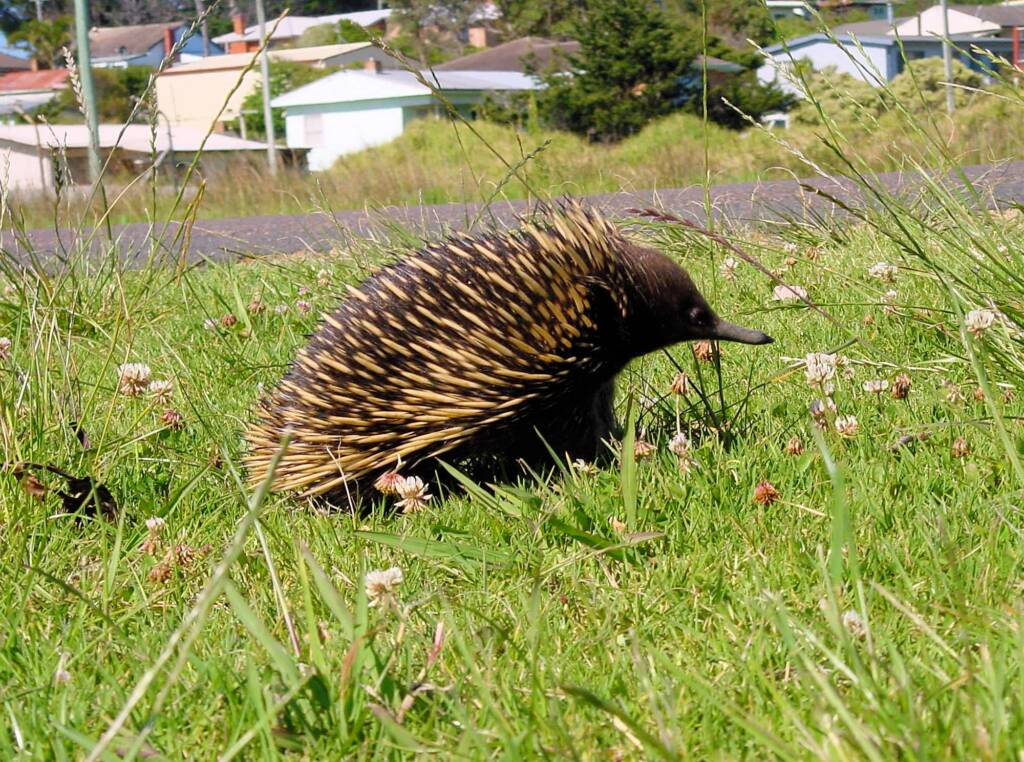
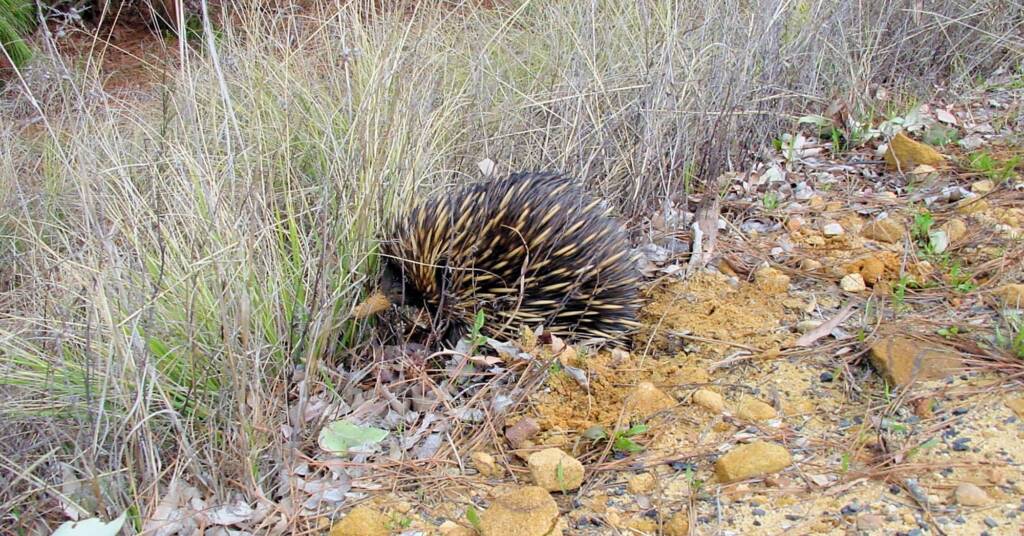
Whilst walking along Ninety Mile Beach in the Gippsland Lakes Coastal Park, Victoria, we disturbed the following Short-beaked Echidna, who then just dug itself down into the soil for protection.
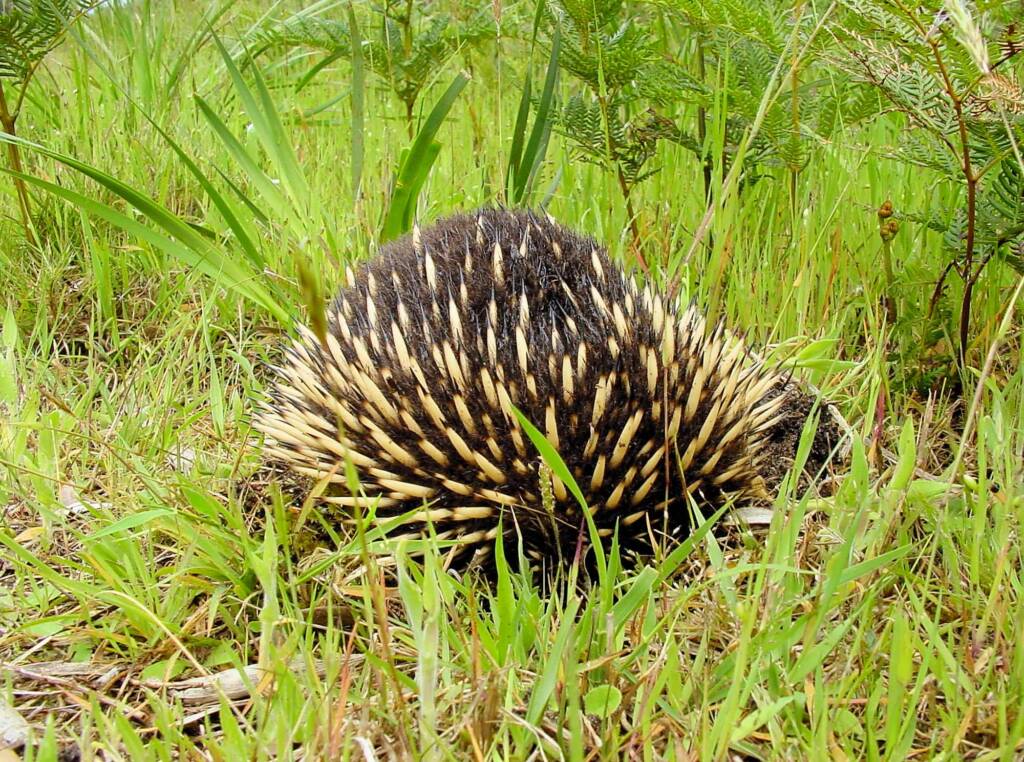
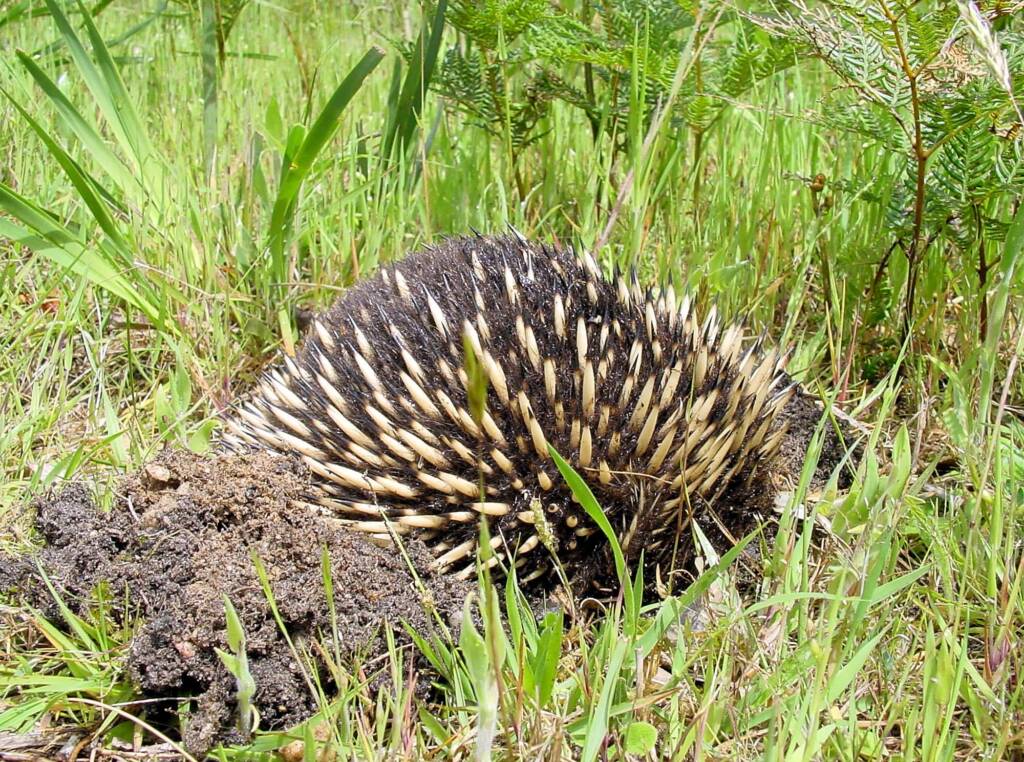
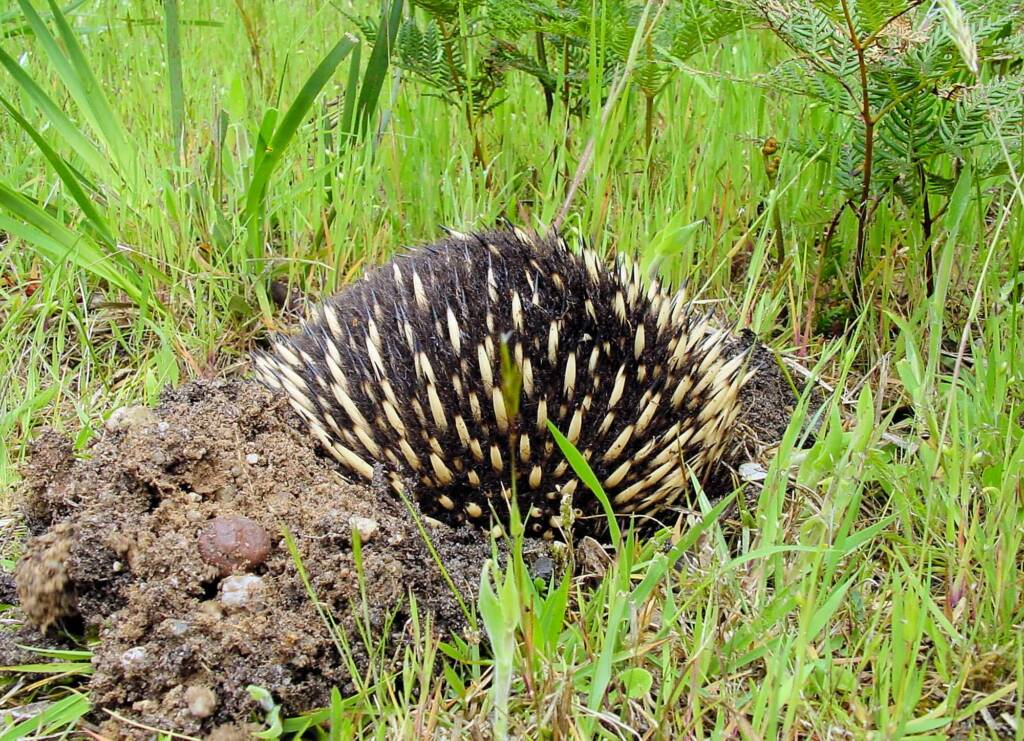
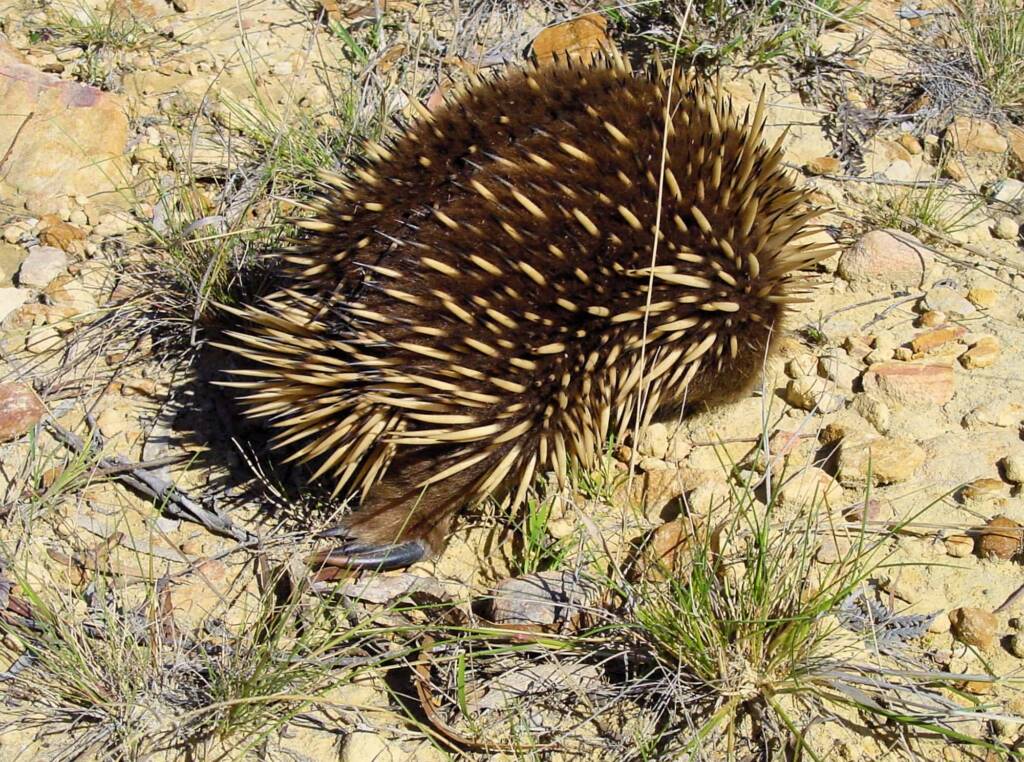
The following photos of the Short-beaked Echidna were taken at the Warrumbungle near Coonabarabran, NSW. It was foraging for food.
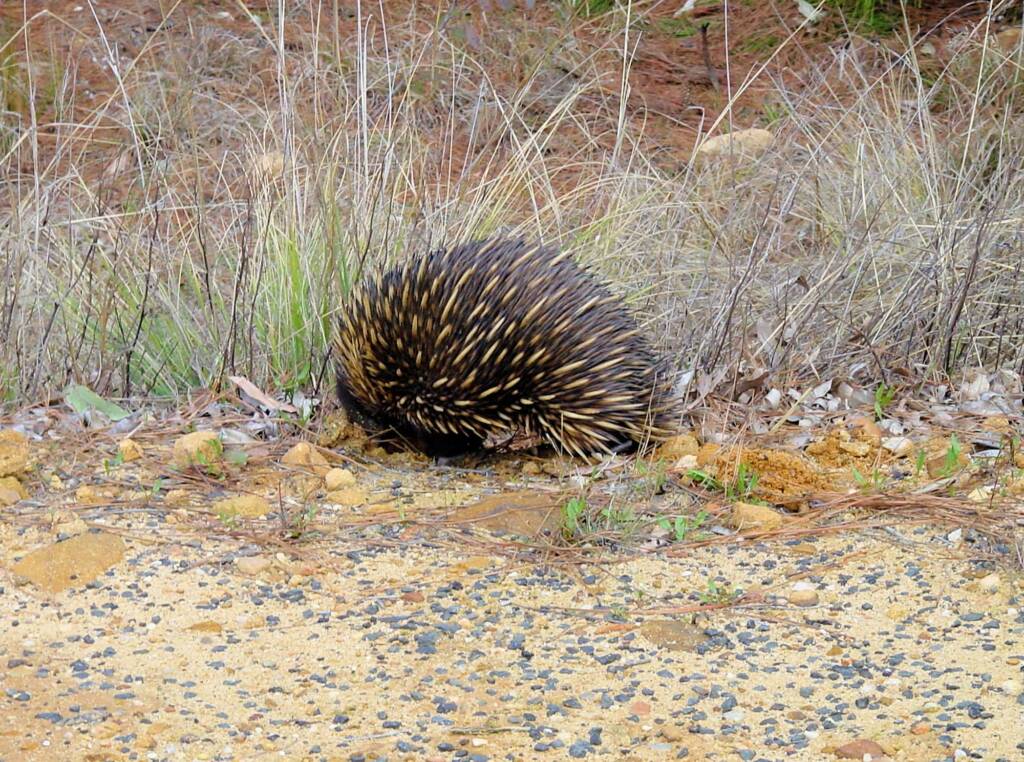
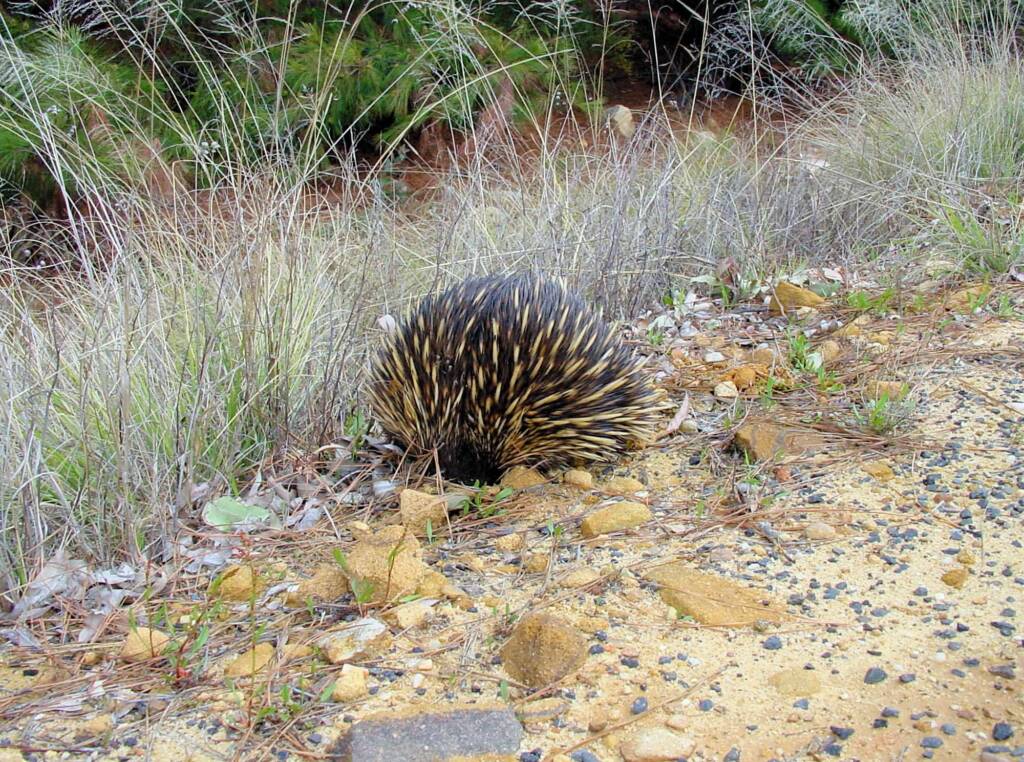
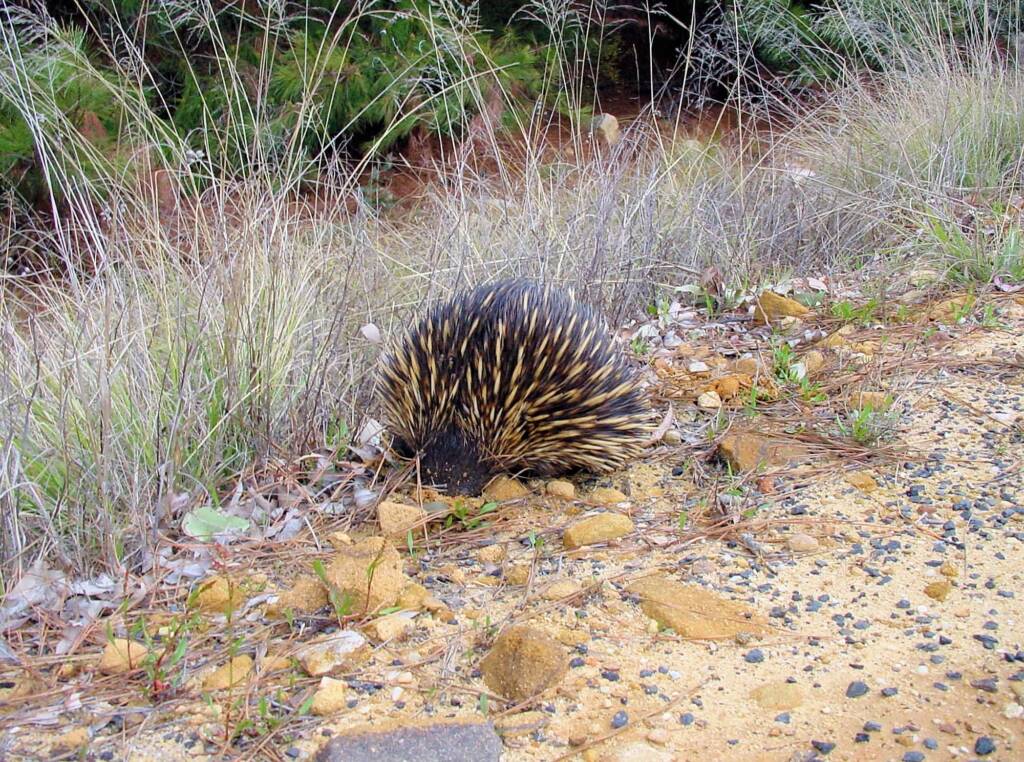
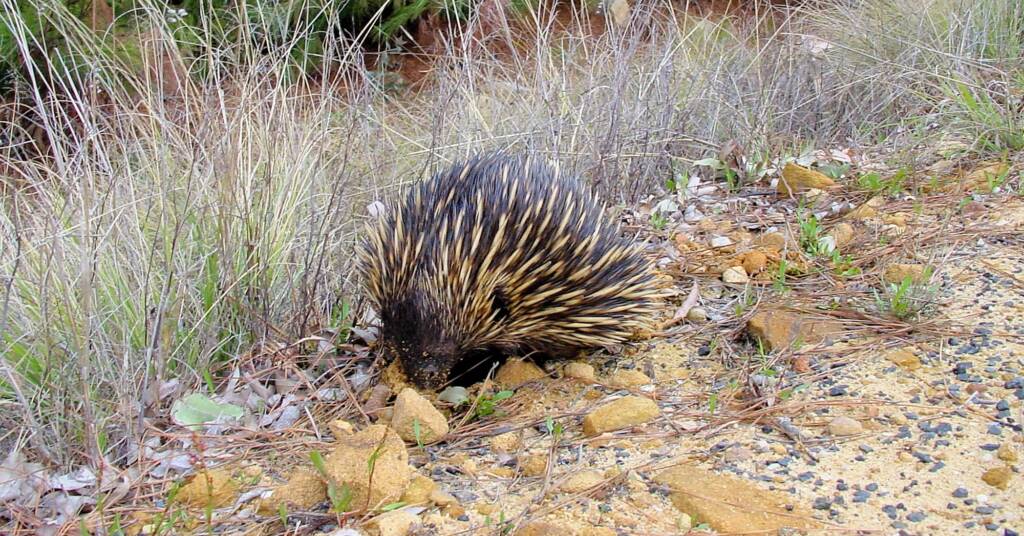
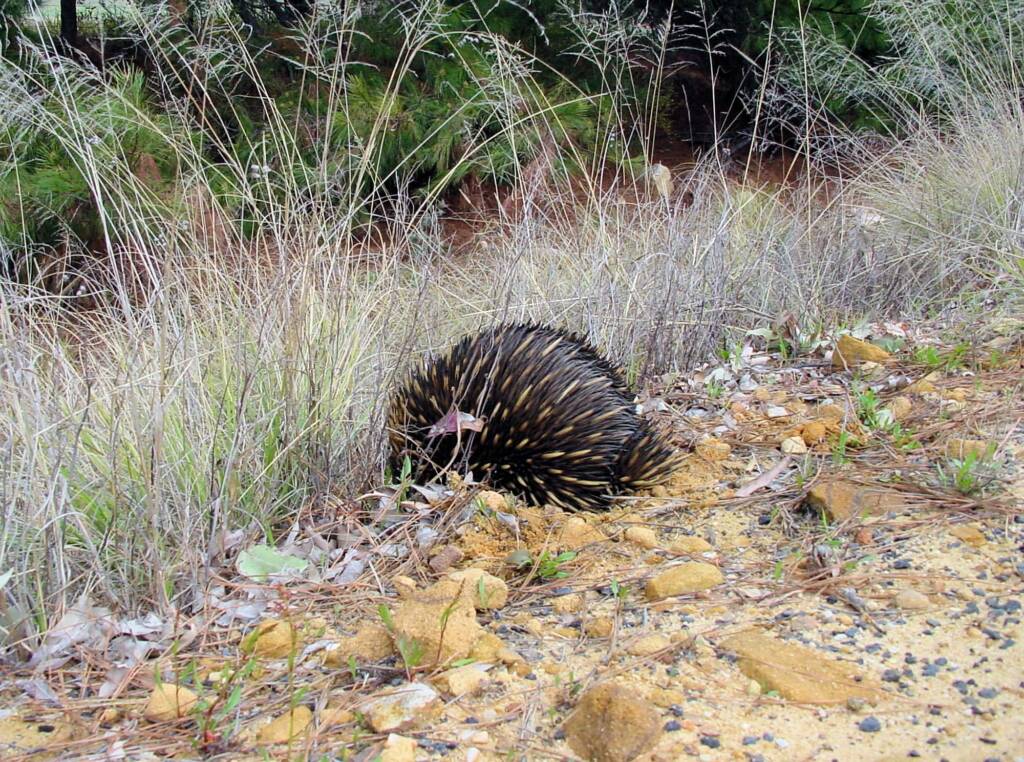
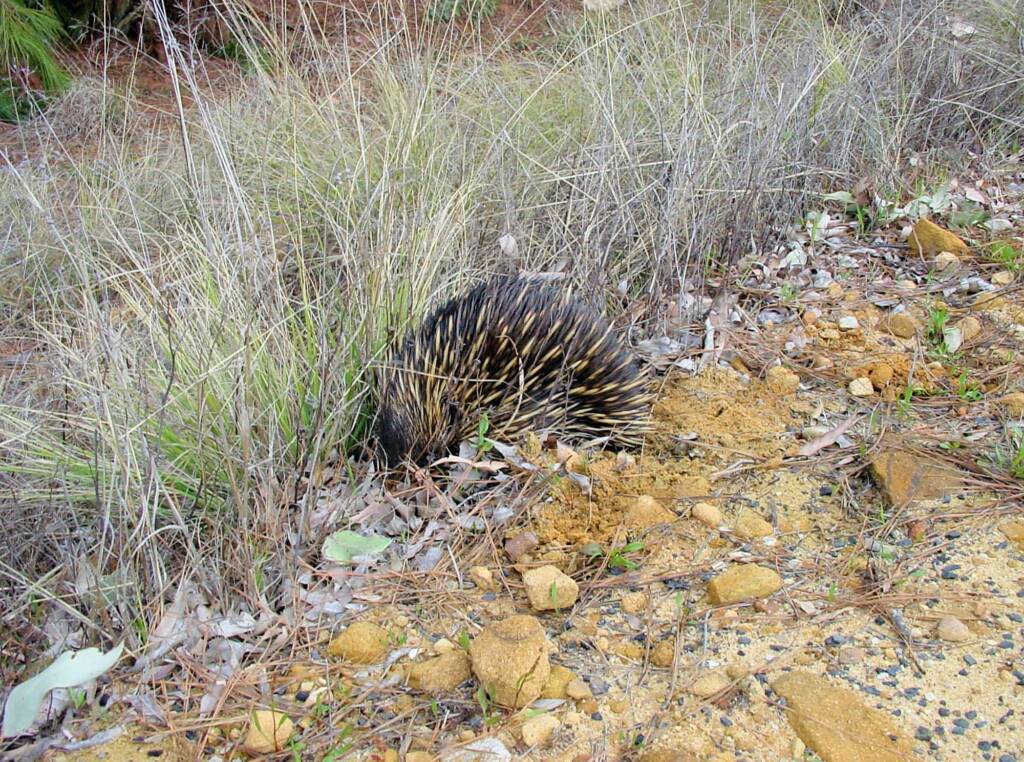
Echidnas can often be found at fauna parks around Australia, including the Alice Springs Desert Park – Short-beaked Echidna.
- Scientific classification
- Kingdom: Animalia
- Phylum: Chordata
- Class: Mammalia
- Order: Monotremata
- Family: Tachyglossidae
- Genus: Tachyglossus
- Species: T. aculeatus
- Binomial name: Tachyglossus aculeatus


Footnote & References
- Short-beaked echidna, https://en.wikipedia.org/wiki/Short-beaked_echidna (last visited July 16, 2021).
MonotremeShort-beaked Echidna