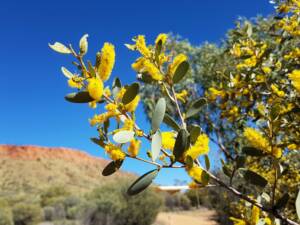
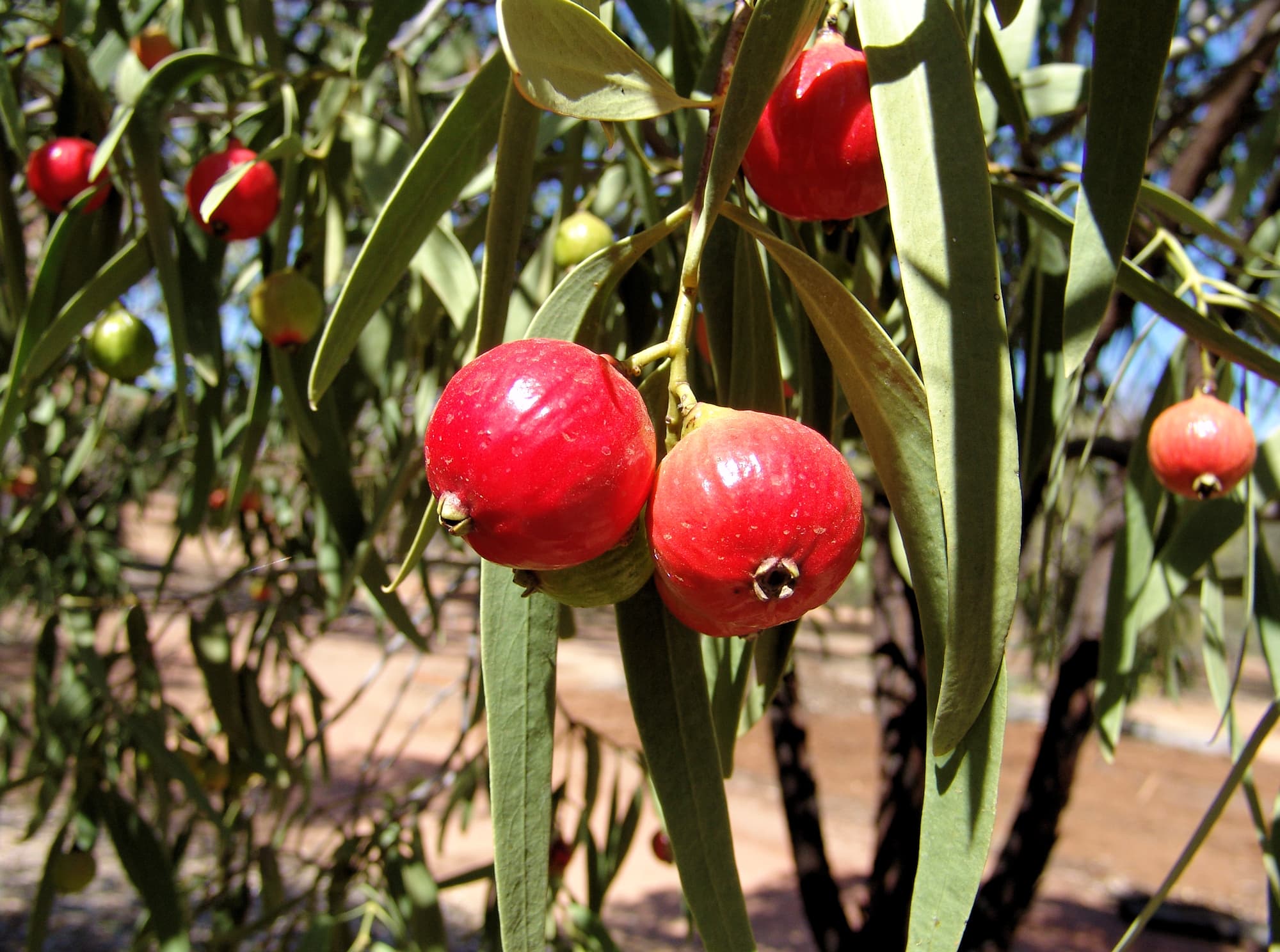
Prized by Aborigines and early settlers alike, the Quandong (Santalum acuminatum) is a shrub or small tree that grows up to 5 m high. It has a rough dark bark and sometimes yellowish green leathery leaves, lanceolate, often curved measuring between 30-90 mm long and 3-12 mm wide.
Rich in vitamin C, the Aborigines ate both the sharp-tasting flesh and the kernel of the large stone, although there is a toxin in the seed that is removed by roasting, and appears to decay over time. There is also some evidence that the seed is used for medicinal purpose. The seed kernel inside the nut casing can be extracted, crushed into a paste then used on sore gums or an oral gum boil to ease the pain.
The wrinkled looking seed case was also used in the game Chinese checkers. The early settlers made the fruit into jams, jellies and pies.
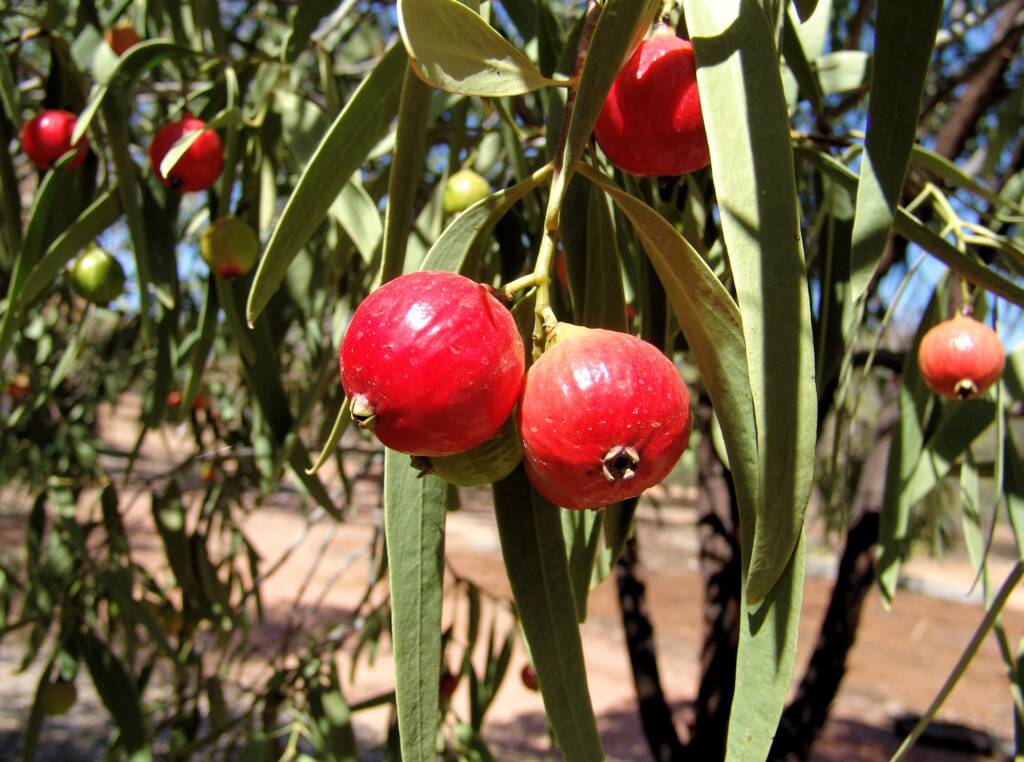
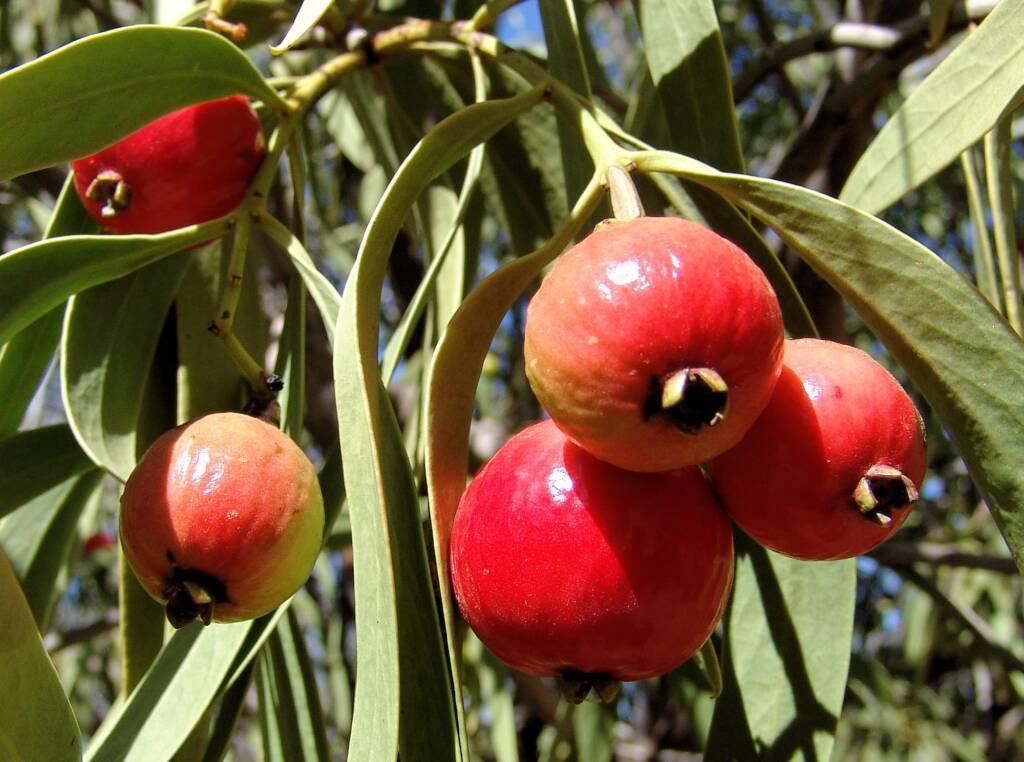
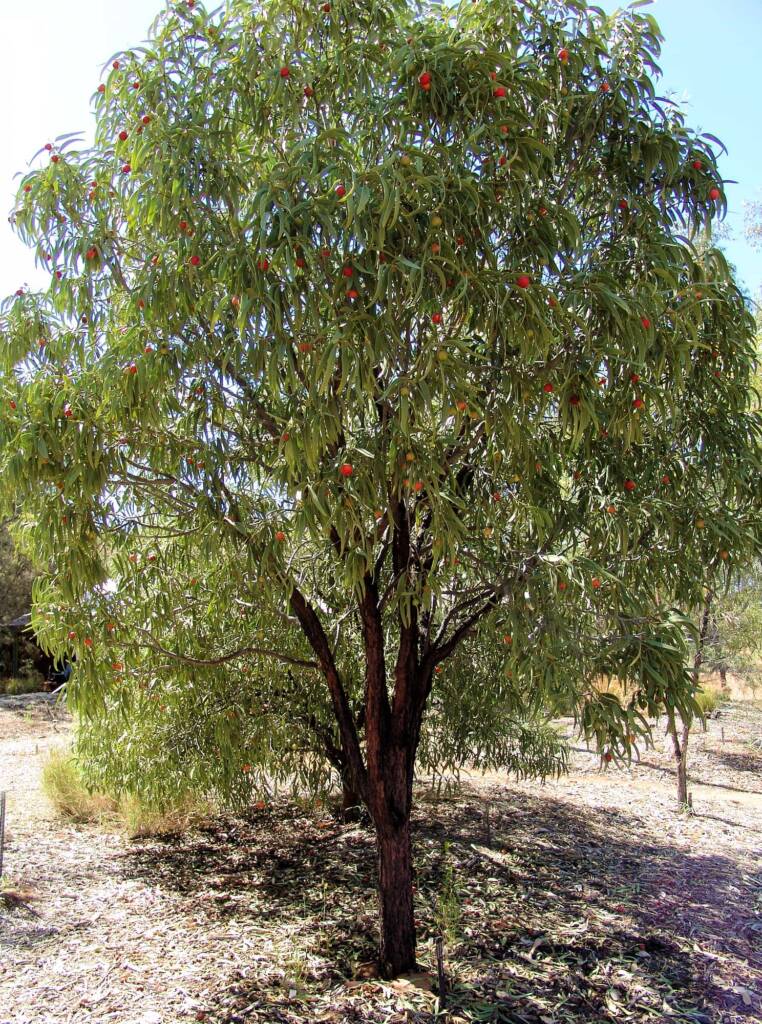
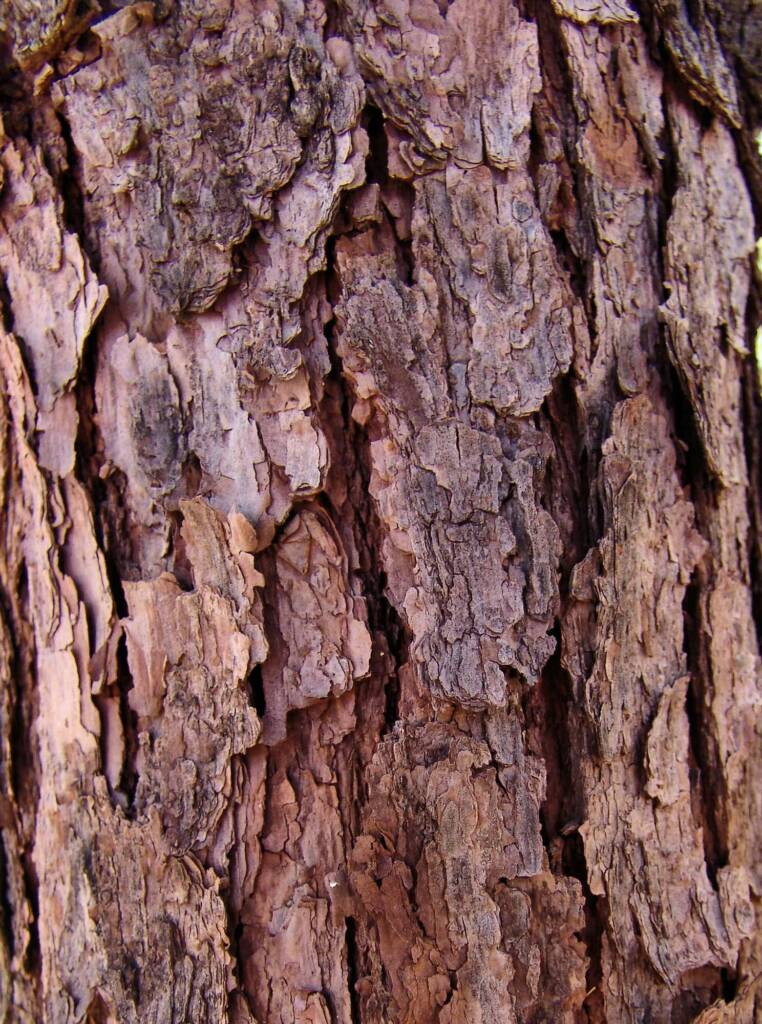
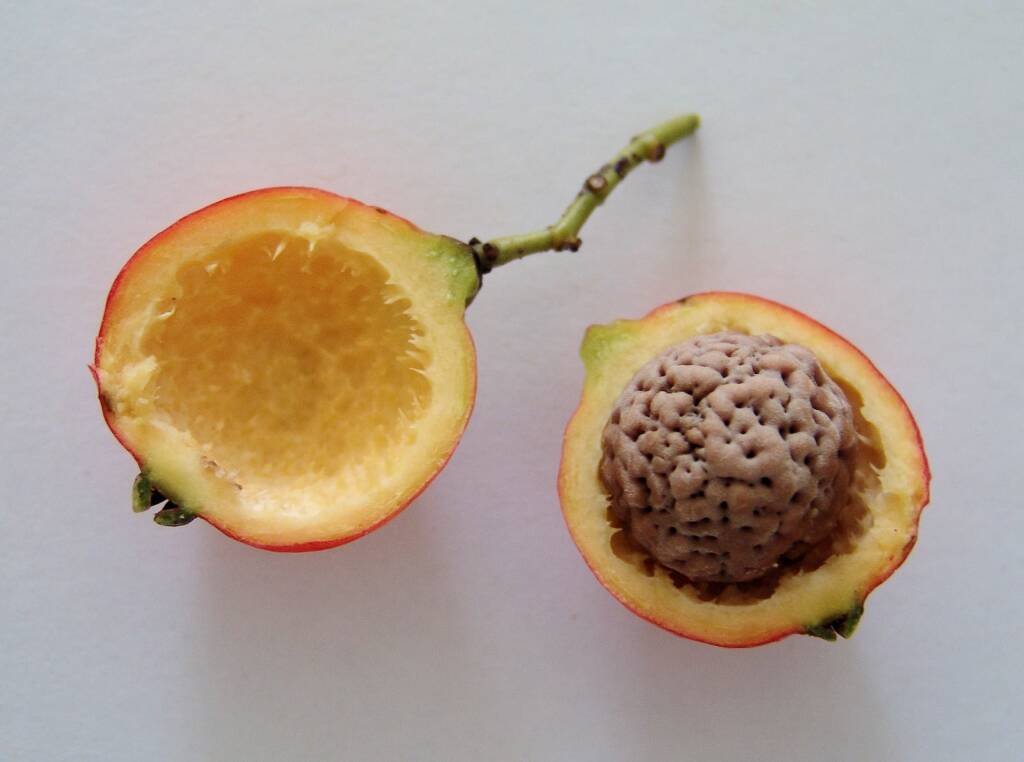
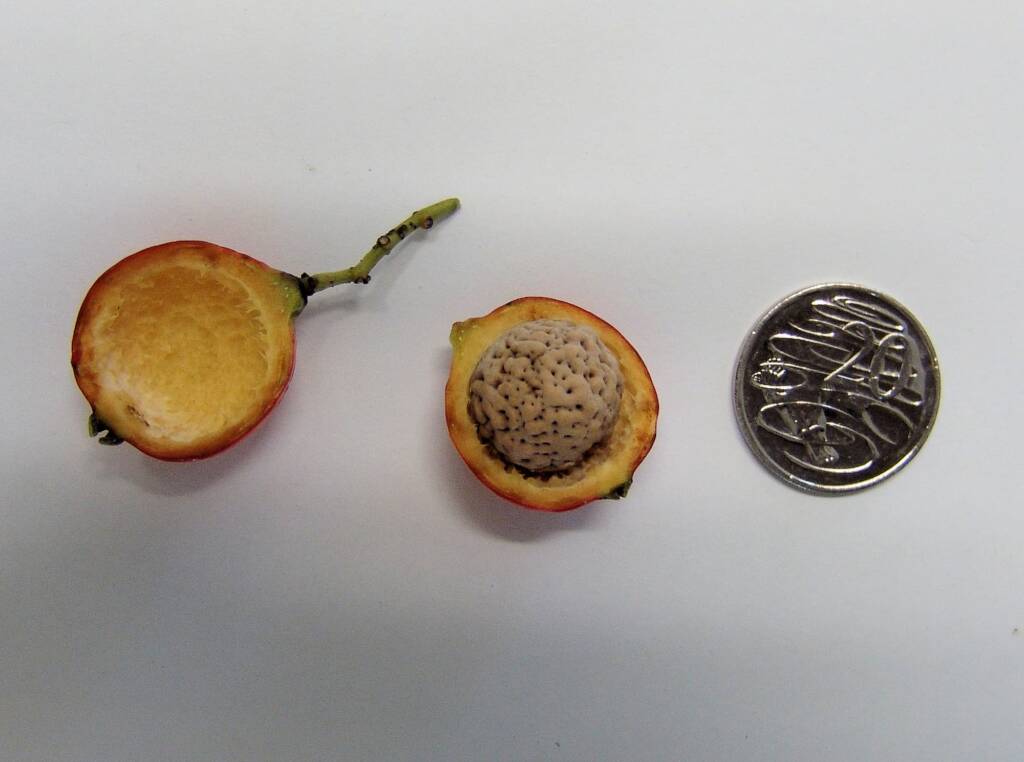
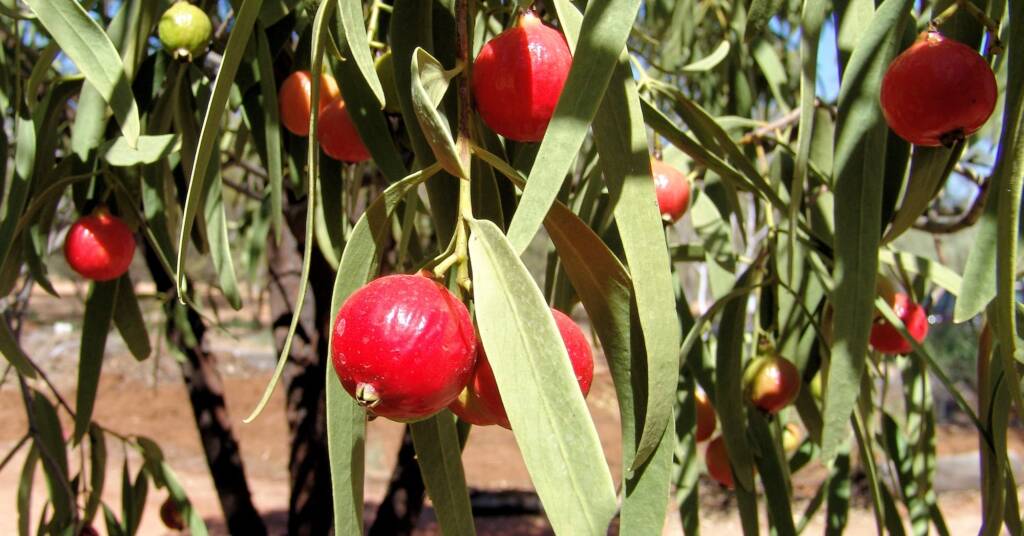
The flower is small and greenish, with a greenish fruit that turns bright red, fleshing and enclosing a round pitted stone. There is also a rarer yellow-fruited form. The fruit ripens in September to October, depending on rainfall.
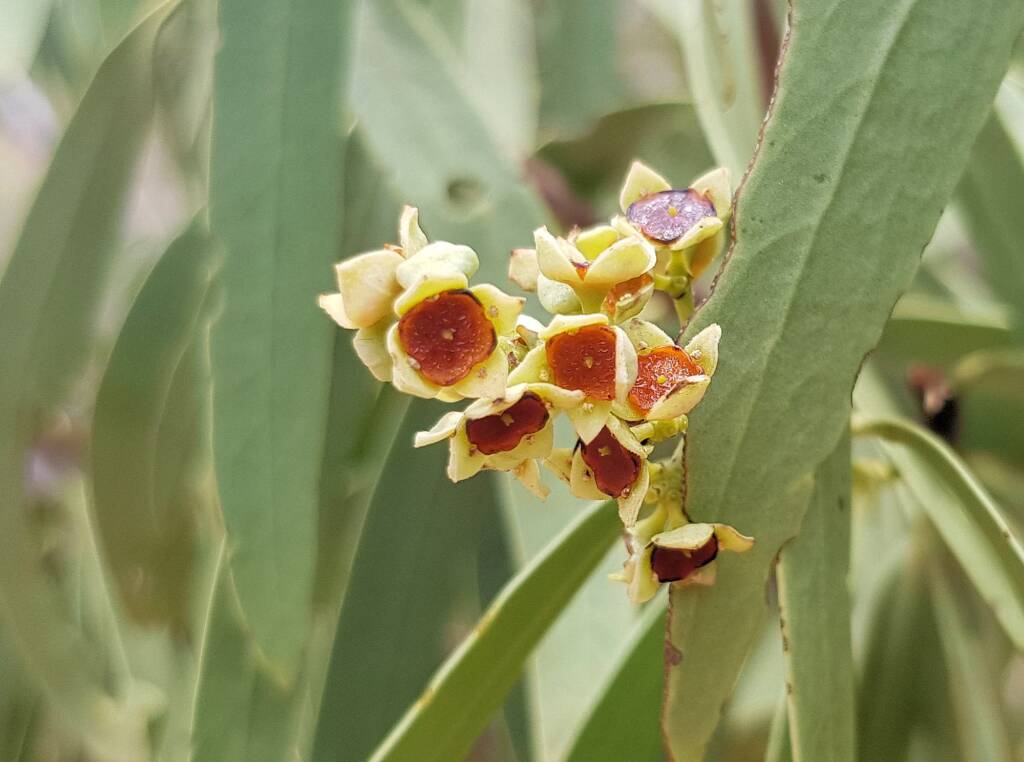
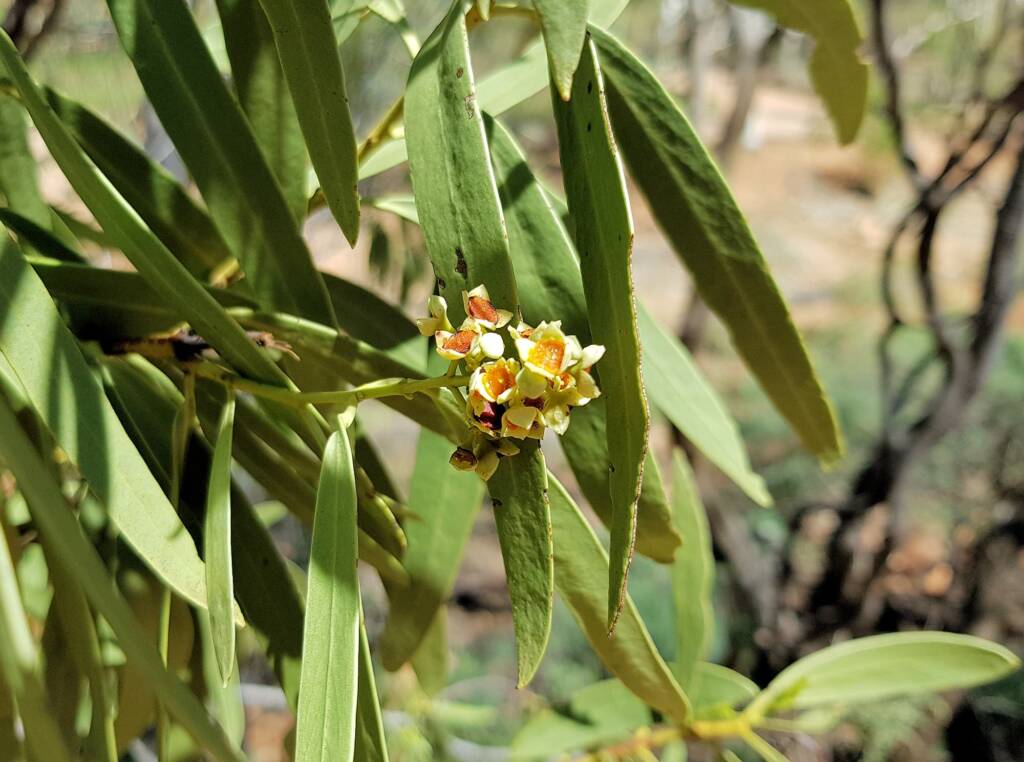
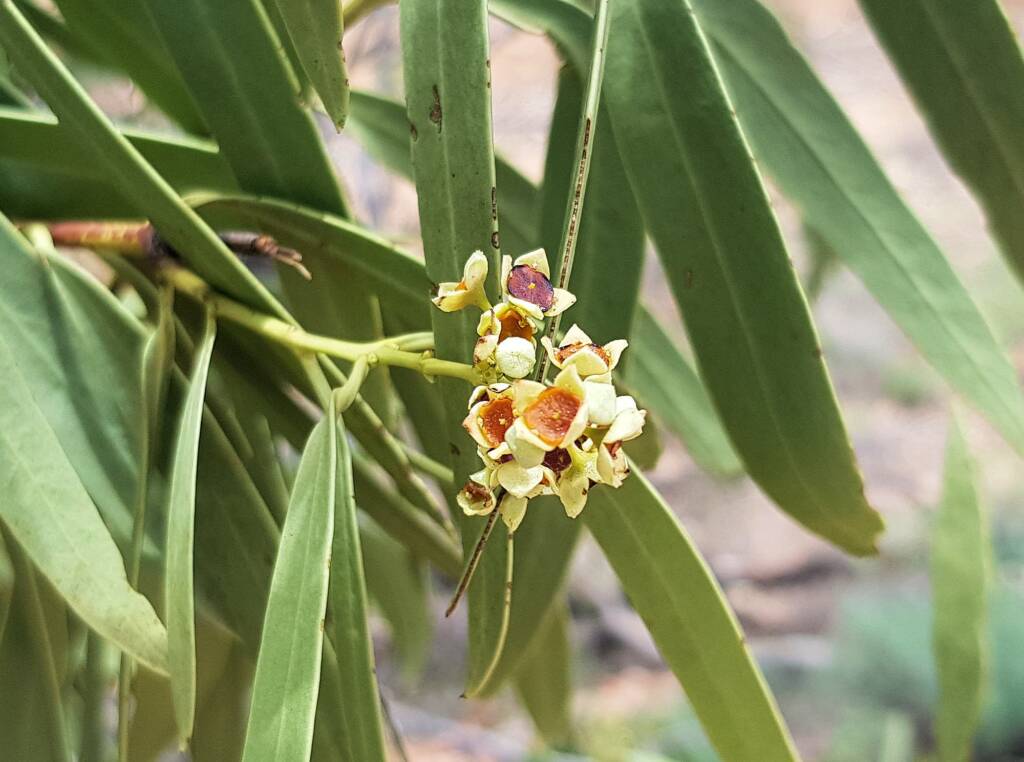
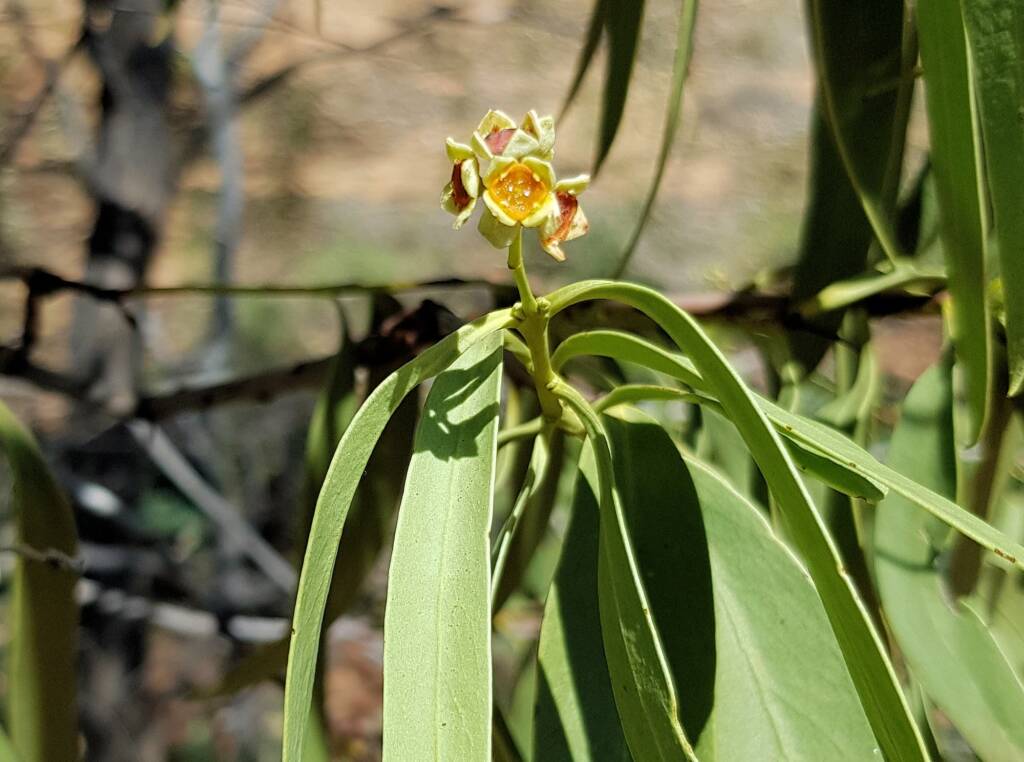
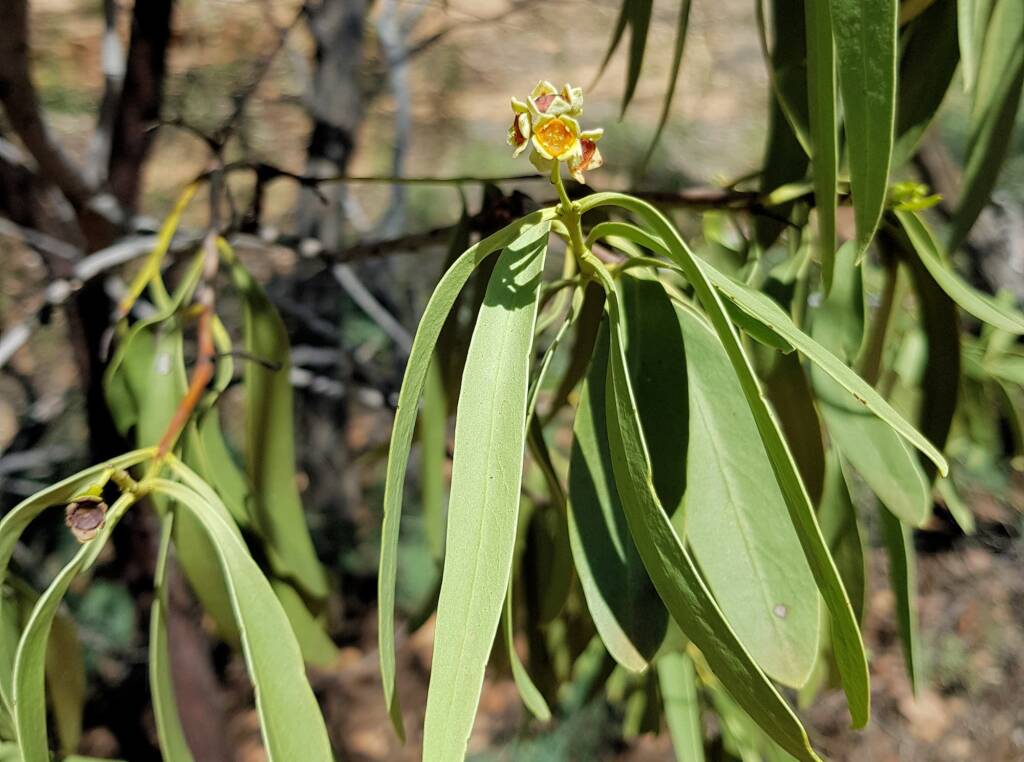
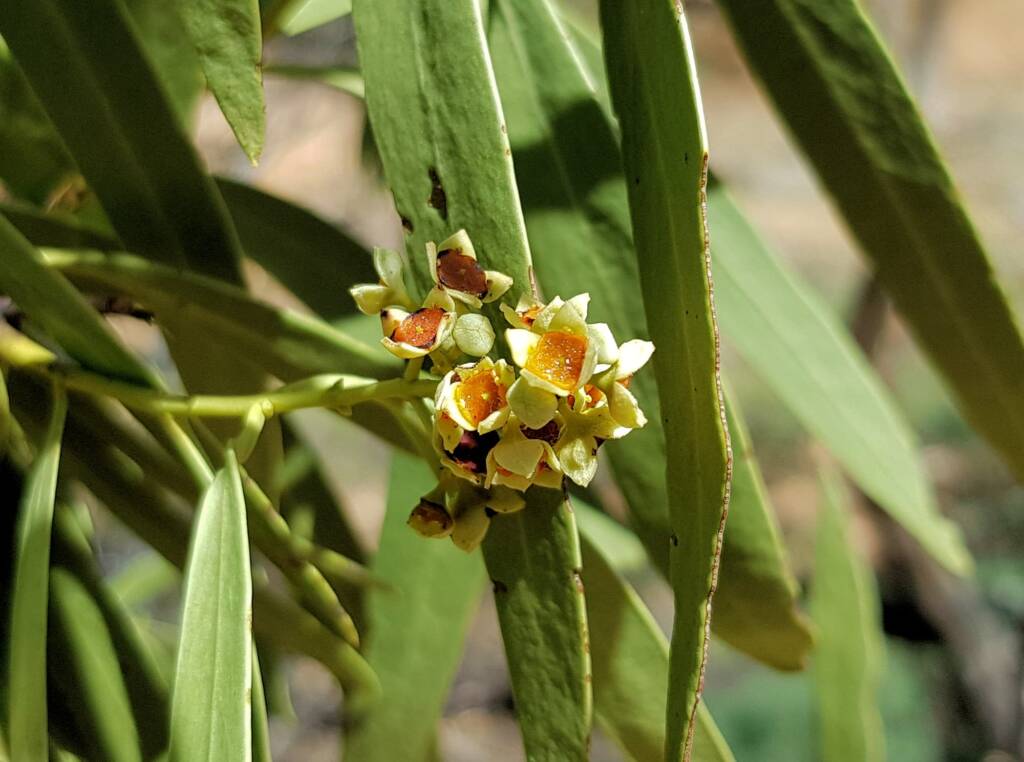
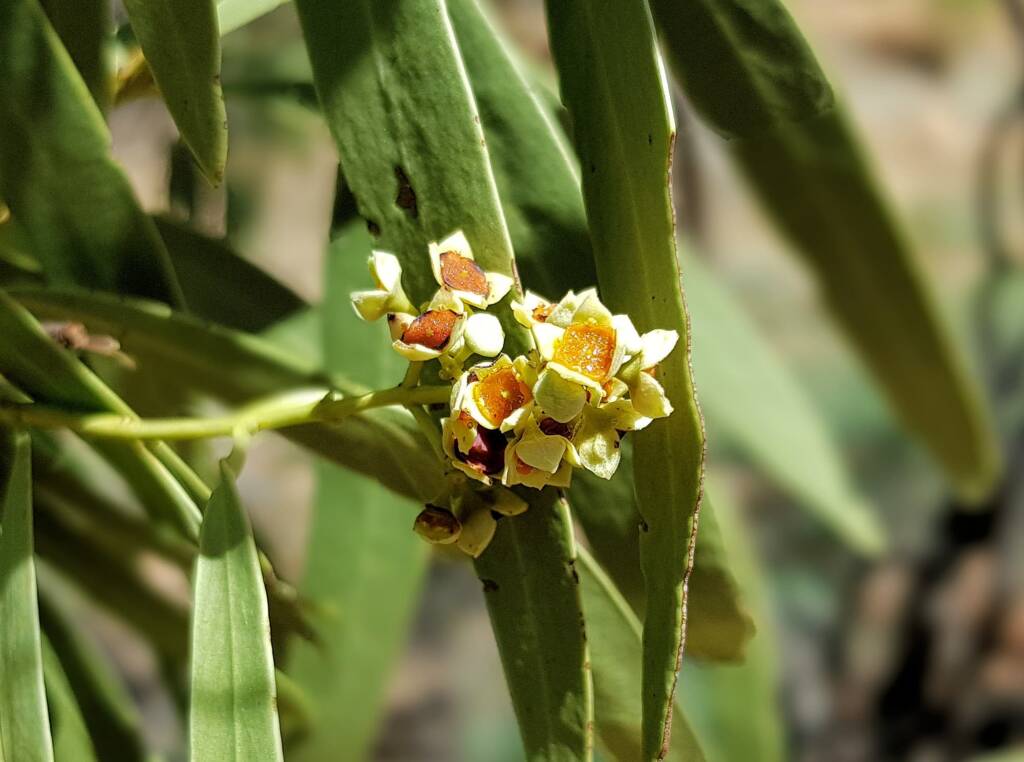
Native to Australia, it is found in the semi-arid, central desert and southern regions of Australia. It is found growing in sandy spinifex areas, often near water courses, salt lakes or hills. Like others of the genus, the plant is parasitic on the root systems of other nearby trees, however recent research have found that they are parasitic on any root systems of nearby plants.
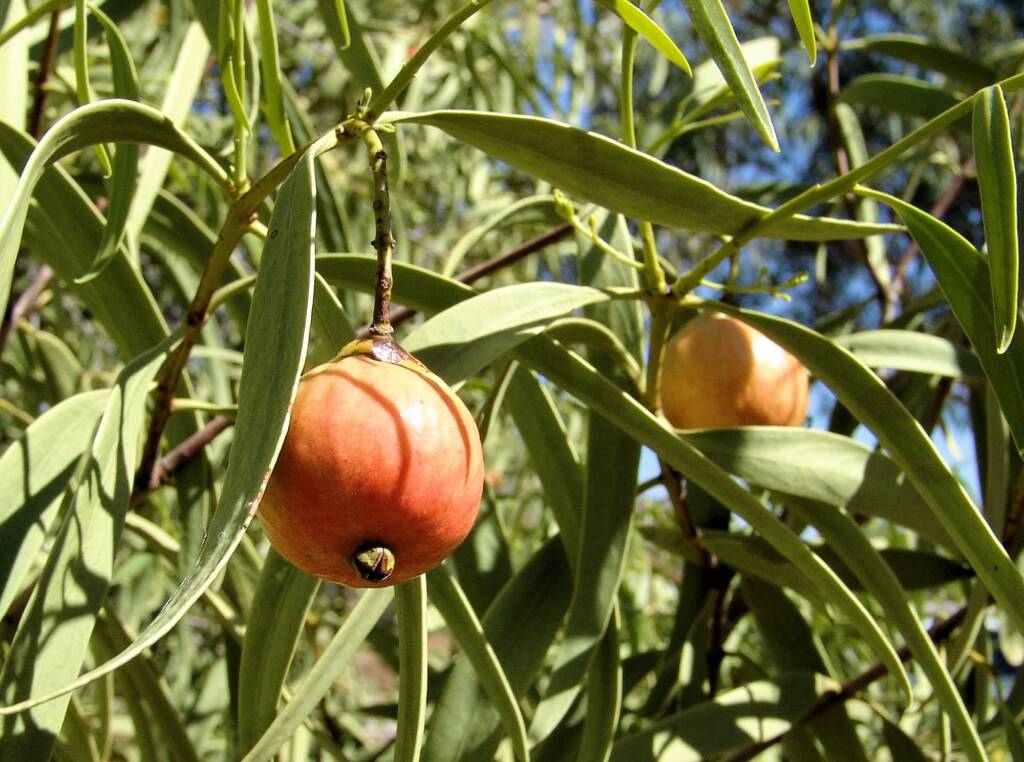
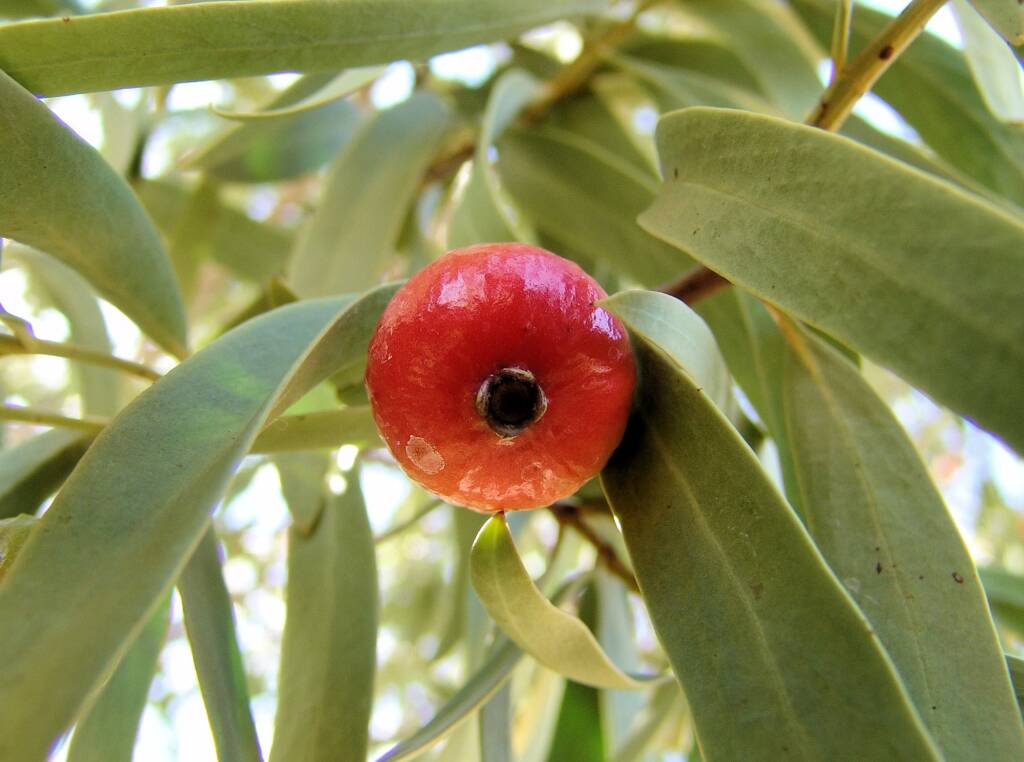
Check out the Quandong in the Alice Springs Desert Park.
Common name
Desert Quandong, Sweet Quandong, Native Peach, Peach Tree.
The quandong is known to many different indigenous language groups and is known by a number of local names:
- Name — Indigenous Language Group
- pmerlpe, pmwerlpe — Eastern Arrernte
- pmwerlpe — Western Arrernte
- mangata, walku — Pintupi
- kuuturu, mangata, walku, wayanu, witirrpa (seed) — Pitjantjatjara
- goorti — Narungga
- guwandhang — Wiradjuri, NSW
- gutchu — Wotjobaluk, WA
- mangarda, mangarta — Warlpiri
| CAUTION Extreme care must be taken when identifying edible food plants and those used in bush medicine. Some bush foods are only edible at different stages of the plant cycle, or when treated appropriately. Bush medicine should only be used under the guidance of a qualified physician. Information here is only provided for research. You should always seek experts in the field to confirm the identification of the plant and whether they are edible or appropriate. |
- Scientific classification
- Kingdom: Plantae
- Phylum: Charophyta
- Class: Magoliopsida
- Subclass: Magnoliidae
- Superorder: Santalanae
- Order: Santalales
- Family: Santalaceae
- Genus: Santalum
- Species: Santalum acuminatum
Footnote & References
- Peter Latz, Bushfires and Bushtucker Aboriginal Plant Use in Central Australia, IAD Press, Alice Springs, 2004
- Philip Moore, A Guide To Plants Of Inland Australia
- Santalum acuminatum, https://en.wikipedia.org/wiki/Santalum_acuminatum (last visited Dec. 29, 2020).
- Santalum murrayanum (T.Mitch.) C.A.Gardner, Bitter Quandong, Atlas of Living Australia, https://bie.ala.org.au/species/Santalum murrayanum
FloraFlora in Australia Flora Index Acacia Adenanthos cuneatus (Coastal Jug Flower) Agapanthus Apium prostratum subsp. prostratum var filiforme Anigozanthos (Kangaroo Paws) Apple Bush (Pterocaulon sphacelatum) Annual Yellowtop Australian Bluebell Australian Gossypium Banksia Batswing Coral Tree Billy Buttons Birdsville Indigo Blue Pincushion Bush Banana Callistemon Callitris drummondii (Drummond’s Cypress Pine) Calothamnus quadrifidus Cape Honeysuckle Cassia fistula (Golden Shower) Cattle Bush Common Heath Crotalaria Darwinia wittwerorum (Wittwer’s Mountain Bell) Daviesia oppositifolia (Rattle-pea) Desert Oaks Drumsticks Eremophila Eucalyptus Ficus Flannel Cudweed (Actinobole uliginosum) Georges Indigo Goatshead Burr (Sclerolaena bicornis) Golden Everlasting Goodenia Gossypium Grass and Grasses Grass Trees Grevillea Grey Germander Hakea Kapok Bush (Aerva javanica) Lambertia sp Leptospermum MacDonnell Ranges Cycad Maireana scleroptera Mexican Poppy Minnie Daisy Mistletoe Family Nardoo Native Apricot Nicotiana megalosiphon subspecies sessilifolia Nuytsia floribunda Orange Spade Flower Orchidaceae Parakeelyas (Calandrinia) Pebble Bush (Stylobasium spathulatum) Perennial Yellow Top Pink Everlasting Pink Rock Wort Poached Egg Daisy Portulaca Proteaceae Ptilotus Quandong Resurrection Fern Rosy Dock Ruby Saltbush Santalum Solanum Spike Centaury Spinifex Storkbill (Erodium cygnorum) Striped Mint Bush Sturt’s Desert Pea Sturt’s Desert Rose Tall Saltbush Tangled Leschenaultia Tar Vine Tribulus eichlerianus Upside-down Plant Urodon dasyphylla Variable Daisy Waratah (Telopea) Wertabona Daisy White Cedar (Melia azedarach) White Indigo White Paper Daisy Wild Passionfruit Wild Stock Woolly-Headed Burr Daisy Woolly Bush Yellow-keeled Swainsona
Flora & FaunaFauna Flora Fauna Flora Funga Glossary Funga Related Topics Scientific Classification Backyard Wildlife Floral Emblems of Australia Wildflowers