
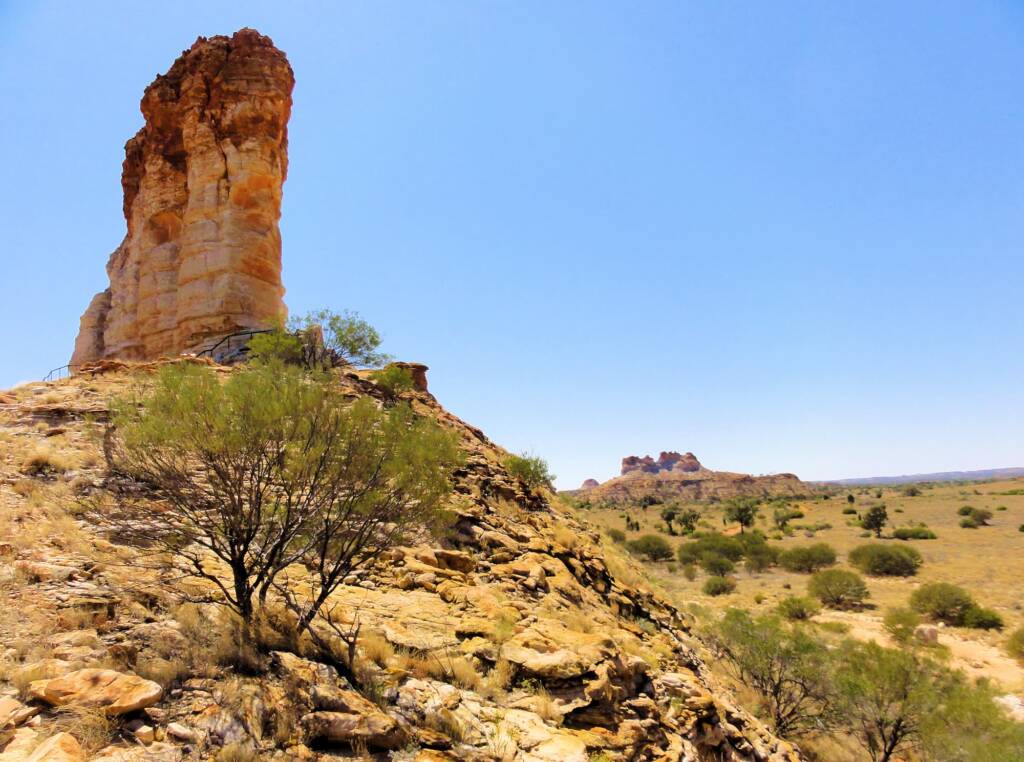
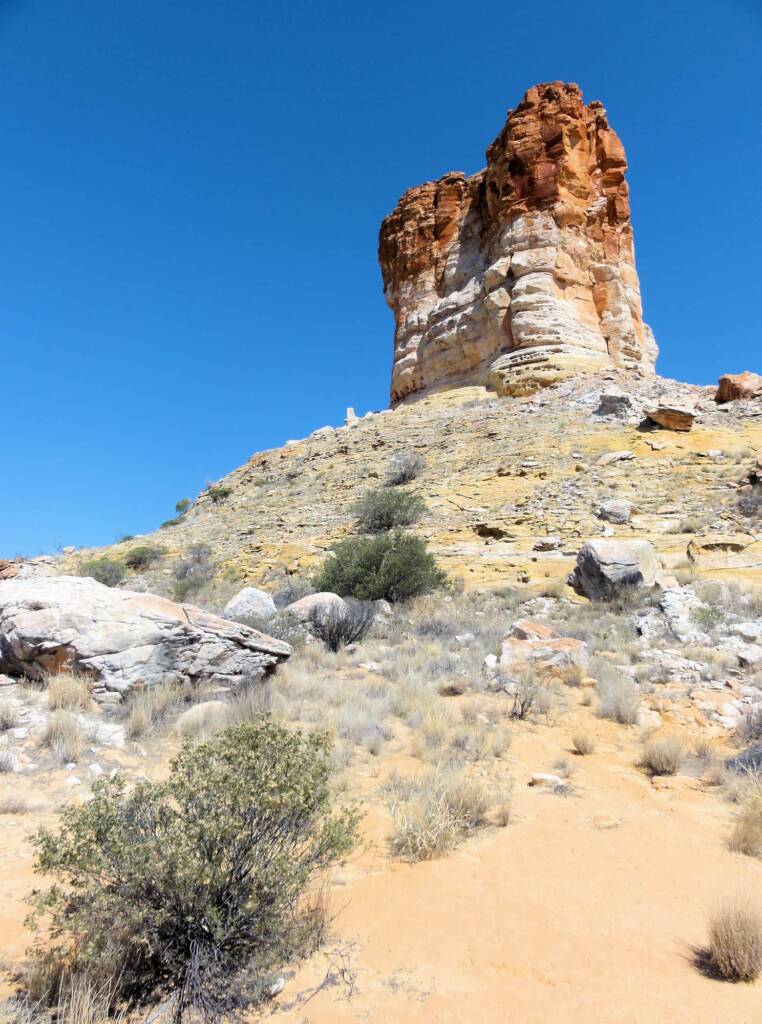
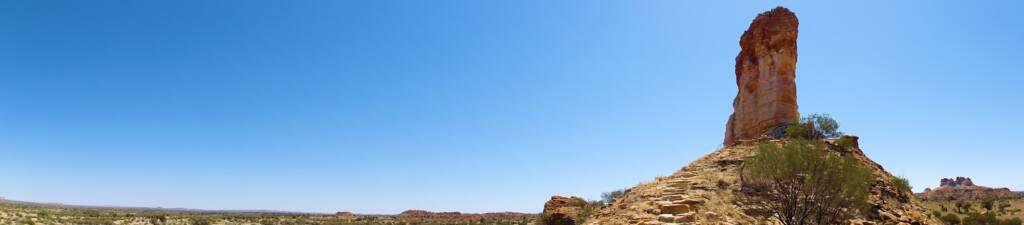
Just over 160 km south of Alice Springs is the Chambers Pillar Historical Reserve. Covering an area of some 340 hectare, the key feature of the reserve is the pillar of sandstone, towering some 50 metres high above the surrounding plain.
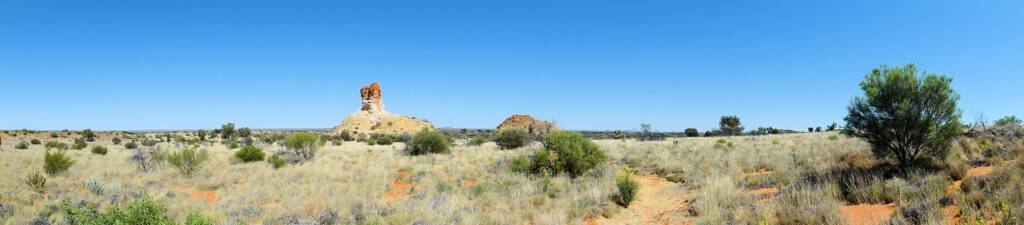
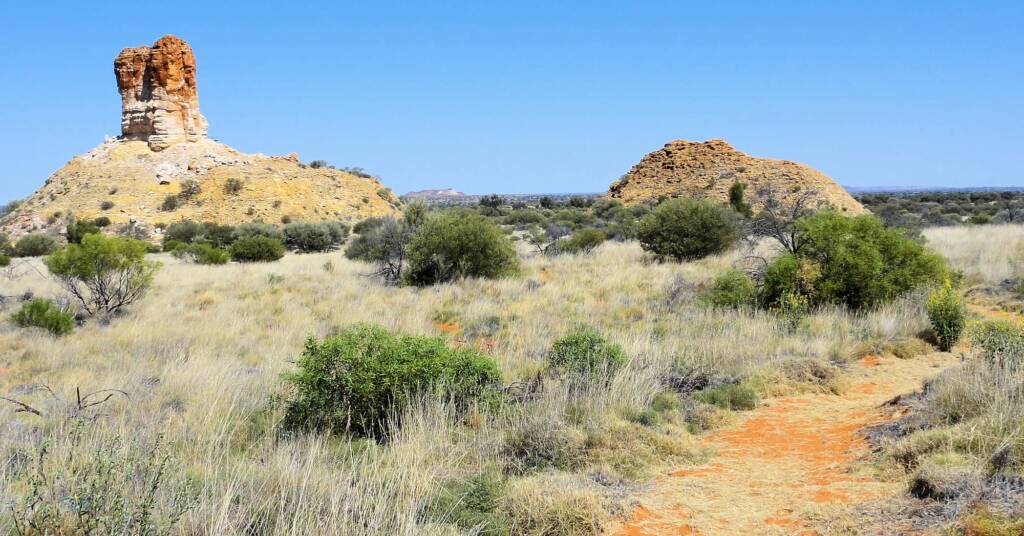
This huge sandstone pillar is known as Chambers Pillar (the Aboriginal name is ‘Itirkawara’). There are two other prominent features in the reserve, Castle Rock (‘Yayurara’) and Window Rock (‘Umarri’).
A very important landmark to guide the region’s earliest pioneers. It is at its spectacular best at sunrise and sunset.

Cultural Aboriginal Significance
A site of Aboriginal significance, Chambers Pillar and the surrounding region is part of Aboriginal dreamtime that speak of the knob-tailed gecko ancestor spirit, Itirkawara (pronounced it-turk-kar-wara). Itirkawara left the Finke River and journeyed north-east on his way home to his birth place. As he travelled, he grew stronger, a huge powerfully built man who had super human strength and an extreme violent temper. Such was his strength, he challenged and killed a number of ancestors with his stone knife.
Flushed with his success, he then took a girl for a wife, who under the strict marriage code was from the wrong skin group and forbidden. This enraged the relatives who promptly banished him and the girl.
Banished because of this behaviour, he brought the girl to these sandhills, where among the dunes they rested. At this spot where he sat down to rest and Itirkawara turned to stone (Chambers Pillar), while his female companion, crouching 500 metres away to the northeast, with her face turned away in shame, became Yayurara (Castle Rock).
For the southern Arrente Aboriginal Community, Chambers Pillar is a permanent reminder of the need to observe kinship laws.
European History
Until the coming of the railway in the 1920s, this pillar of sandstone was a landmark in the desert for those making the long overland journey from Adelaide to Alice Springs. It was John MacDouall Stuart who first recorded the pillar in April 1860, whilst travelling north on his first attempt to cross Australia. He named the landmark after James Chambers, one of his South Australian sponsors.
Since then many of those early travellers left records of their visit inscribed in the soft sandstone, most of these are still visible today.
John Ross who led the exploring party for the Overland Telegraph Line constructed in 1870-71, was one of the first white people to visit Chambers Pillar since John MacDouall Stuart, recording his visit in his diary. Both his name and that of Alfred Giles, who was with the Overland Telegraph Line exploring party under the leadership of John Ross, names can be seen today. A number of other pioneers including William Hayes, AP Cheeseman and Joseph James East.
Whilst this form of ‘graffiti’ was a common practice in the past to register movement through the land, the volume of visitors to the site, and its status as an Aboriginal Sacred Site, now make any form of graffiti inappropriate and illegal.
How it was formed
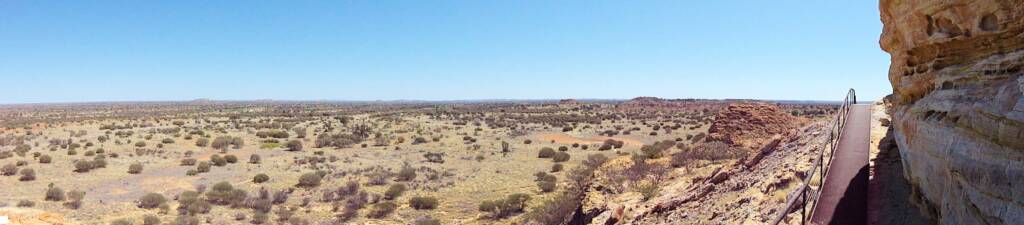
Some 350 million years ago, sandstone deposits were laid down in the area. With the action of wind and rain, the softer material eroded away leaving the harder sandstone material that make up the prominent features in the reserve. These landforms are remnant mesa, that is usually characterised by a flat ‘tabletop’, made of Devonian-Carboniferous sandstone.
How to get there
Chambers Pillar Historical Reserve is located just over 160 km south of Alice Springs, along the Old South Road, on a turnoff to the west of Maryvale Station. The road is unsealed and may be closed after rain. After the Maryvale turnoff, a 4WD is required to negotiate the sand hills and rutted track. Please ensure you close any gates as you pass through.
When to Visit
The cooler months are from April to September, making this the best time to visit Chambers Pillar. However, Central Australia often receives most of its rain anytime during this period, so check with local authorities regarding road conditions.
Visitor Facilities
Picnic facilities, gas barbecues, information, toilets and parking are available. Camping is permitted (fees apply), and there are ranger guided talks available between May and October.
Please Remember
Please camp only in the camping area provided between Chambers Pillar and Castle Rock. Camping fees are payable. Please use the gas barbecues provided for all cooking requirements.
Source: NRETA – Chambers Pillar Historical Reserve
Northern TerritoryCentral Australia Aileron Alice Springs Binns Track Chambers Pillar Historical Reserve Ernest Giles Road Finke Gorge National Park Henbury Meteorites Conservation Reserve Hermannsburg Historic Precinct Ilparpa Claypans Karlu Karlu / Devils Marbles Conservation Reserve MacDonnell Ranges Mount Connor Newhaven Wildlife Sanctuary Owen Springs Reserve Red Centre Way Drive Standley Chasm Tnorala (Gosse Bluff) Conservation Reserve Uluru-Kata Tjuta National Park Watarrka National Park & Kings Canyon Wurre / Rainbow Valley