|
|
|
Boggy Hole / Finke Gorge National Park |
|
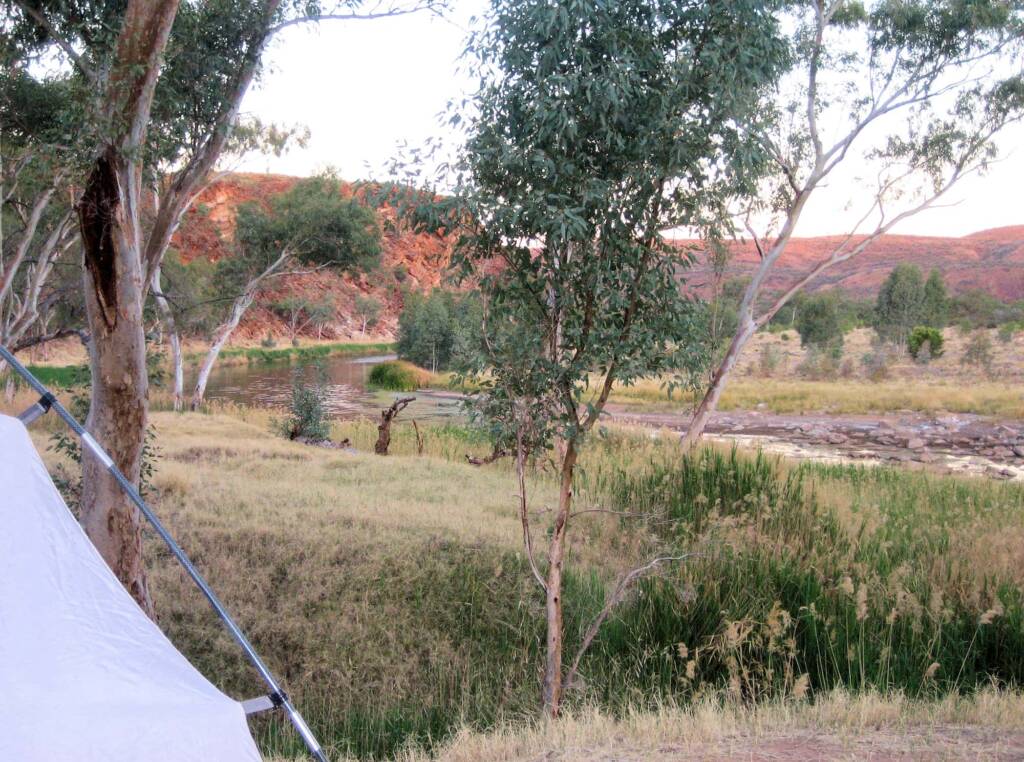
Located in the the ancient landscape of the
West MacDonnell,
as you follow what is cited as being ‘the oldest river in the world’, the
Finke River traverses through
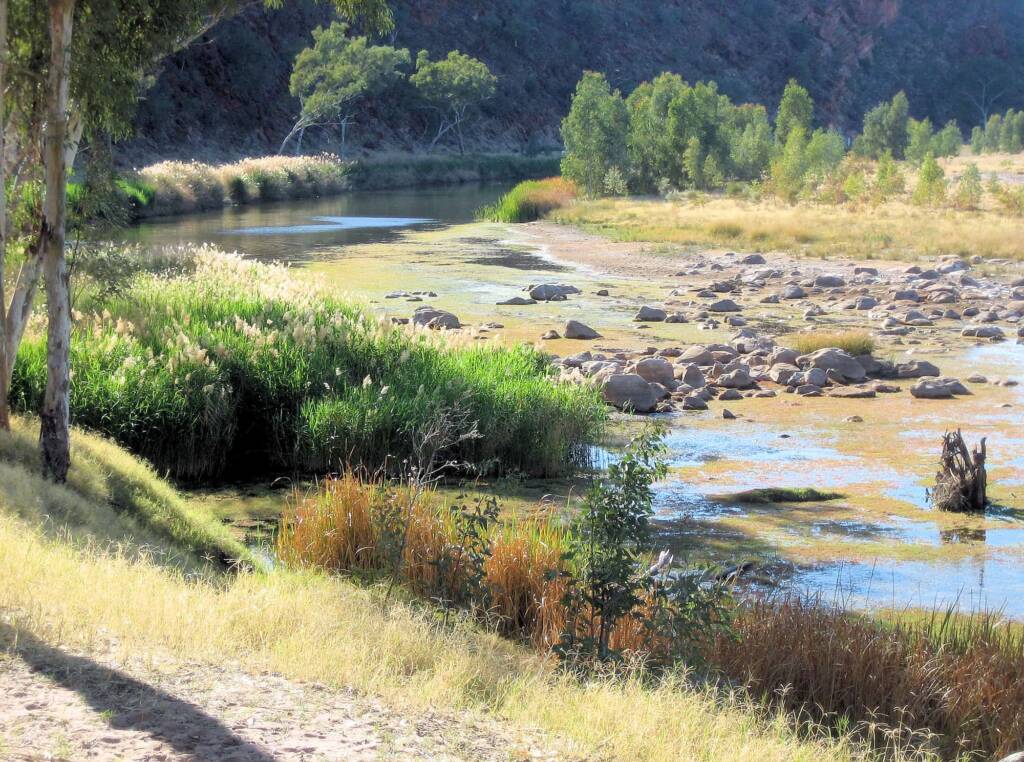
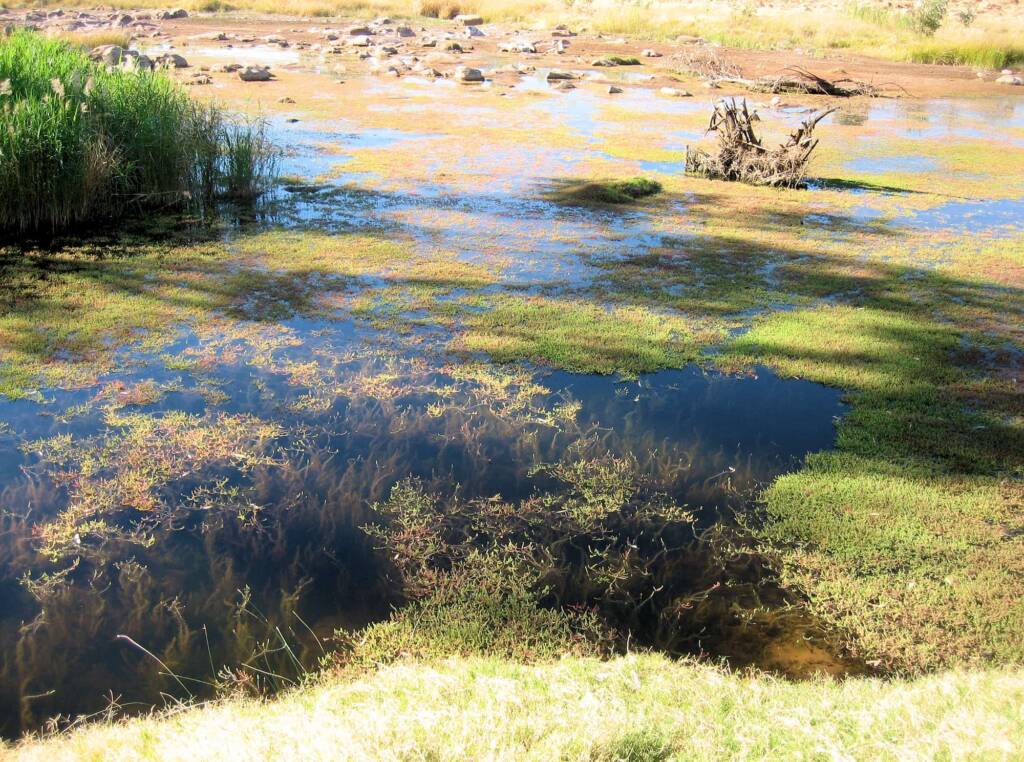
the landscape into the Finke Gorge National Park, where there is a large
waterhole known as the ‘Boggy Hole’. About 200 km from Alice Springs,
this route is popular with 4WD visitors, as the getting here takes you through
the spectacular Finke River Gorge, that includes the internationally renown
Palm Valley (about 2.5 hours
from the Boggy Hole). Before the modern tourist in their 4WDs the Finke River
with its permanent waterholes and wide flat bed provided a travel and trade
route for the Aboriginal people for many thousands of years.
|
|
|
In 1872 Ernest Giles was the first of the European explorers to navigate this
section of the Finke River, with others to follow. Lutheran Missionaries
established themselves at Hermannsburg in 1877, with the Finke providing a
supply route. Today, you can see the ruined remains of the old police station
just south of the Boggy Hole, that once operated just briefly during the 1870s.
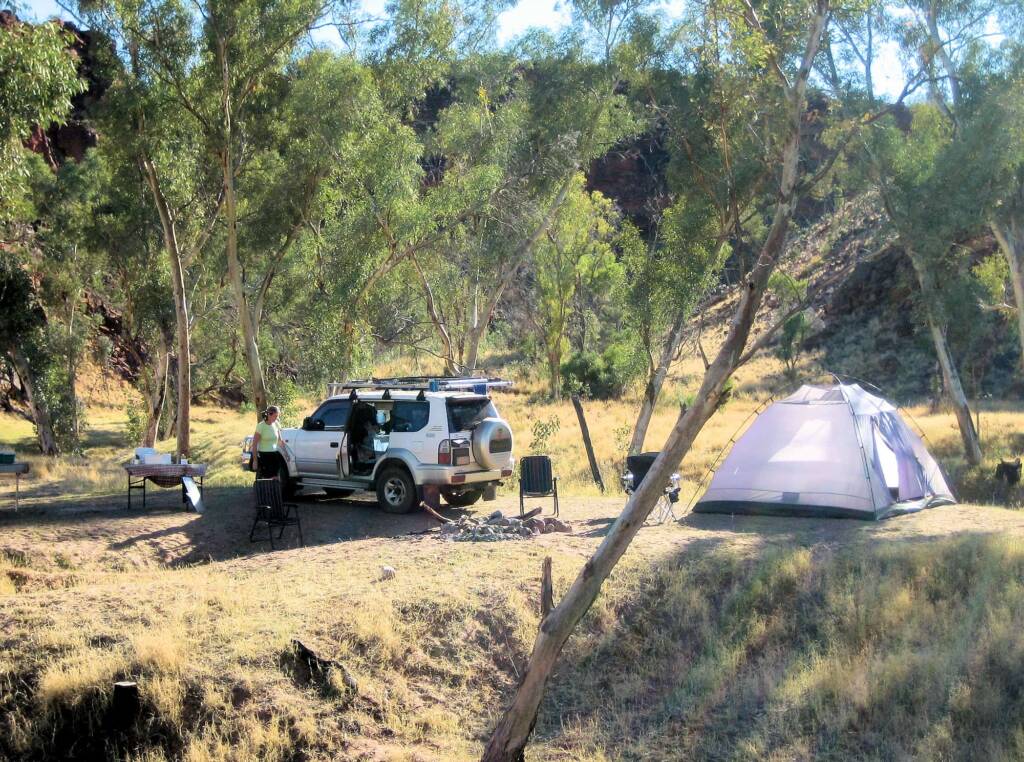
Visitors to the Boggy Hole can experience bush camping (there are no
facilities). Please remember, there are no bins, so take your rubbish out with
you. Avoid using soaps or detergents in or near waterways, use gas barbecues or
fuel stoves where possible, as you are not allowed to collect firewood in the
park. Stay on existing tracks and do not enter Aboriginal living areas without
permission or a permit. Leave all gates as you find them. Observe all road
conditions, but for your own safety, it is advisable to use the voluntary
4WD and
Overnight Walkers Registration Scheme
Registration Scheme.
Check out the Northern Territory Parks and Wildlife Services for additional
information:
|
|
|
 |
Boggy Hole Birds
|
The Boggy Hole not only provides water for birds, but also offers the refuge of
trees and reeds, as well as providing water plants, insects and fish for food.
The best time for bird watching is during the cooler hours of the day. Don’t
forget your binoculars.
Some of the birds identified at the Boggy Hole include:
- Kingfishers - are colourful, well built birds with a big beak.
Watch for them as they pounce on insects and email lizards.
- Whistling Kites - are light brown and have stuttering, whistling cry.
They’re often alone, flying slowly overhead in search of insects, lizards
and dead animals.
- Coots - are shy and live in pairs and groups. They either dive for their
plant food or pick it from the ground or shallows.
- Egrets - are large, white birds. They stalk fish and insects in shallow
water before catching them with quick jabs of their beats.
- Darters and Cormorants - these birds dive underwater for fish and
insects. They look similar, but you’ll notice the Darter’s longer tail and
slender neck.
- Rainbow Bee-eaters - are common visitors in spring and summer.
You’ll see their bright colours as they snatch insects from mid-air and take
them to a perch to eat.
- Grebes - are like dark brown ducks, but have slender necks and
tiny tails. They dive when they’re frightened, or to catch fish, frogs and
insects.
- Herons - are grey with a white face or neck. Like Egrets, they
hunt fish and insects in the shallows.
Source: NT Parks and Wildlife Service signage |
 |
Finke River Fish
|
|
The Boggy Hole is one of only six special places that are more-or-less permanent
waterholes along the 600 kilometre length of the Finke River system. It is these
waterholes that fish and wildlife depend on for survival during drought.
As the floodwaters fall, the river’s ten native fish species retreat to the
nearest waterholes. During drought periods when most of the waterholes dry up,
thousands of fish die. The only fish to survive are the ones in the
more-permanent waterholes, such as the Boggy Hole. These are the fish that help
to repopulate the river during the next floods.
As if surviving the drought isn’t enough, the fish here also have to face other
dangers. Fishermen’s illegal nets, horses and cattle trampling water plants, and
the natural winter ‘die off’ of oxygen-starved fish all take their toll.
The survival of the Finke’s fish may be at risk if there is any pollution of
this water or damage to the shallow weedy ‘nursery’ areas where the fish breed
and grow.
Some of the fish found here include:
- Bony bream - are the largest fish in Central Australia and grown
to about 300 mm. Look for their silvery flashes as big schools swim through
the shallows feedings on algae and rotting food plants.
- Spangled Grunters - have a mottled pattern of brown spots and
grow to around 200 mm long. They often swim in schools, feeding on insects,
shrimp, other fish and some water plants. They’re very hardy and during
floods are the first fish to leave their waterholes.
- Black-striped Grunters - average 100 mm in length and usually
display five to eight dark vertical bands. They make grunting sounds when
distressed and are often seen alone. They feed mostly on insects and
occasionally eat small shrimps and plants.
- MacDonnell Range Rainbow Fish - swim in schools and only grown to
about 80 mm. Look for them among water plants in shallow, undisturbed pools.
They have a body-length rainbow body and feed on small insects.
Source: NT Parks and Wildlife Service signage |
|
|
|