|
|
|
West MacDonnell Range - Cities, Towns and Localities |
|
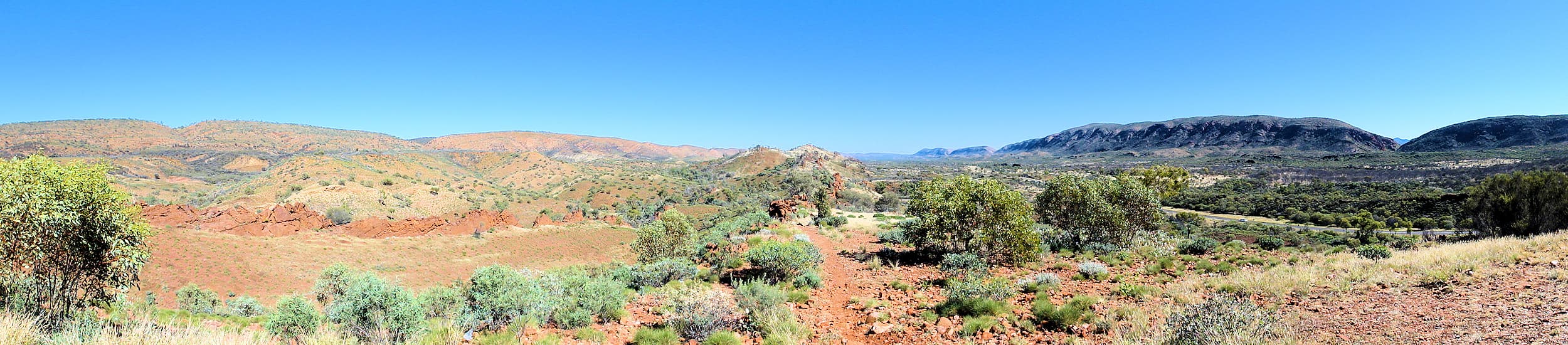
The West MacDonnell Range, known locally as the West Macs, extends west of
Alice Springs over 160 km. This vast, ancient and spectacular section of the
MacDonnell Ranges, encompasses the West MacDonnell National Park, and is an
important refuges for plants and animals, many of which are found only here,
living side by side with relics descended from ancient tropical forests.
Explore the wonders of the region, featuring landscaped that is significant in
the stories of the Arrernte Aboriginal culture, a culture that existed in the
region for many thousands of year.
|
|
What to see
Departing from Alice Springs, many of the main features are accessible via the
sealed roads of Larapinta and Namatjira Drives, which runs west along the
valley.The first port of call is Flynns Grave, then
Simpsons Gap, where a
early or late afternoon walk to the waterhole provide opportunities to see the
local wallabies.
If you are coming from
Watarrka National
Park (Kings Canyon) access is via
the unsealed road of the Mereenie Loop Road (part of the
Red Centre Way tourism
route - permit is required).
When to Visit and Access
The region is accessible all year round, with the cooler months being from April
to September. During heavy rain the roads can become impassable for short
periods. From Alice Springs, vehicle access is via Larapinta Drive and Namatjira
Drive. From Watarrka National Park (Kings Canyon) access to the West MacDonnell
National Park is via the Mereenie Loop Road. 4WD is recommended as the road is
unsealed.
Simpsons Gap
is also accessible via a 17 km sealed bicycle track that starts opposite Flynn's
Grave on Larapinta Drive, about 7 km from Alice Springs.
Due to its close proximity to the town centre, Simpsons Gap is popular with
tourist who have limited time to explore, providing an example of a gap, which
usually has some water in it, although during long periods of no rain, this can
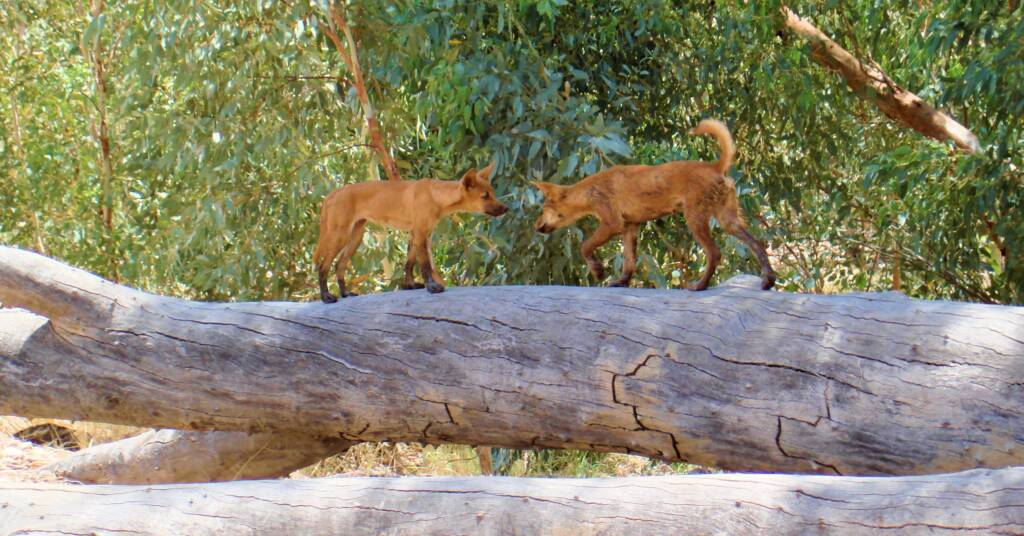
dry to a small pool of water. It is also home to the
Black-footed Rock Wallaby, numerous insects and a number of species of
frogs, including the
Centralian Green Frog and
Desert
Tree Frog.
Source: Parks and Wildlife Northern Territory
-
West MacDonnell National Park fact sheet. Check out our listing of
MacDonnell Ranges accommodation and
Central Australia accommodation. For additional attractions, tours and other information contact
local tourism visitor centre or the NT Parks and Wildlife. |
|
|
 |
|
|
Much of the West MacDonnell Range is encompassed in the
West MacDonnell National Park...
|
West MacDonnell National Park
The West MacDonnell National Park
include spectacular scenery that encompasses parts of the MacDonnell Ranges and offers
much for those interested in camping, bush walking, flora, fauna, geology, and
spectacular views and scenery.
|
|
|
The many attractions along the West MacDonnell Range is listed in sequence
starting from John Flynn Historic Reserve on the edge of
Alice Springs.
Another popular way of taking in the range is via the world famous
Larapinta Trail,
that winds it's way along the backbone of the West MacDonnell Range and down
through the many gaps, chasm and gorges, ending at
Mount Sonder, the
highest point along the trail.
|
John Flynn Historic Reserve
Just on the western outskirts of Alice Springs
on Larapinta Drive, the historic reserve is situated amongst the low
rocky hills with the beloved West MacDonnell Range as the backdrop. It is the
historical grave site of John Flynn.
|
Simpsons Gap
Simpsons Gap is located in the West
MacDonnell National Park, and being just 26 km west of Alice Springs is one of the
better known and popular gaps in the West MacDonnell Range. Home to a resident population of
rock wallabies, it is also the location for a number of species of
frogs.
|
Standley Chasm
Located 50 km from Alice Springs, a
popular time to see Standley Chasm is between 11 am and 1 pm. It is during this
period that that you have the best chance to see the cathedral high walls of the
chasm glow red from the suns reflections.
|
Serpentine Gorge
Serpentine Gorge is aptly named for the snake-like course that the creek has cut
through the range. It is home to a number of rare plants that are protected from
the region's harsh climate. You can take the walk either via the Service Track
or the creekbed to the gorge entrance. A steep, stony track leads from the gorge
entrance to the Lookout with stunning views of the MacDonnell Range. This part
of the walk is a strenuous climb for about 15 minutes and there is a sheer drop
from the top of the Lookout. Care should be taken, so keep clear of the edge.
Serpentine Gorge is the site of the Carpet Snake Dreaming, with some areas in
the gorge and western cliffs having special significance for the Traditional
Western Arrernte custodians.
|
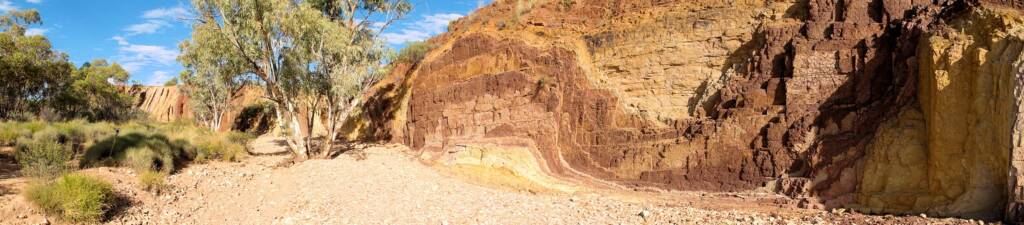
Ochre Pits
Located approximately 121 km west of
Alice Springs, from the Larapinta Drive turn on to Namatjira Drive, then follow
the signs for the turn off to the Ochre Pits.
Aboriginal people have extracted ochre from these cliffs for thousands of years.
The ochre from here is still used by Western Arrernte people, mainly for
ceremonial purposes.
|
Ellery Creek Big Hole
Ellery Creek is part of the Finke River system,
and is one of the largest permanent waterholes in the West MacDonnell National
Park. Located about an hour's drives west of Alice Springs, along Namatjira Drive,
the waterhole is a great place for a swim or just to relax on a hot day. Swimmers
should take care, as the water is deep, and during the winter, extremely cold.
For your own safety, do not climb or jump from rocks.
|
Ormiston Gorge
Located in the vast and spectacular West MacDonnell Range and part of the
West MacDonnell National Park, Ormiston Gorge with a near-permanent waterhole,
showcases the spectacular geology and landforms of the region. When full, the
waterhole is estimated to be up to 14 metres deep at its southern end.
|
|
|
A unique way to get another perspective on the region, especially the western
part of the range around Glen Helen, Mount Sonder and Ormiston Gorge is by
helicopter. A range of flight options are available from Glen Helen Resort -
check out some of our aerial
images to see.
|
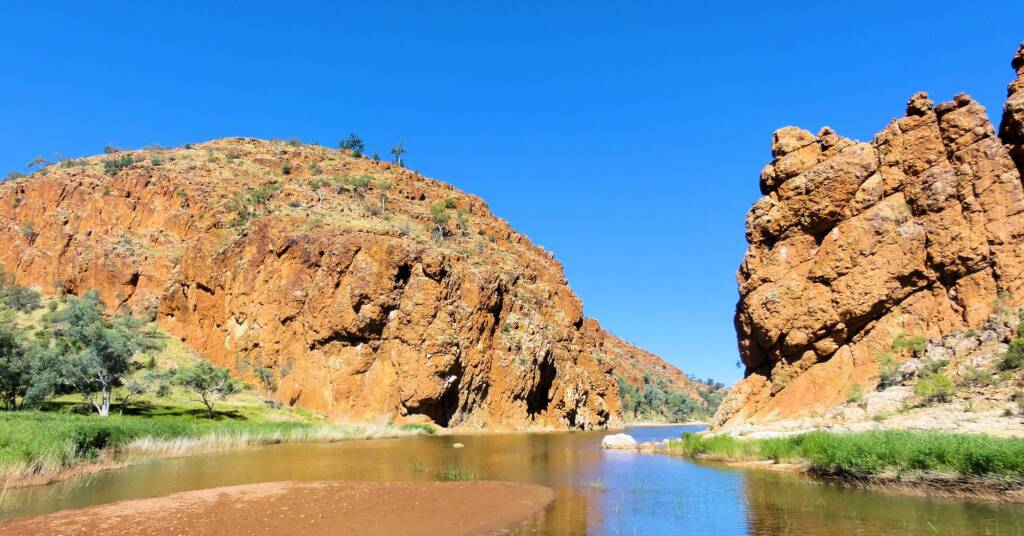
Glen Helen Gorge / Resort and Homestead
Located at the end of the spectacular West MacDonnell Range, Glen
Helen Gorge is at the end of the sealed section of road known as Namatjira
Drive, named after the famous Indigenous artist Albert Namatjira.
|
Mount
Sonder
An icon landmark in the West MacDonnell Range, Mount Sonder (at 1,380
metres above sea level), is the fourth highest point in Central Australia. It is
included in the Larapinta Trail and captured in the landscape paintings of many
artists including the famous Albert Namatjira.
|
Redbank Gorge
Located at the western end of the West MacDonnell National Park, just 157 km
west of Alice Springs, the narrow gorge through the red quartzite range offers
relief with a number of waterholes. A great place to Mount Sonder and there are
camping facilities.
|
|
|
The Finke River System commences from the West MacDonnell Range region, with the
Finke Gorge National Park located to the south of the range.
|
Finke River
One of the world's oldest
watercourses, the Finke River forms in the West MacDonnell Range, passing
through the Finke Gorge National Park and like the Hugh, Palmer and Diamantina
rivers all flow inland eventually ending up in Lake Eyre. Part of the Finke
River bed provides vehicle access to the famed Palm Valley. The river itself is
usually dry, however in heavy rains parts of the river become impassable.
|
Finke Gorge National Park
Covering an area of 46,000 hectares,
the park is home to the famed Palm Valley. The park and nearby areas hold
cultural significance for the Western Arrernte Aboriginal people. It also
contains evidence of early European settlement.
|
Boggy Hole
Located in the
Finke Gorge National Park,
the Boggy Hole is a permanent waterhole located south of the West MacDonnell
Ranges. After heavy rain the waterhole can stretch up to 2 km in length. You
will need a high clearance 4WD, as the route is off road and follows or forms
part of the Finke River bed. Access is from either Larapinta Drive or the Ernest
Giles Road. There are bush camping facilities.
|
|
|
|
|
|
|

The claypans south of the West MacDonnell Range filled with water after the
recent rains. |
|