
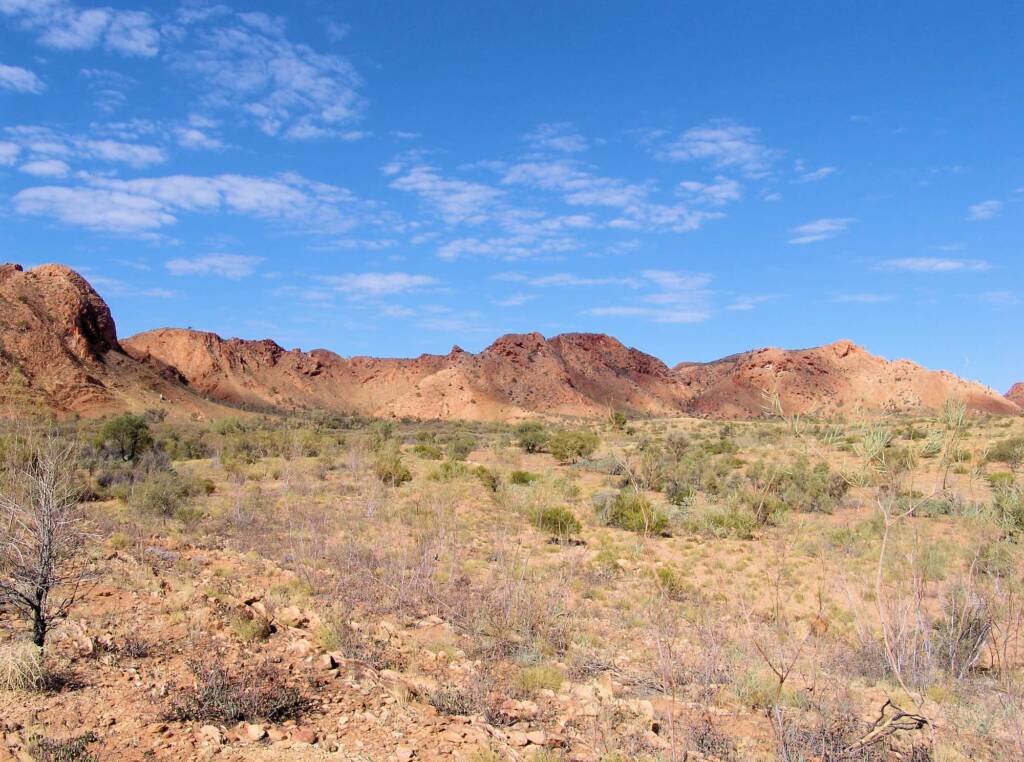
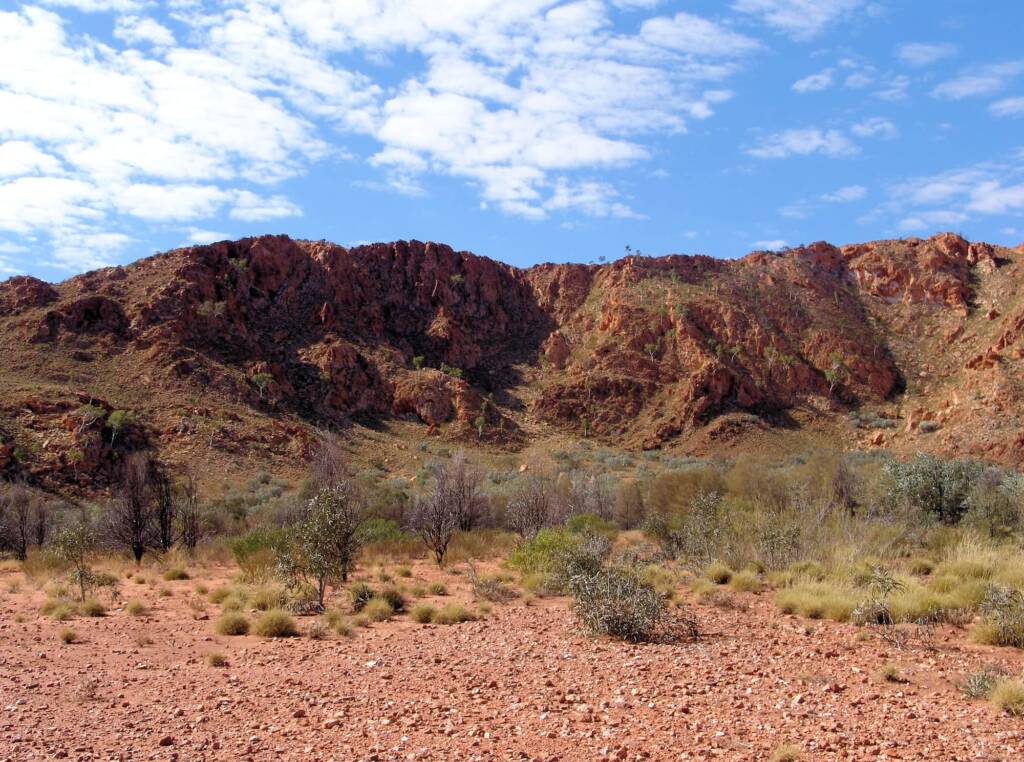
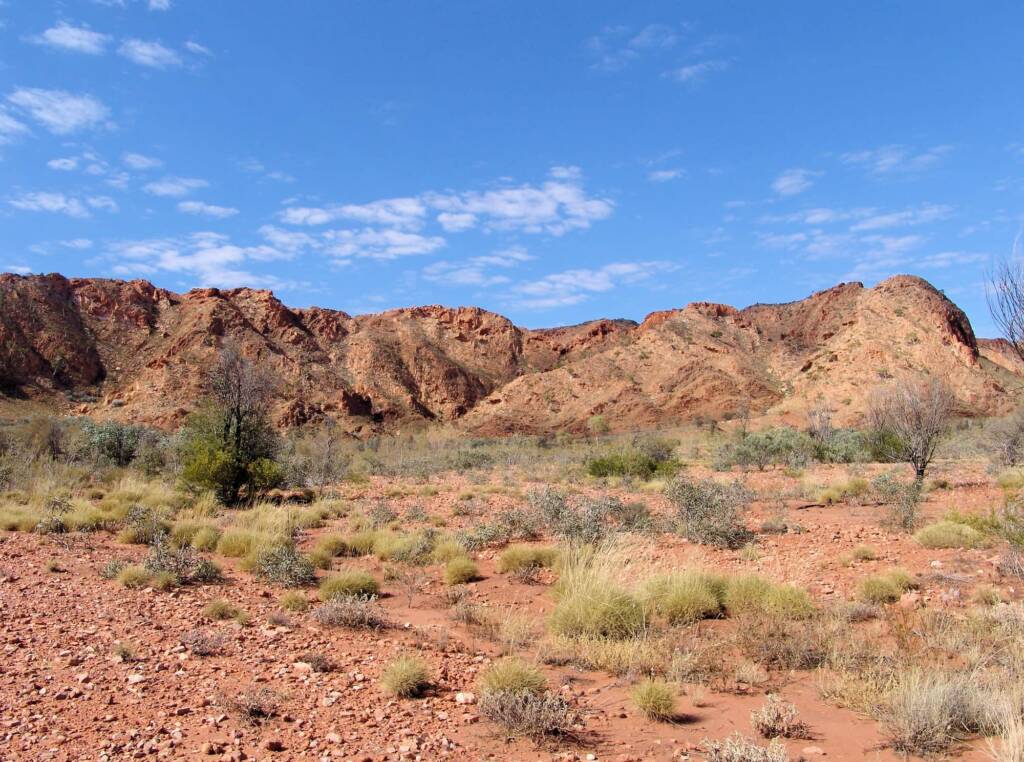
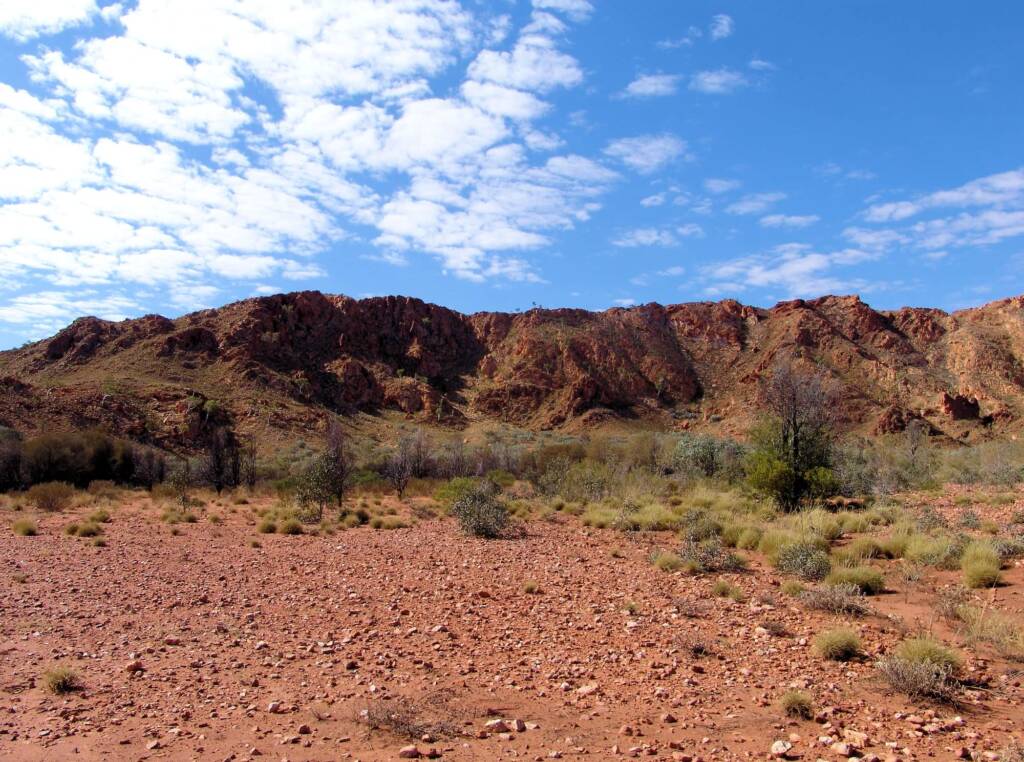
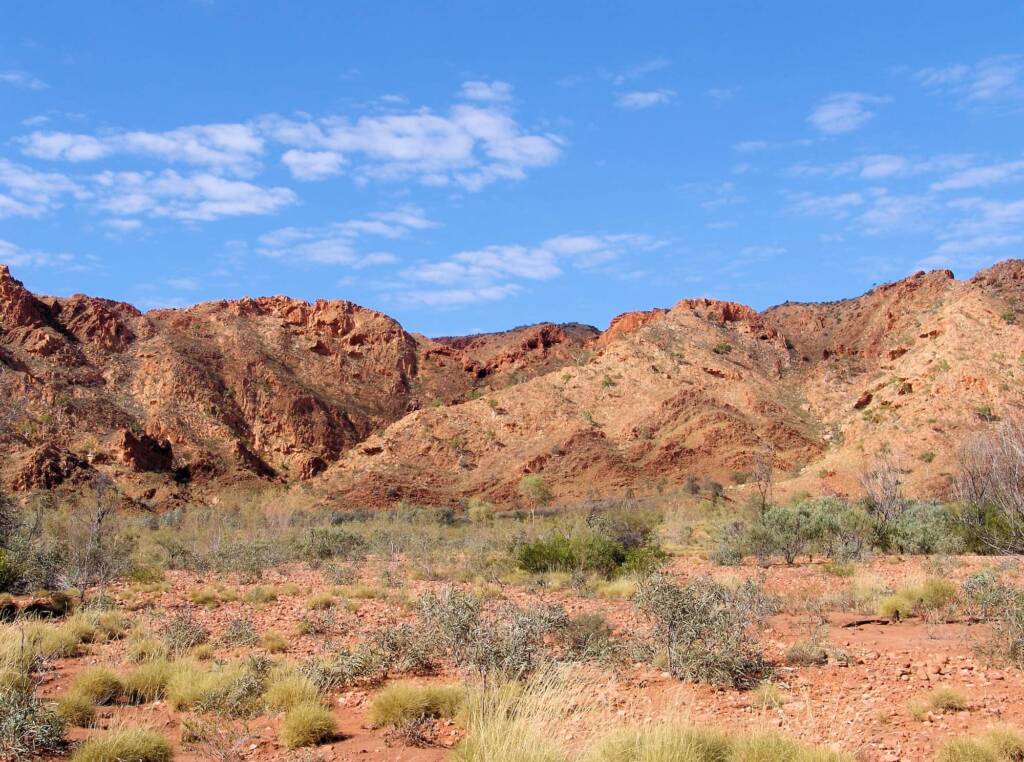
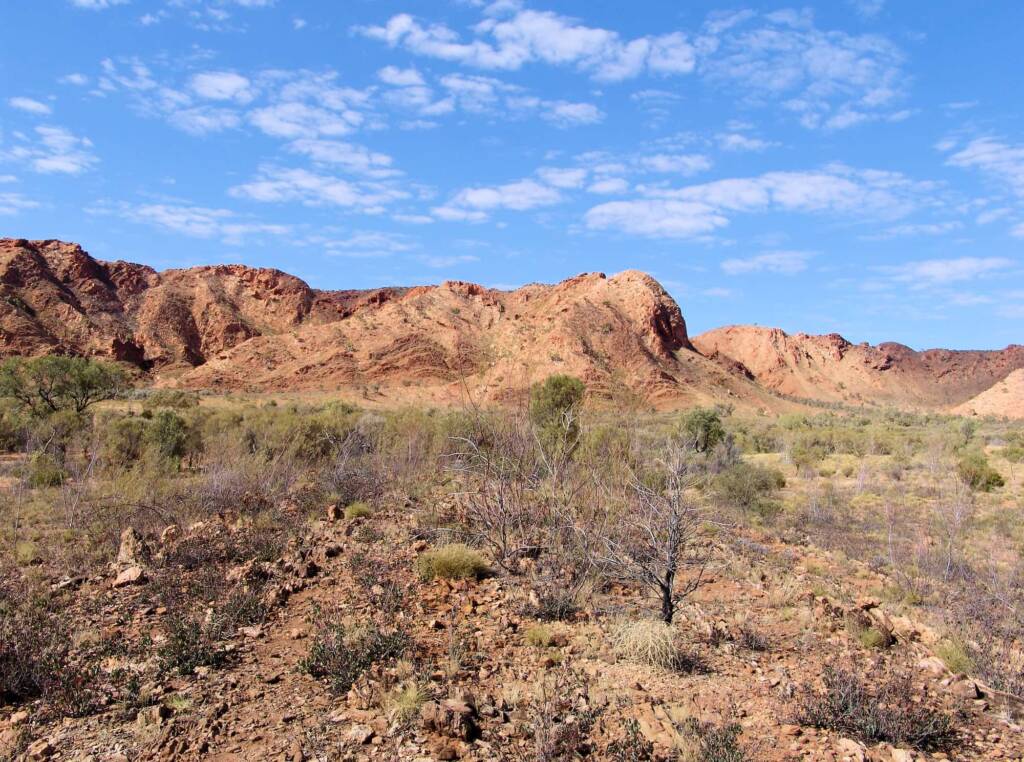
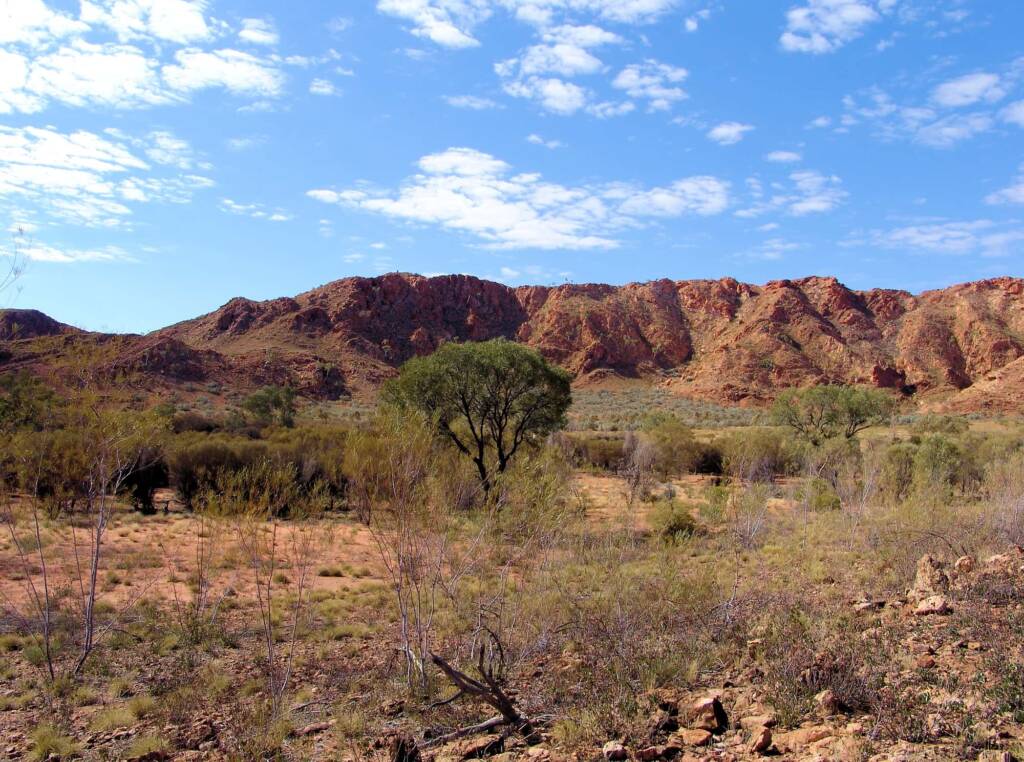
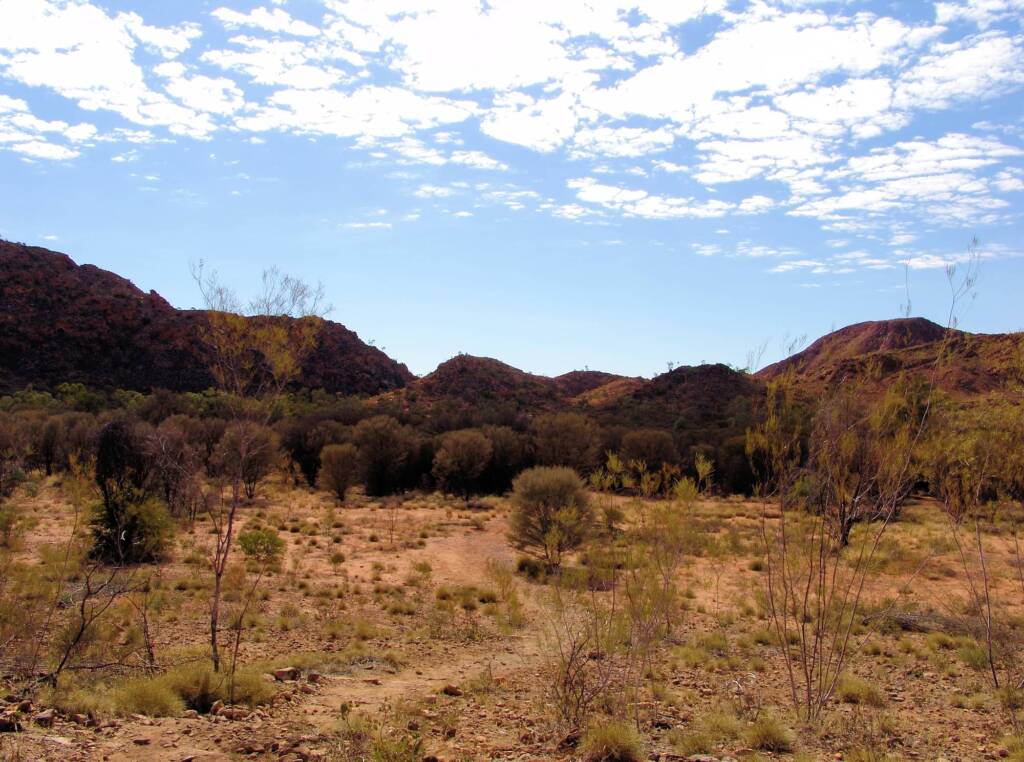
Known as Tnorala to the Western Arrernte people of the surrounding region, Gosse Bluff is the eroded remnant of an impact crater. Located in the southern part of the Northern Territory, about 175 km west of Alice Springs and about 212 km to the northeast of Uluru.
From Creation to Today
Tnorala (Gosse Bluff) has endured millions of years of erosion. Once a colossal crater hundreds of metres above the plains, almost all of the original outer structure has eroded.
Satellite imagery reveals the remnants of the original crater, resembling a halo of shattered rock, far outside the mountain ring.
Today, the inner core of Gosse Bluff is about 5 km in diameter. Its floor is littered with shatter cones, which can be observed in the area.
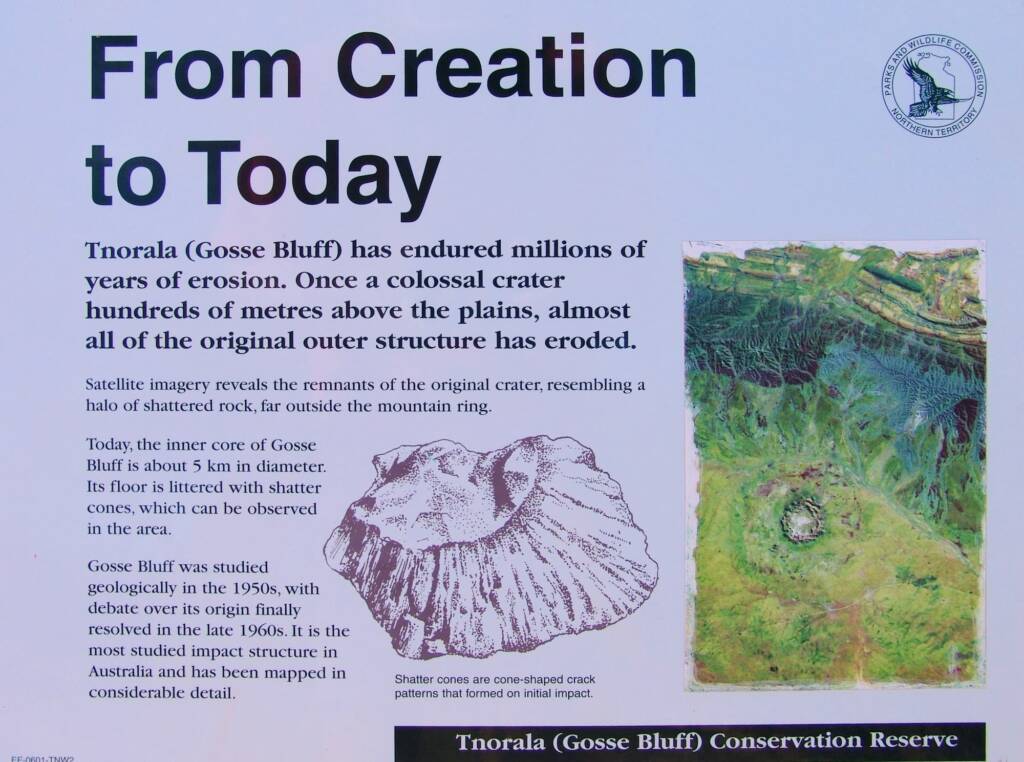
Gosse Bluff was studied geologically in the 1950s, with debate over its origin finally resolved in the late 1960s. It is the most studied impact structure in Australia and has been mapped in considerable detail.
More information coming…
Footnote & References
- Tnorala (Gosse Bluff) Conservation Reserve, Parks and reserves, NT Government, https://nt.gov.au/parks/find-a-park/tnorala-gosse-bluff-conservation-reserve