
Ochre PitsOchre Pits – Central Australia
Ochre – Stone of the Dreamtime
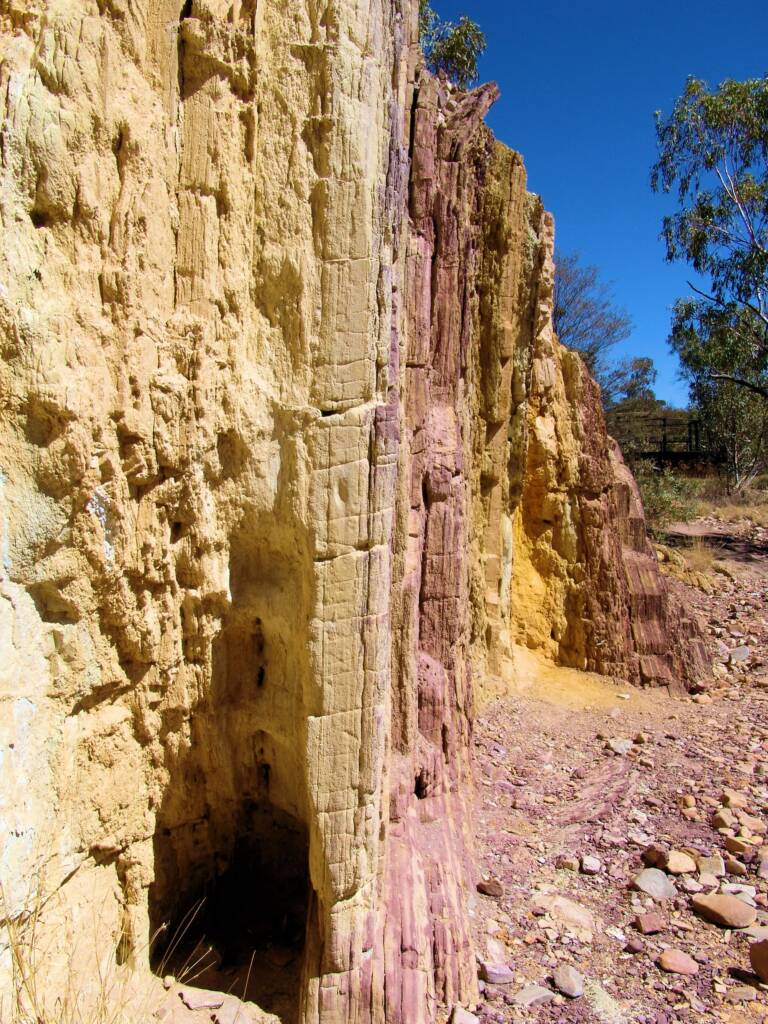
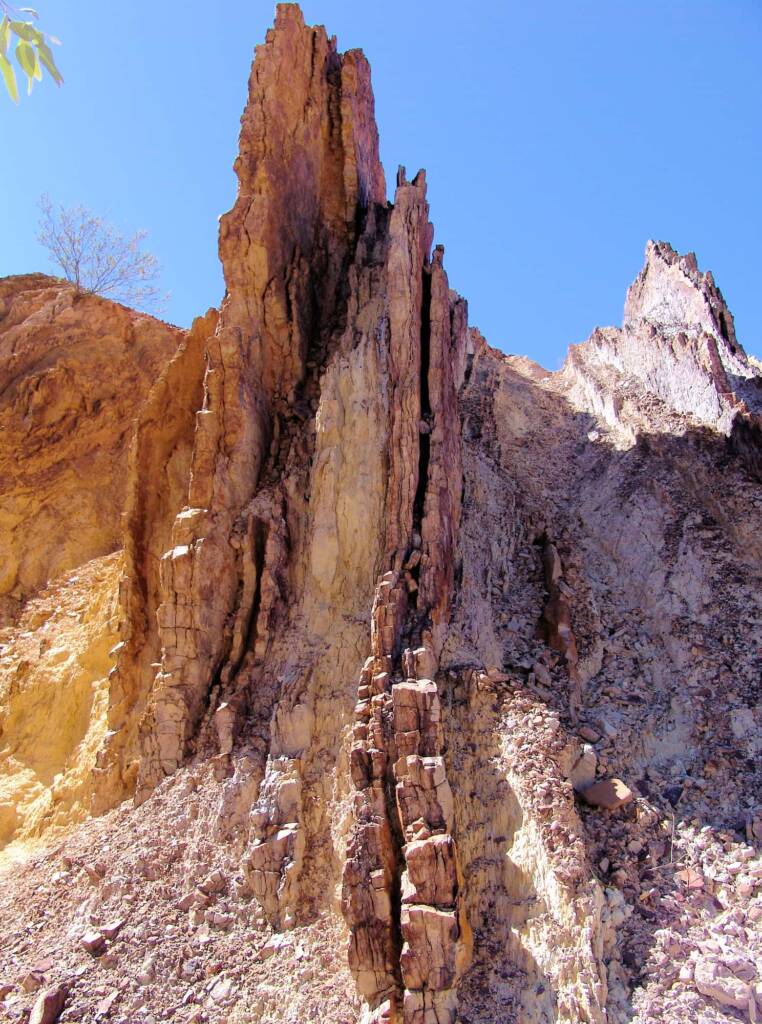
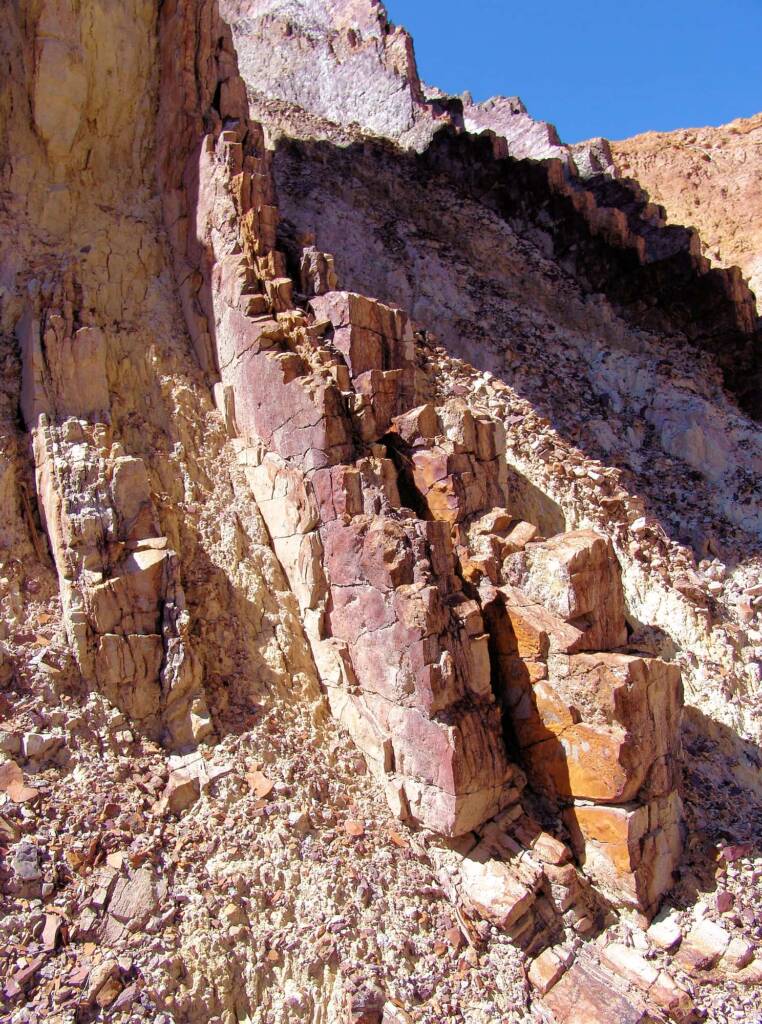
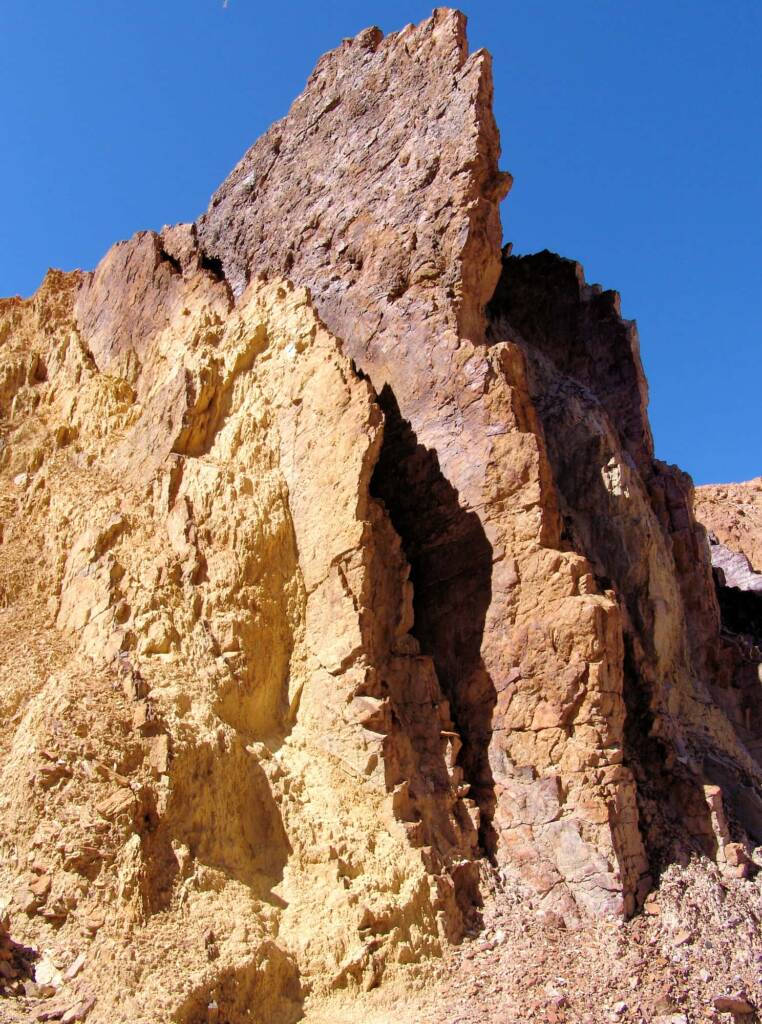
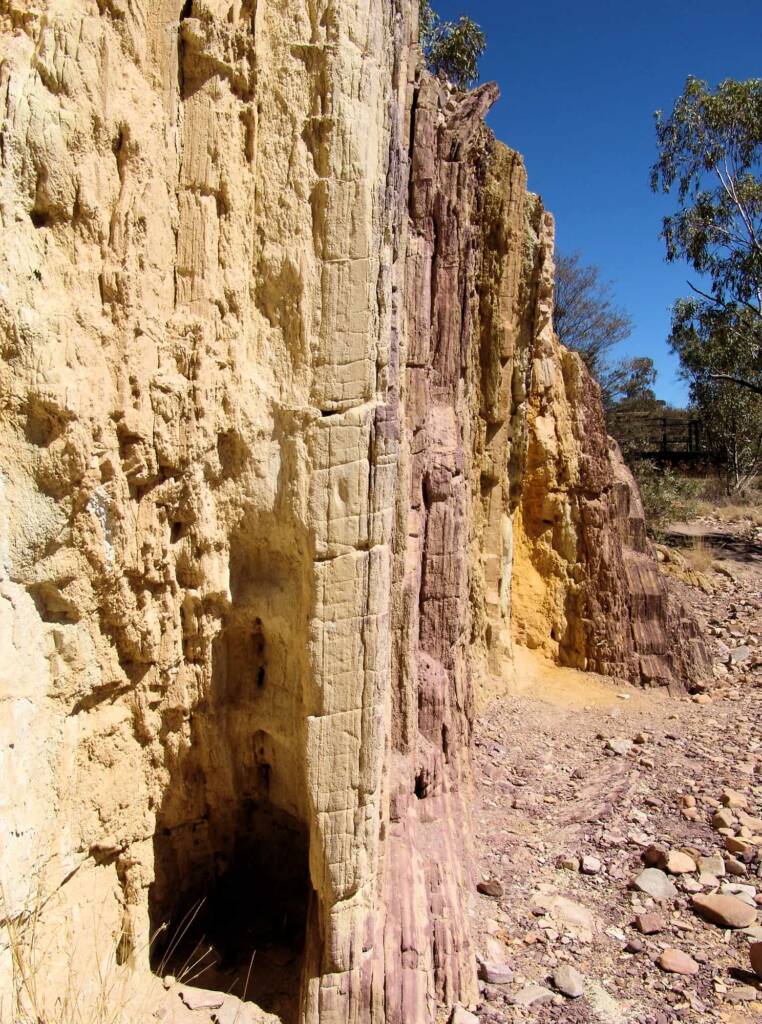
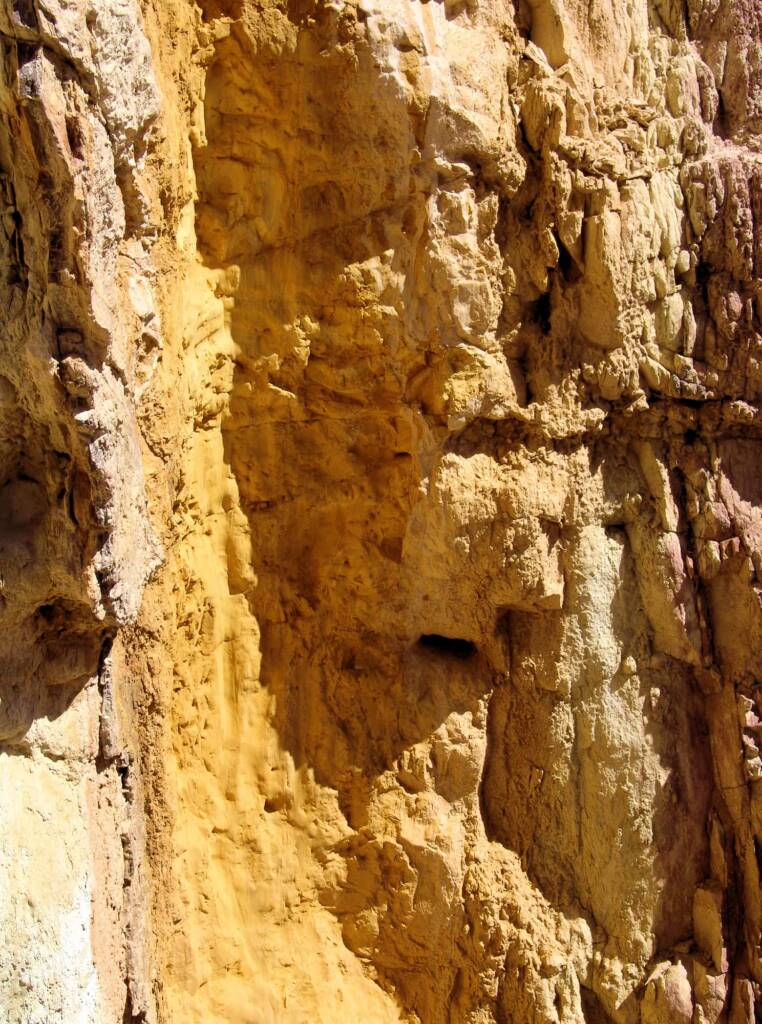
Aboriginal people have extracted ochre from these cliffs for thousands of years. The ochre from here is still used by Western Arrernte people, mainly for ceremonial purposes.
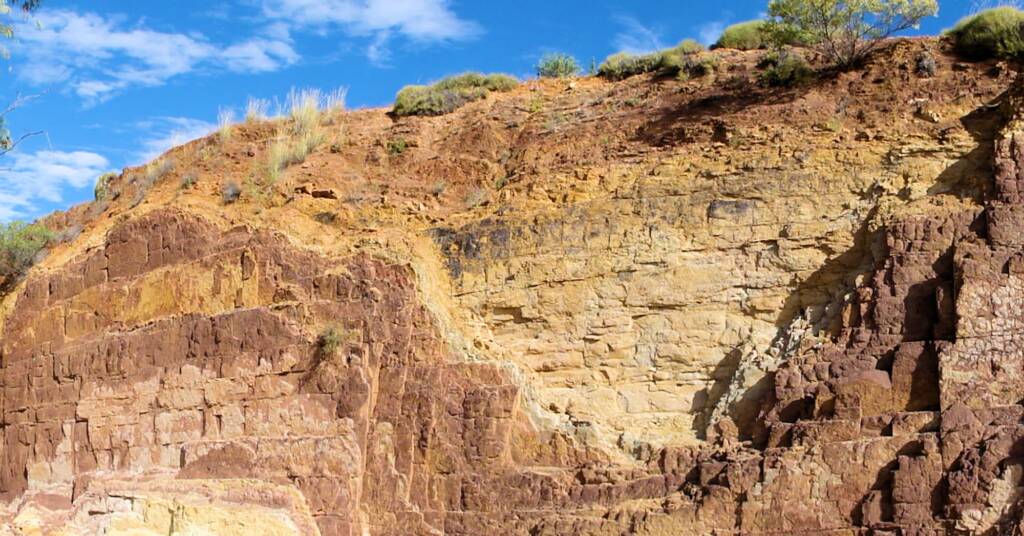
Ochre is integral to the Dreamtime stories — stories of Creation and Law — of Aboriginal people throughout Australia. Red ochre deposits often represent the blood of sacred ancestral beings.
The traditional Aboriginal stories and ceremonies for this site belong to Western Arrernte men. Women and children are not permitted to dig the ochre, or know of the stories associated with the site. Therefore it is not possible to relate or show how ochre is used in the telling of these stories.
However, women use ochre, provided by men, from this site in their own ceremonies.
Rock paintings, common in other parts of Australia, are not prolific in Central Australia. This could be because in this region fixatives are not mixed with ochre paint and the rock paintings did not last, or it could be that rock paintings are not central to local Aboriginal culture. Here, the Dreamtime is drawn in sand paintings, which are destroyed as part of the ceremonies.
Source: Northern Territory Parks and Wildlife Commission – park signage
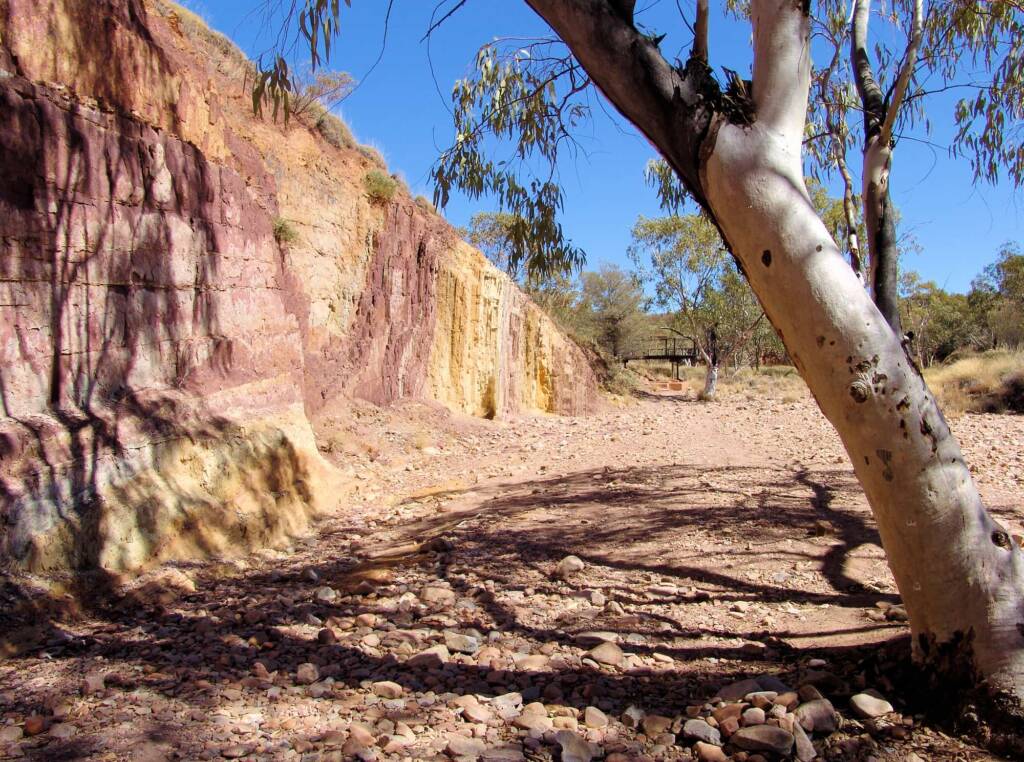
The Ochre Pits are located approximately 121 km west of Alice Springs along the Larapinta Drive, turn on to Namatjira Drive, then follow the turn off.
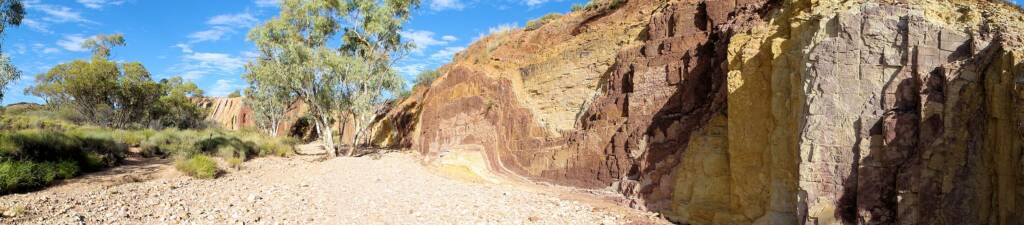
Ochre PitsOchre Pits – Central Australia
West MacDonnell RangesBirthday Waterhole Ellery Creek Big Hole Finke Two Mile Glen Helen Gorge Jay Creek John Flynn’s Grave Historical Reserve Laura Creek Larapinta Drive Mount Sonder / Rwetyepme Namatjira Drive The Neil Hargrave Lookout Ochre Pits Ormiston Gorge & Pound Point Howard Lookout Redbank Gorge Simpsons Gap
MacDonnell RangesEast MacDonnell Ranges West MacDonnell Ranges Tjoritja West MacDonnell National Park